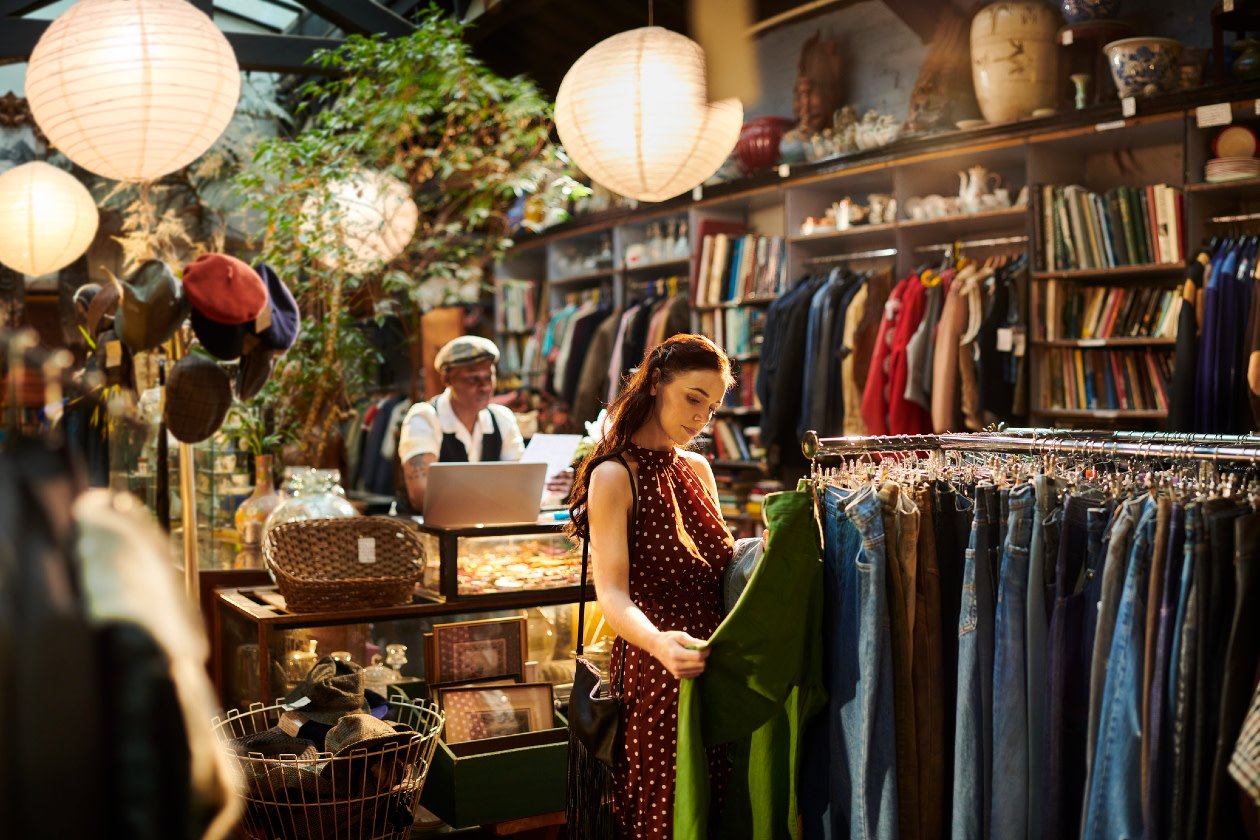
There’s a particular thrill in a charity-shop find — but also a particular fear: will this look like a costume, or just… old? The difference between secondhand that looks modern and secondhand that looks dated isn’t luck; it’s styling. If you want to style second hand clothes to look modern, these are the techniques that make pre-loved pieces look like deliberate fashion choices.
The mindset first: stop seeing secondhand as “old clothes” and start seeing it as “pieces with history”. The most stylish people in any city mix eras and sources — the charity-shop blazer with new jeans, the vintage dress with modern boots. Contrast is the whole aesthetic.
How to style second hand clothes to look modern: the principles
1. Mix eras, never match them
Head-to-toe vintage reads as costume. One vintage or secondhand statement piece + modern basics reads as style. A 1970s blouse with straight-leg jeans and clean trainers; a vintage blazer with a simple tee and modern trousers. The modern pieces anchor the look in the present.
2. Fit and tailoring first
Nothing dates an outfit faster than poor fit — and secondhand pieces often need tweaks. A £10 charity-shop blazer with £20 of tailoring looks like £200. Take in waists, hem trousers, shorten sleeves. Our cheap-clothes-look-expensive guide is essentially a secondhand styling manual.
3. Modernise with shoes and accessories
Shoes date an outfit fastest. Pair vintage or secondhand clothes with current footwear — clean white trainers, modern boots, contemporary loafers — and the whole look updates instantly. Same with bags and jewellery: modern accessories drag any era into now. (See our handbag guide and watch guide for the anchor pieces.)
4. Grooming does heavy lifting
Modern hair, neat styling and contemporary grooming keep secondhand outfits from reading “thrifted by accident”. The contrast between a vintage piece and polished presentation is exactly what makes it look intentional.
5. Edit ruthlessly when buying
Not every secondhand find deserves a place. Ask: would I buy this if it were new? Does it fit my current wardrobe’s palette? Can I name three outfits with it? If not, leave it — the £5 “bargain” you never wear is the most expensive kind. Our London charity shop guide covers where to hunt.
Secondhand styling formulas
- Vintage blazer + white tee + straight jeans + loafers. The uniform of everyone who looks effortlessly cool.
- Secondhand silk shirt + modern tailored trousers + heels. Work-appropriate, interesting, sustainable.
- Vintage dress + modern boots + leather jacket. Era-mixing at its best.
- Charity-shop knit + new dark jeans + clean trainers. Nobody can tell, nobody needs to.
- Designer secondhand bag + high-street outfit. The one-piece upgrade that lifts everything — the core of budget style.
Refreshing secondhand finds
Wash everything on arrival (hot wash if fabric allows), de-pill knits, replace missing buttons, steam thoroughly, and air vintage pieces (a vodka-water spray neutralises musty smells). A refreshed garment looks and feels new — which is half the styling battle. This is also the most sustainable way to update your wardrobe without fast fashion.
Vinted UK is the easiest place to start secondhand shopping online — their UK marketplace has millions of pre-loved pieces with buyer protection built in.
The modernisation toolkit: 7 tweaks that update anything
Secondhand clothes often need small interventions to shed their previous decade. These seven tweaks modernise almost anything.
- Half-tuck or full tuck. The fastest moderniser in existence. A shirt left hanging reads 2010; the same shirt half-tucked into jeans reads now. Works on shirts, jumpers (the “French tuck”), even blazers worn open over a tucked top.
- Sleeve push. Pushing sleeves to just below the elbow — on shirts, blazers, jumpers — instantly relaxes a garment and shows the wrist (visually slimming). A £0 alteration with outsized effect.
- Knot, tie or belt. An oversized secondhand shirt knotted at the waist, a blazer belted, a dress with the waist defined — adding shape where the original was shapeless drags it into the current decade.
- Modern shoes. The shoes date an outfit more than the clothes. A 90s slip dress with strappy heels reads costume; the same dress with chunky loafers or minimal trainers reads 2020s. When a secondhand outfit feels “off”, change the shoes first.
- Steam and de-pill. Secondhand clothes arrive creased and often pilled — both read as “old” rather than “vintage”. A steamer (£25) and fabric shaver (£8) are the vintage shopper’s essential kit; 10 minutes of care makes a £6 find look intentional.
- Remove or replace dated details. Shoulder pads (snip them out — most are just tacked in), fussy bows, dated buttons. A seam ripper (£3) and 10 minutes liberate many a good garment from its era.
- Tailor the one thing. The single alteration that updates most secondhand finds: hemming to a current length, or taking in for a closer fit. £10–£15 spent on the right alteration beats £50 spent on more secondhand clothes.
The eras that work hardest secondhand
Not all vintage is equal. 90s minimalism (slip dresses, straight-leg jeans, simple blazers) slots straight into current wardrobes — the 90s revival means these read as fashion, not costume. 70s tailoring (wide-leg trousers, trench coats, knitwear) is perennially wearable. 80s power pieces (strong-shoulder blazers, bold prints) work as statement items mixed with modern basics. What’s hardest: 2000s fast fashion (low-rise, bedazzled, thin fabrics — it was cheap new and hasn’t improved), and 80s occasionwear in full (one piece at a time, never the whole outfit). The rule: take the silhouette or the fabric from the past, style it with the present. Head-to-toe vintage from any single era reads as costume; one vintage piece in a modern outfit reads as style.
Secondhand style: quick answers
How do I avoid looking dated in vintage? One vintage piece per outfit, styled with modern basics. Head-to-toe vintage from a single era reads as costume; one 90s blazer with current jeans reads as style. The modern pieces do the dating work.
What’s worth paying to alter? Hemming (£8–£15) and waist suppression (£12–£20) — the two alterations that transform secondhand fit. Skip shoulder alterations (expensive, rarely perfect). If it needs more than £25 of work, it wasn’t a bargain.
How do I wash vintage without ruining it? Cold, gentle, inside out — and when in doubt, hand wash. Vintage fabrics are often more delicate than modern equivalents. For anything valuable or fragile, the dry cleaner (£8–£12) is cheap insurance.
Where’s the best place to sell what doesn’t work? Vinted for easy volume (buyer pays postage, quick listings), Depop for trend-led pieces, eBay for valuable vintage. Photograph well, measure accurately, and price 10–15% above your minimum to allow for offers.
Your takeaway: contrast is the aesthetic
To style second hand clothes to look modern: mix one vintage piece with modern basics, tailor for fit, update with current shoes and accessories, keep grooming polished, and buy selectively. Secondhand isn’t a compromise — styled right, it’s the most interesting way to dress.