The average UK wedding now costs around £20,000–£25,000 (figures from Hitched’s annual wedding survey) — a figure that has roughly doubled in real terms in a generation, driven by an industry with a genius for converting love into line items. Faced with that, couples split into two camps: the DIY warriors (jam-jar centrepieces, Spotify playlist, uncle with a camera) and the hire-the-professionals brigade (planner, photographer, florist, band). The truth, as with most things, is that the smart answer is neither camp — it’s knowing which parts reward DIY and which punish it. This guide draws that line, with real numbers.
The Real Cost Breakdown: Where the Money Goes
Typical UK wedding spend (~£20,000): venue and catering 40–50%, photography 8–12%, flowers and décor 8–10%, music/entertainment 5–8%, attire 5–8%, cake 2–3%, stationery 2%, transport 2–3%, miscellaneous and the infamous “forgotten” costs (the rest). The DIY question applies differently to each line — some have huge DIY savings with low risk, others have catastrophic DIY failure modes.
DIY These: High Saving, Low Risk
- Stationery and signage (£300–£600 saved): Canva + a home printer (or Vistaprint) produces invitations, orders of service, table plans and signage indistinguishable from professional suites costing £400–£800. Risk: near zero. Time cost: a few evenings.
- Favours (£200–£400 saved): guests don’t want monogrammed trinkets — they want something consumable or nothing. Homemade fudge, seed packets, or a charity donation note. DIY cost: £1–£2/head vs £4–£6 professional.
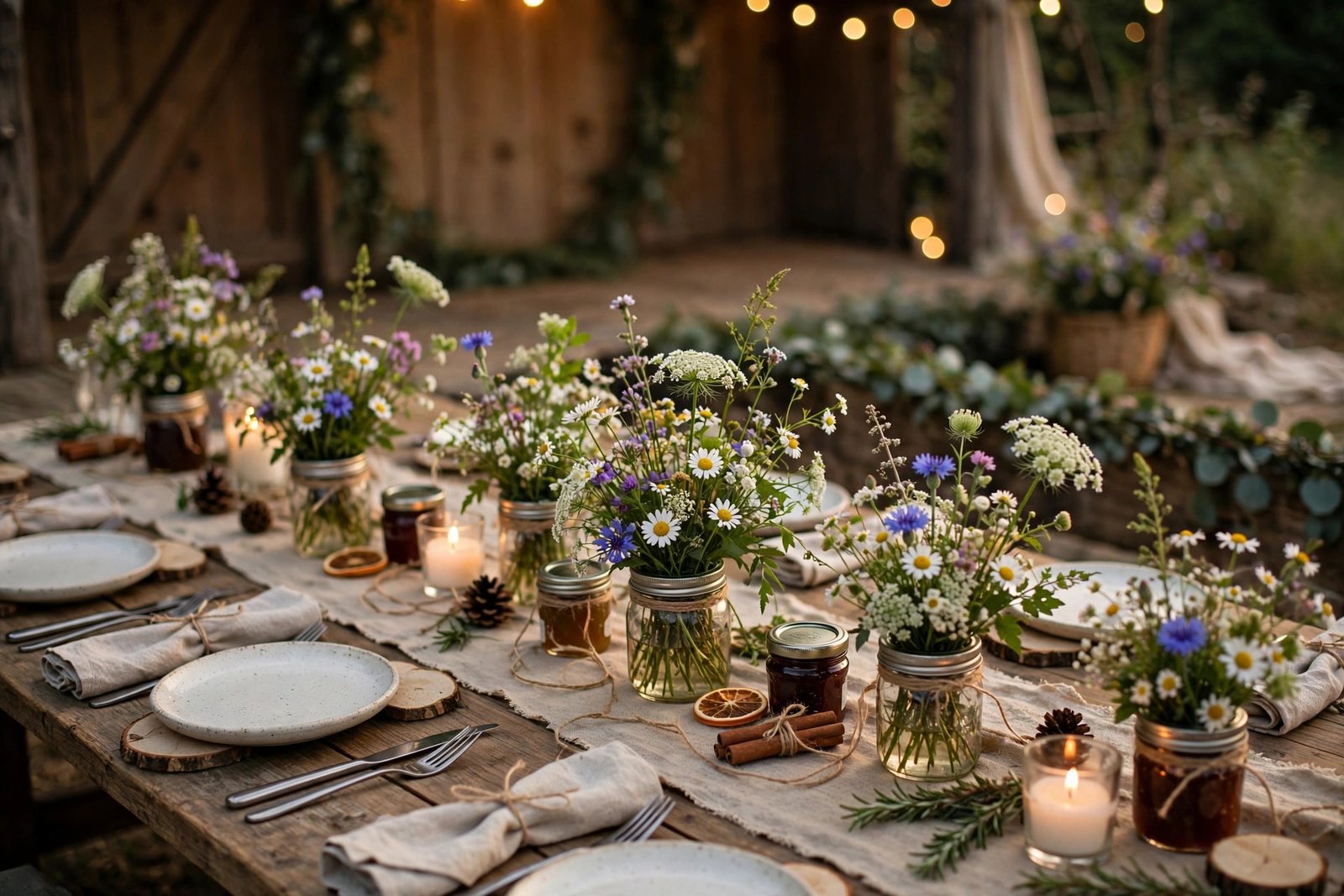
- Décor assembly (£500–£1,500 saved): buying wholesale flowers and arranging with friends, fairy lights, candles, table runners — the assembly is DIY-able even if the flowers are professional. The morning-of setup crew (recruit 4–6 friends, feed them breakfast) replaces a £500–£1,000 stylist fee.
- Playlist/DJ (£400–£800 saved): a curated Spotify playlist on a hired PA (£100–£200) works brilliantly for the drinks reception and dinner; many couples DIY the whole evening. Risk: reading the room (a DJ does this professionally) — mitigate with a “do not play” list and a designated MC friend.
- Cake (£200–£400 saved): a talented home baker in the family, or the M&S/Sainsbury’s column-cake hack (stacked luxury fruit cakes, £100–£150, decorated with fresh flowers — the wedding industry’s worst-kept secret).
Hire These: The Failure Modes Are Expensive
- Photography (£1,000–£2,500 — do not DIY): the single most regretted DIY decision in wedding surveys. Uncle Bob’s camera cannot replicate a professional’s low-light handling, unobtrusive presence and editing. The photos are the only thing that lasts; this is the last place to economise. Compromise smartly: full-day pro (£1,500) beats pro-plus-videographer (£3,000+) — the photos matter more than the film.
- Catering (£5,000–£10,000 — hire, but smart): self-catering a wedding breakfast for 80 is a catering operation, not a dinner party — food safety, timing, dietary requirements, sheer volume. The savings aren’t worth the stress or the risk. Save instead by choosing format: street-food vans, hog roast, afternoon tea or bowl food (£25–£45/head) vs formal three-course (£60–£100/head).
- Hair and makeup (£300–£600 — hire for the couple, DIY for the party): wedding-day nerves plus unfamiliar false eyelashes is a bad combination. Hire the artist for bride/groom; bridesmaids can DIY with a trial run.
- Coordination (the hidden one): someone must run the day — suppliers arriving, timeline, problems. A professional coordinator (£500–£1,000 for on-the-day) or a designated, non-bridal-party friend with a clipboard and authority. The couple cannot coordinate their own wedding; the wedding party shouldn’t have to.
The Hybrid Sweet Spots
Flowers: professional bouquets and buttonholes (the photographed bits — £200–£400) + DIY table arrangements from wholesale blooms (£150–£250 vs £800+ full florist). Venue: the village hall/dry-hire venue (£500–£2,000) + professional caterers is often half the price of the all-inclusive wedding venue — but price your time honestly (dry hire means you manage everything). Music: pro for the evening party (the dancing matters), DIY playlist for the rest. Videography: the most skippable professional line — a tripod + willing guest + good audio recorder captures 80% of the value for 10% of the cost, if video matters to you at all.
The Budget Math: Three Realistic Tiers
£5,000–£8,000 (DIY-heavy): registry office or village hall, street-food catering, Spotify, home-baker cake, DIY décor and stationery, pro photographer (the one splurge). Entirely achievable, genuinely lovely. £12,000–£18,000 (hybrid): the sweet spot — pro photographer, caterers, florist for key pieces, coordinator for the day, DIY for stationery, favours, décor assembly, playlist. £25,000+ (full professional): diminishing returns beyond this — the extra £10,000 buys polish guests barely notice. Whatever the tier, the MoneyHelper wedding budget planner keeps the numbers honest.
For the event-hosting skills that transfer directly, hosting a dinner party on a small budget is the wedding breakfast in miniature, and making Christmas special without overspending rehearses the festive-budget discipline.
The Traps: Where Wedding Budgets Die
The guest-list creep: every 10 extra guests costs ~£800–£1,200 (catering, drinks, favours, stationery) — the list is the budget. The “while we’re at it” upgrades: the £200 chair sashes, the £300 photo booth, the £150 cake topper — individually trivial, collectively thousands. DIY underestimation: price your time at something — 60 hours of DIY décor is a part-time job; if you’d rather be excited than exhausted, hire it. The debt trap: the average wedding loan/credit-card debt takes years to clear and starts a marriage with a monthly reminder of one day. Set the budget from savings, not borrowing — the best wedding advice in this entire guide.
Conclusion
DIY or hire a professional for a budget wedding? DIY the stationery, favours, décor assembly, playlist and cake (saving £1,500–£3,500 at low risk); hire the photographer, caterers, hair/makeup and day-of coordination (the failure modes are expensive and the stress is real); hybrid the flowers, venue, music and video. Set the budget from savings — never debt — guard the guest list like a hawk, and remember what the money is actually for: a day you’ll remember fondly, not a performance you’ll be paying off. The jam jars are fine. The photographer is non-negotiable.
Frequently Asked Questions
What is a realistic wedding budget in the UK?
£12,000–£18,000 buys a full, lovely wedding with smart hybrid choices. £5,000–£8,000 is achievable DIY-heavy. The £20,000–£25,000 “average” reflects heavy professional use — it’s a data point, not a requirement. Set your budget from what you can save, not from averages.
Where can I cut wedding costs without guests noticing?
Flowers beyond the bouquets (guests don’t remember centrepieces), the cake (served sliced, nobody sees the structure), stationery (digital invites are now normal), favours (consumable or none), and the bar structure (wine/beer/signature cocktail beats full open bar at triple the cost).
Is a wedding planner worth it on a budget?
A full planner (£2,000–£4,000) rarely pays on a tight budget — but on-the-day coordination (£400–£800) is the best-value professional spend in weddings. It buys the couple the ability to actually enjoy the day instead of managing it. If that’s out of reach, designate one organised non-bridal-party friend with full authority.
Should we take on debt for the wedding?
No — full stop. Wedding debt is uniquely miserable: high-interest, long-tail, attached to a single day’s memories. Scale the wedding to the savings. Every wedding survey finds couples wish they’d spent less; none wish they’d borrowed more. The marriage matters more than the day.
How far in advance should we book suppliers?
12–18 months for peak-season Saturdays (venues, photographers); 6–12 months for everything else. But the budget secret: off-peak (November–March, Fridays, Sundays) cuts venue and supplier prices 20–40% — the single biggest discount lever available. A November Friday wedding with the same suppliers costs dramatically less.