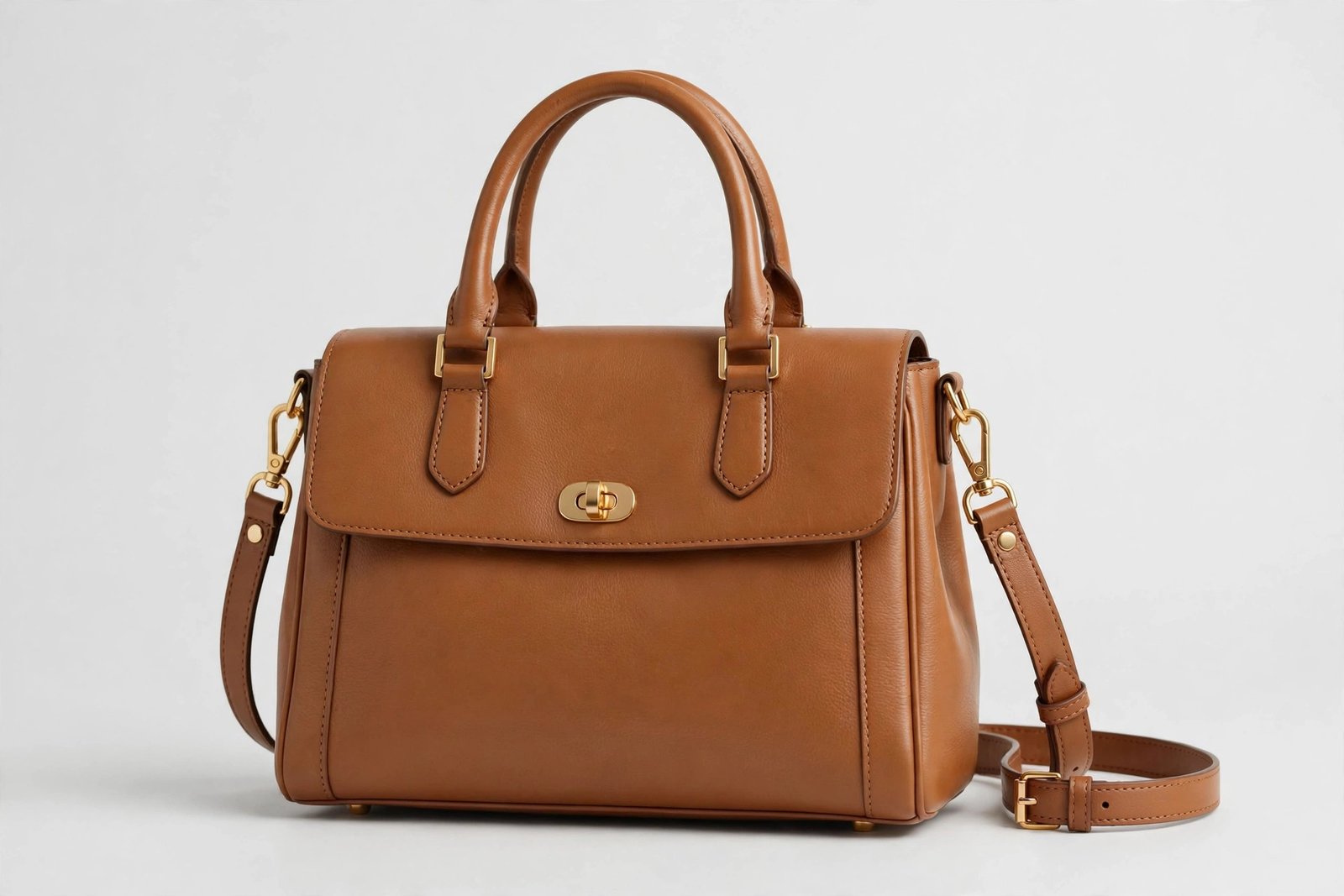
The average woman uses one handbag daily for years — which makes choosing wrong an expensive, annoying mistake you repeat every morning. The dream is the handbag that goes with everything: one bag that works for work, weekends, evenings and travel without looking out of place anywhere. It exists, but only if you choose by rules rather than impulse. Here’s how.
The everything-bag isn’t about finding a magical unicorn — it’s about understanding which features create versatility and which destroy it. Get the fundamentals right and one bag genuinely covers 90% of life.
How to pick a handbag that goes with everything: the rules
1. Colour: the versatility hierarchy
- Black: goes with everything, always appropriate, but can look harsh with light summer outfits.
- Tan/cognac: the true everything colour — works with black, navy, brown, white, denim, prints. Warm, rich, and ages beautifully.
- Navy: the sophisticated alternative to black; pairs with everything except black (the navy-black clash is real).
- Grey/taupe: the quiet achiever — neutral without black’s severity.
- Avoid for your main bag: white (stains), bright colours, heavy hardware in odd finishes, obvious logos — all limit pairings.
2. Size: the Goldilocks zone
Medium — roughly 25–35cm wide. Big enough for phone, wallet, keys, sunglasses, small water bottle and makeup pouch; small enough not to look like luggage. Oversized totes swallow you and look unprofessional; tiny bags can’t carry daily essentials. If you carry a laptop, that’s a separate tote — don’t ask one bag to do both jobs.
3. Shape: structured beats slouchy
A structured bag (holds its shape empty) looks polished in every context — work, dinner, weekend. Slouchy hobos are comfortable but read casual; they can’t dress up. For the everything-bag, structure wins. Rounded or softly rectangular shapes are the most versatile silhouettes.
4. Straps: versatility hardware
Look for both a top handle and a detachable crossbody strap. Top-handle for work and evenings, crossbody for weekends, travel and commuting. Adjustable straps matter — the same bag worn at different drops looks like different bags. Convertible designs (tote-to-crossbody) are the everything-bag cheat code.
5. Material: leather (or excellent faux)
Real leather (£80–£300 for good high-street) ages beautifully and suits every context. Good faux leather (£30–£80) has improved enormously — look for soft hand-feel and matte finish, avoid shiny plastic-look. Canvas is great for casual but can’t dress up; suede is beautiful but high-maintenance in British weather.
Where to buy in the UK (by budget)
- Under £50: M&S, H&M Premium, Monki — surprisingly good structured bags; check stitching and hardware weight.
- £50–£150: the sweet spot — Radley, Fiorelli, Osprey London, Dune. Proper leather, excellent construction, years of daily use.
- £150–£400: Coach, Polène, Strathberry (the Scottish brand behind that structured look), Aspinal seconds sales. Investment pieces with serious longevity.
- Secondhand: Vestiaire Collective and Vinted for designer bags at 50–70% off — authenticate carefully.
Whatever you spend, the principles from our cheap-clothes-look-expensive guide apply — clean lines and good hardware read expensive at any price. And a good bag lifts everything, which is the whole philosophy behind looking stylish on a budget.
Care: make it last
Stuff with tissue when stored, keep in the dust bag, condition leather twice a year, wipe hardware, and rotate occasionally — even the everything-bag deserves rest days. A £100 bag maintained for 8 years costs £12.50 a year.
What to look for in the shop: the 60-second test
Handbag shopping goes wrong when it’s emotional. Run this 60-second checklist in the shop (or on arrival, for online orders) before committing.
- The weight test. Hold it with your typical contents mentally added — structured leather bags often weigh 1kg+ empty. If it feels heavy now, it’ll be agony by 6pm. The best everyday bags disappear on your shoulder.
- The zip test. Open and close every zip and clasp three times. Cheap hardware sticks, snags or feels gritty — and it’s the first thing to fail. YKK zips are the industry standard; their absence isn’t a dealbreaker, but gritty zips are.
- The lining check. Turn it inside out (or peer in with your phone torch). Loose threads, glued rather than stitched seams, or a lining that pulls away from the shell all signal short lifespan. A good bag is finished inside, not just outside.
- The strap drop. Put it on your shoulder and check the drop length — can you get it on and off with a coat on? Crossbody long enough to sit at the hip? Straps that are slightly too short are the most common fit complaint and can’t be fixed.
- The contents test. Mentally (or actually) load it: phone, wallet, keys, water bottle, plus your daily extras. Does it all fit without bulging? Is there a pocket for the phone you can reach one-handed? A beautiful bag that doesn’t hold your life is a sculpture, not an accessory.
- The outfit scan. Picture it with your three most-worn outfits — the work clothes, the weekend clothes, the evening clothes. If it clashes with two of three, it’s not the “goes with everything” bag, whatever the label says.
Online buying adds one more check: read the 3-star reviews, not the 5-star ones. Five-star reviews say “love it!”; three-star reviews say “lovely but the strap is short and it doesn’t fit a water bottle” — the actual information. And check the returns policy before ordering; a bag you can’t return is a bag you can’t properly evaluate.
Handbags: quick answers
How many bags does one person need? Three covers everything: an everyday workhorse, a small evening/clutch, and a tote or travel bag. Everything beyond three is collection, not need — which is fine, but know which you’re doing.
Is it worth buying designer secondhand? For the cost-per-wear maths, often yes — a £300 pre-loved designer bag that lasts a decade beats three £100 high-street bags that don’t. Authenticate carefully (or buy from reputable resellers), and buy classic styles that hold value.
How do I stop a bag smelling musty? Bicarbonate of soda in a sock, left inside overnight. Then store stuffed (tissue or a small pillow) in its dust bag, never in plastic. Leather needs air; plastic traps moisture.
Crossbody or shoulder bag for everyday? Crossbody for commuting and travel (secure, hands-free, weight distributed); shoulder for work and polish. The everyday winner for most lifestyles is a medium crossbody with an adjustable strap — it does both jobs.
Your takeaway: tan, medium, structured, convertible
To pick a handbag that goes with everything: choose tan, black or navy in a medium structured shape with both top-handle and crossbody options, in leather or quality faux. Buy the best construction your budget allows, maintain it, and enjoy the only bag decision you need to make for years. For the finishing touches, our affordable jewellery brands and affordable watches guides complete the accessories picture.