


How to Grill the Perfect Burger Medium Rare

There is something special about a burger fresh off the grill. The outside develops a deliciously browned crust, while the inside stays tender and juicy. But getting that balance right takes more than simply placing a patty over hot coals.
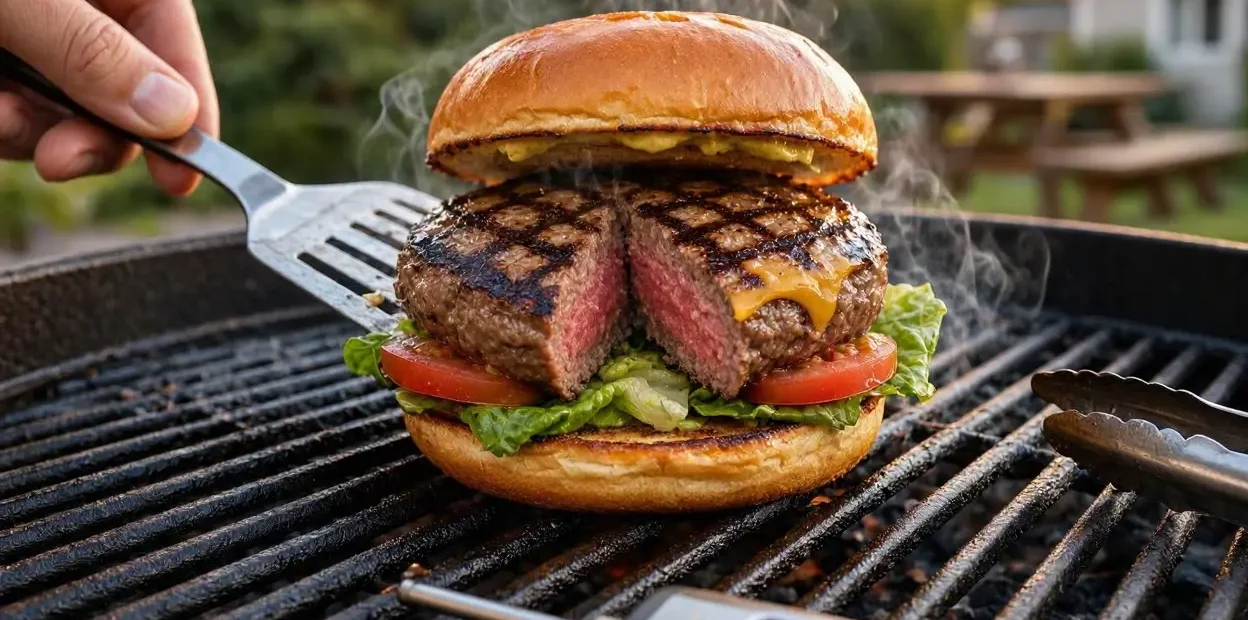
If you want to learn how to grill the perfect burger medium rare, the key is to start with good ground beef, shape the patties gently, use strong direct heat, and avoid constantly moving or pressing the burgers.
One important food-safety note comes first: many grilling guides describe medium-rare burgers as having a pink center at around 130–135°F. However, the USDA recommends cooking ground beef burgers to 160°F measured with a food thermometer. Unlike steaks, burgers are made from ground meat, so bacteria that may have been on the surface can become distributed throughout the patty.
With that in mind, here is a simple method for making flavorful, juicy grilled burgers.
What You Need
For four burgers, you will need:
- 1½ pounds 80/20 ground beef
- Kosher salt
- Freshly ground black pepper
- A little neutral cooking oil
- 4 hamburger buns
- Cheese, optional
- Lettuce, tomato, onion, pickles, or other toppings
- Your favorite burger sauce
- An instant-read meat thermometer
An 80/20 ground beef blend is commonly recommended for burgers because the higher fat content helps produce a juicy, flavorful patty.
1. Choose the Right Ground Beef
For a classic grilled hamburger, ground chuck is a great starting point. Look for beef with enough fat to keep the patty moist while it cooks.
Avoid choosing extremely lean ground beef if your main goal is a juicy burger. Very lean meat can become dry more quickly on a hot grill.
Keep the ground beef refrigerated until you are ready to shape the patties. Keeping the meat cold also helps the fat stay firm during preparation.
2. Shape the Burger Patties Gently
Divide the meat into four equal portions.
Lightly shape each portion into a patty about ¾ to 1 inch thick. Don’t squeeze or knead the meat more than necessary. Overworking ground beef can give the burger a dense texture.
Make a small indentation in the center of each patty with your thumb. This simple step helps compensate for the tendency of the meat to puff up as it cooks, helping the finished burger stay flatter.
3. Season Just Before Grilling
Keep the seasoning simple.
Sprinkle both sides of each patty with salt and freshly ground black pepper immediately before the burgers go onto the grill.
You can add garlic powder, smoked paprika, onion powder, Worcestershire sauce, or another seasoning blend if you want more flavor. However, you don’t need a long list of ingredients to make a great burger.
The beef, grill, and toppings should all have a chance to shine.
4. Preheat the Grill
A hot grill is essential for getting a flavorful crust.
For gas or charcoal grilling, use direct medium-high to high heat. Some grilling guides recommend a grill around 450–500°F for burgers, although the exact temperature can vary depending on your grill and setup.
Before adding the patties:
- Clean the grill grates.
- Lightly oil the grates if needed.
- Make sure the grill is properly preheated.
- Have your spatula and thermometer ready.
If you’re using charcoal, let the coals become hot and develop an ash-covered surface before cooking.
5. Put the Burgers on the Grill
Place the patties directly over the hot part of the grill.
Once they are down, resist the temptation to move them around. Let the surface develop a crust.
Most importantly, don’t press down on the burgers with your spatula. Pressing the patties can force flavorful juices and fat out onto the flames and may also cause flare-ups.
6. Flip the Burgers Once
When the first side has developed good grill marks and releases from the grate, flip the burger.
For a typical ¾-inch patty, several recipe guides give approximately 3–4 minutes per side as a starting point, but actual cooking time depends on patty thickness, grill temperature, and the grill itself.
Don’t rely on time alone. A thermometer is much more dependable.
7. Check the Internal Temperature
This is the most important part.
A pink center doesn’t automatically tell you whether a ground beef burger is safe. USDA guidance says ground beef should reach 160°F throughout, measured with a food thermometer.
For thin patties, insert the thermometer horizontally through the side so the probe reaches the center. This gives you a more accurate reading without losing too much juice.
Burger Temperature Guide
| Doneness | Common Culinary Range* |
|---|---|
| Rare | About 120–125°F |
| Medium-rare | About 130–135°F |
| Medium | About 140–145°F |
| Well done | 160°F+ |
*These are culinary doneness ranges found in burger-grilling guides, not USDA safety recommendations for ground beef. USDA recommends 160°F for hamburgers.
If food safety is your priority, cook the burger to the USDA-recommended 160°F rather than stopping at medium-rare temperatures.
8. Add Cheese at the End
If you’re making a cheeseburger, place the cheese on top during the final minute or so of cooking.
Close the grill lid briefly to help the cheese melt.
Cheddar, American, Swiss, Monterey Jack, and Pepper Jack all work well with grilled burgers.
9. Toast the Buns
Don’t overlook the bun.
Place the cut sides of your hamburger buns on the grill for about 10–15 seconds, watching them closely. This gives them a lightly toasted surface without making them hard.
A toasted bun also helps the burger hold up better against sauces and juicy toppings.
10. Build Your Perfect Burger
Now comes the fun part.
Start with the bottom bun and add your burger patty. Then layer on your favorite toppings.
Try combinations such as:
Classic:
Lettuce + tomato + onion + pickles + ketchup
Cheeseburger:
Cheddar + pickles + onion + burger sauce
BBQ:
Cheddar + crispy onions + barbecue sauce
Fresh & Tangy:
Lettuce + tomato + pickled onions + mustard
You can also experiment with caramelized onions, jalapeños, bacon, mushrooms, avocado, or a homemade burger sauce.
Common Burger-Grilling Mistakes
Pressing the patties
This pushes juices and fat out of the burger and can lead to flare-ups.
Flipping constantly
A burger doesn’t need to be flipped over and over. Give each side enough time to develop a good crust.
Making the patties too thick
Very thick burgers take longer to cook and can make temperature control more difficult.
Guessing doneness by color
Ground beef can brown before reaching a safe temperature. USDA specifically notes that color isn’t a reliable indicator of safety.
Using the same plate for raw and cooked meat
Always transfer cooked burgers to a clean plate to reduce the risk of cross-contamination.
Gas Grill vs. Charcoal Grill
Both can produce excellent burgers.
A gas grill makes it easy to control heat and is convenient for quick weeknight cooking.
A charcoal grill adds a deeper smoky character and can create an excellent seared crust when the coals are properly heated.
Whichever grill you use, the fundamentals remain the same: hot direct heat, gently formed patties, minimal handling, and thermometer-based temperature checking.
How Long Should You Grill Burgers?
For a typical ¾-inch burger, around 3–4 minutes per side is a useful starting point, but don’t treat that as an exact rule. Grill temperature, patty size, thickness, and starting temperature all affect cooking time.
The thermometer should ultimately guide you rather than the clock.
Final Tips for Juicy Grilled Burgers
For better results every time:
- Choose flavorful ground beef with enough fat.
- Keep the meat cold before grilling.
- Don’t overwork the patties.
- Make a small indentation in the center.
- Preheat the grill properly.
- Season just before grilling.
- Don’t press the burgers.
- Flip them only when needed.
- Toast the buns briefly.
- Use an instant-read thermometer.
- Keep raw and cooked foods separate.
- Cook ground beef to 160°F for food safety.
The Bottom Line
Learning how to grill the perfect burger medium rare is mostly about controlling heat and handling the meat gently. A good 80/20 beef blend, properly shaped patty, hot grill, simple seasoning, and minimal flipping can give you a beautifully browned burger with plenty of flavor.
If you’re specifically aiming for the classic medium-rare texture, understand that the commonly cited 130–135°F range is below the USDA’s recommended safe temperature for ground beef. For the safest approach, use a thermometer and cook your hamburger to 160°F throughout.