



How to Clean a Shower Head with Vinegar (Step-by-Step, No Damage)

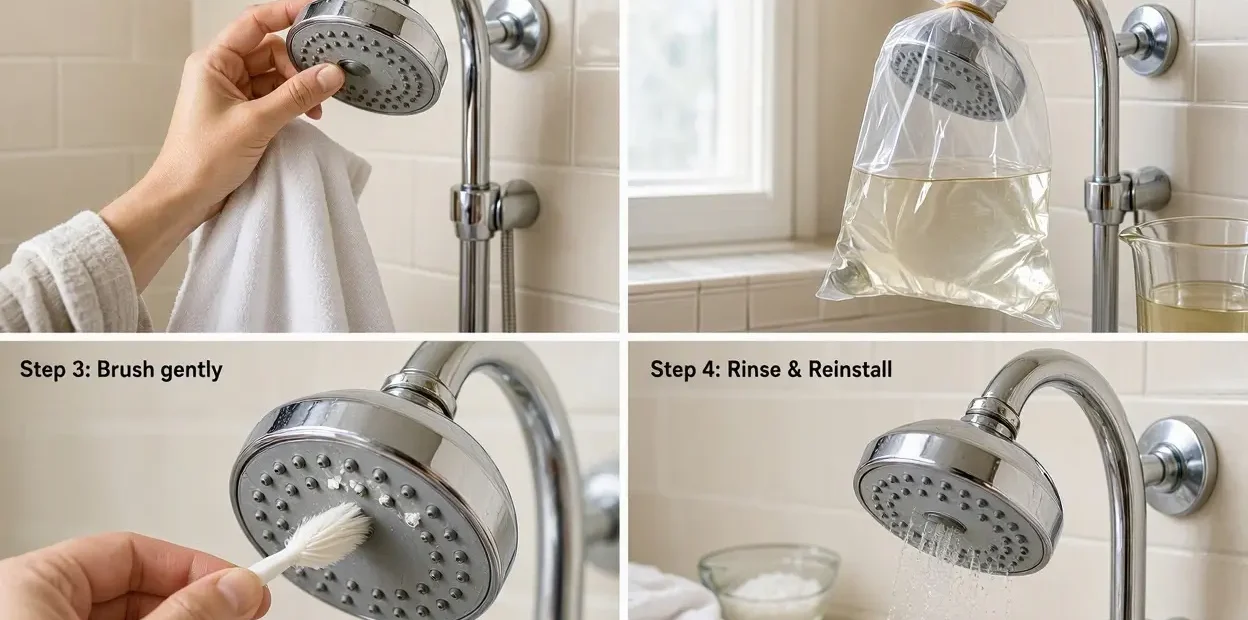
To clean a shower head with vinegar, soak it in white distilled vinegar (or a 50/50 mix with water) for 30 to 60 minutes, scrub the nozzles with a soft brush, rinse well and run the shower for a minute to flush it. If you cannot remove the head, fill a plastic bag with vinegar and tie it over the fixture so the spray face is fully submerged.
Vinegar works because its acidity dissolves the limescale and mineral deposits that clog the nozzles and weaken your water pressure.
The Quick Answer
| Shower head type | Method | Soak time |
|---|---|---|
| Removable or handheld | Soak in a bowl of vinegar | 30 to 60 min |
| Fixed, can’t remove | Vinegar in a bag tied over it | 30 to 60 min (up to several hours for stainless steel) |
| Brass or brushed nickel | Diluted vinegar, short soak | 15 to 30 min maximum |
| Badly clogged | Vinegar soak, then scrub with a toothbrush or pin | 1 hour, repeat if needed |
What You Need
- White distilled vinegar (about 1 to 3 cups depending on size)
- A bowl or bucket, or a plastic bag big enough for your shower head
- A rubber band or string (for the bag method)
- An old toothbrush or soft brush
- A pin, toothpick or paperclip for blocked nozzles
- A soft cloth or microfibre towel
- Optional: an adjustable wrench and plumber’s tape if you remove the head
Which vinegar? Use white distilled vinegar. Malt vinegar is not very effective for descaling and brown vinegar may stain.
Method 1: Soak a Removable or Handheld Shower Head
This gives the most thorough clean.
- Unscrew the shower head. Turn it anticlockwise by hand. If it is stuck, wrap a cloth around the connector so you don’t scratch it, then loosen it gently with a wrench.
- Remove the filter screen if there is one inside the connector, using needle-nose pliers. Rinse it under water.
- Place the shower head in a bowl and pour in enough vinegar to cover the spray face. For a gentler clean, use a 50/50 mix of vinegar and water.
- Soak for 30 to 60 minutes. You may see fizzing or bubbles.
- Scrub the nozzles with a soft toothbrush to loosen softened limescale. Use a pin or toothpick to clear any holes that are still blocked.
- Rinse thoroughly with clean water.
- Reattach the head. If you removed it, wrap plumber’s tape around the shower arm threads first (2 to 3 turns, clockwise).
- Run hot water for 1 to 2 minutes to flush out any loosened deposits and remaining vinegar.
Method 2: Clean a Shower Head Without Removing It
Use this for fixed shower heads you can’t easily take off.
- Fill a plastic bag (a sturdy freezer or food storage bag) about halfway with white vinegar.
- Lift the bag over the shower head so the spray face is completely submerged.
- Secure it with a rubber band, string or a twist tie around the shower arm. Check it is tight, so the vinegar can’t spill.
- Soak for 30 to 60 minutes for regular cleaning. Stainless steel heads with heavy buildup can be left for several hours, but never do this with brass or brushed nickel.
- Remove the bag carefully and pour the vinegar down the drain.
- Scrub the nozzles with a toothbrush and wipe the head with a damp cloth.
- Run hot water for 1 to 2 minutes to flush the nozzles.
Method 3: Clean the Inside of the Shower Head
Buildup often collects inside, where scrubbing can’t reach. If your shower head looks clean but the spray is weak or uneven:
- Unscrew the head and hold it upright.
- Pour in a little vinegar and a small squirt of dish soap. The soap loosens residue and the vinegar dissolves minerals.
- Swirl gently and leave for 20 to 30 minutes.
- Reattach and run hot water through it for a few minutes.
Is Vinegar Safe for Every Shower Head?
Not always. Vinegar is acidic, and it can dull some finishes if left too long.
| Finish or material | Vinegar safe? | Advice |
|---|---|---|
| Chrome | Generally yes | 30 to 60 minutes, rinse well |
| Stainless steel | Yes | Can soak longer, rinse and buff |
| Plastic | Yes | 30 to 60 minutes |
| Brass (polished or lacquered) | Risky | 15 to 30 minutes, diluted, check the manual |
| Brushed nickel, oil-rubbed bronze, matte black, gold | Risky | Avoid long soaks, diluted only, test a hidden spot |
| Natural stone fittings nearby | No | Vinegar can etch stone, keep it away |
Manufacturers differ, with some saying vinegar is fine for their finishes and others warning against it. Check your shower head’s manual first, and if in doubt, use a 50/50 mix and a short soak, then rinse well and buff dry.
How Long Should You Soak a Shower Head in Vinegar?
| Buildup level | Soak time |
|---|---|
| Light, regular maintenance | 20 to 30 minutes |
| Moderate limescale | 30 to 60 minutes |
| Heavy limescale (stainless steel or plastic only) | 1 to 2 hours, or longer with a bag on stainless steel |
| Brass or delicate finishes | 15 to 30 minutes maximum |
Longer is not always better. Extended soaking adds little on light buildup and can damage sensitive finishes.
How to Unclog Shower Head Nozzles
After soaking, some nozzles may still be blocked.
- Rub silicone nozzles with your thumb. Rubber spray jets often pop free with gentle pressure.
- Use a toothbrush in circular motions across the spray face.
- Poke blocked holes with a pin, toothpick or paperclip. Go gently so you don’t scratch or widen the holes.
- Repeat the soak if heavy deposits remain.
Should You Add Baking Soda?
You will see guides that mix vinegar and baking soda. They fizz when combined, but the two neutralise each other, which makes the mix less effective at dissolving limescale. A better approach:
- Soak in vinegar first.
- Make a paste with baking soda and a little water and use it as a gentle scrub on the exterior.
- Rinse well.
Never mix vinegar with bleach. It produces toxic chlorine gas. If you use any other cleaner, rinse the shower head thoroughly before using vinegar.
Does Vinegar Kill Mould and Bacteria?
Vinegar can help reduce some germs and loosen light mould, but it is not a full disinfectant. Shower heads can harbour bacteria, including Legionella, in the film that builds up inside, and health departments recommend routine cleaning to reduce this.
- For visible black or pink growth, soak, scrub thoroughly, and rinse well. Consider a disinfectant suitable for your fixture if mould keeps coming back.
- If you are immunocompromised, elderly or have respiratory conditions, or if you have concerns about Legionella, check health department guidance or ask a plumber.
- Flush the shower for a couple of minutes after you have been away for a while, and stand out of the spray while it runs.
How Often Should You Clean a Shower Head?
| Situation | How often |
|---|---|
| Hard water area | Every 4 to 6 weeks |
| Soft water | Every 2 to 3 months |
| Standard home | About once a month for a light clean |
| Weak or uneven spray | Right away |
| Unused for a long time | Before using it again |
Regular cleaning is much easier than tackling thick limescale that has built up for months.
How to Prevent Limescale in Your Shower Head
- Wipe the spray face with a damp cloth after showers, or weekly.
- Run a quick vinegar clean before buildup gets heavy.
- Use a water softener or a filter shower head if you live in a hard-water area.
- Choose silicone nozzles, which are easier to wipe clean.
- Dry the head after use when you can, since limescale forms as water evaporates.
- Replace the shower head if it is old, corroded or never recovers after cleaning.
Troubleshooting
The water pressure is still weak after cleaning.
The filter screen may be clogged, the nozzles may still be blocked, or the problem may be elsewhere, such as the shower valve or the water supply. Soak again, clean the filter screen, and if it doesn’t improve, ask a plumber.
The spray goes in different directions.
Some nozzles are still blocked. Soak again and poke each one gently.
The finish looks dull or spotted.
Vinegar may have been left on too long. Rinse well, buff with a dry cloth, and use a shorter soak next time.
It still smells.
Soak longer, clean the inside and the filter screen, and check for mould around the connector.
It leaks after reattaching.
Add fresh plumber’s tape to the threads and tighten the head by hand, then a little more with a cloth-wrapped wrench. Do not overtighten.
Common Mistakes to Avoid
- Using malt or brown vinegar
- Leaving brass or brushed nickel in vinegar for hours
- Mixing vinegar with bleach
- Scrubbing with steel wool or harsh abrasives, which scratch the finish
- Forgetting to rinse, which leaves a sour smell
- Skipping the filter screen
- Waiting until the head is badly clogged
Conclusion
To clean a shower head with vinegar, soak it in white distilled vinegar for 30 to 60 minutes, either in a bowl or in a plastic bag tied over the fixture. Scrub the nozzles, rinse well and run the shower for a minute or two. Keep soaks short for brass and brushed finishes, and aim to clean about once a month, more often in hard-water areas. It is a cheap, simple routine that restores water flow and keeps your shower head cleaner and longer-lasting.
FAQs
How do you clean a shower head with vinegar?
Soak it in white distilled vinegar for 30 to 60 minutes, scrub the nozzles with a soft brush, rinse and run the shower to flush it.
Can you clean a shower head without removing it?
Yes. Fill a plastic bag with vinegar, tie it over the shower head so the spray face is submerged, and leave it for 30 to 60 minutes.
How long should I soak my shower head in vinegar?
Usually 30 to 60 minutes. Heavy buildup on stainless steel can take longer, but brass and delicate finishes should be limited to 15 to 30 minutes.
Should I use undiluted vinegar or a 50/50 mix?
Either works. A 50/50 mix is gentler and good for delicate finishes, and undiluted is stronger for heavy limescale.
Can vinegar damage my shower head?
It can dull some finishes, such as brass, brushed nickel and oil-rubbed bronze, if left too long. Check the manual and keep the soak short.
What kind of vinegar should I use?
White distilled vinegar. Malt vinegar isn’t very effective and brown vinegar can stain.
How do I unclog shower head holes?
Soak in vinegar, then scrub with a toothbrush and gently poke the holes with a pin or toothpick.
How often should I clean my shower head?
About once a month, or every 4 to 6 weeks in hard-water areas.
Can I mix vinegar and baking soda to clean my shower head?
You can, but they cancel each other out. Use vinegar first, then a baking soda paste as a scrub if needed.
Does vinegar kill bacteria in a shower head?
It can reduce some germs but it is not a full disinfectant. Regular cleaning helps, and you should ask a health department or plumber if you have a specific concern such as Legionella.
Why is my shower pressure still low after cleaning?
The filter screen, valve or water supply may be the problem. Clean the filter, repeat the soak and call a plumber if it doesn’t improve.
Do I need to flush the shower head after cleaning?
Yes. Run hot water for 1 to 2 minutes to wash out loosened deposits and vinegar.