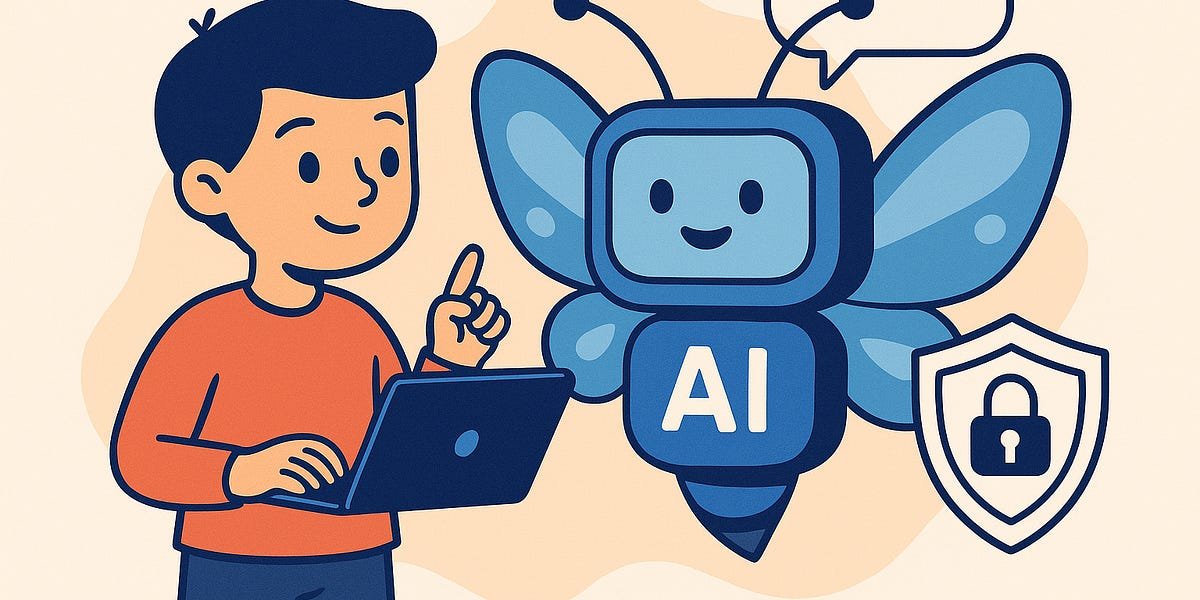
Knowing what should I teach my kids about using ai safely is the defining parenting challenge of this decade — as fundamental as teaching road safety was for our parents. Your children will use AI more than any generation before them: for homework, for fun, for friendship, for things we can’t yet imagine. They can’t opt out of this world, so the goal isn’t restriction — it’s competence. Here’s the curriculum I’d teach, organised by what actually matters.
The overarching principle: curiosity with critical thinking. You want kids who are excited by what AI can do and instinctively sceptical of what it claims. Those two traits together are the whole game.
What should I teach my kids about using AI safely?
1. What’s real and what isn’t (AI literacy foundations)
- AI can fake anything now: videos, photos, voices, messages. Show them examples (age-appropriate) so the concept is concrete, not abstract. Our guide to talking to kids about deepfakes covers this conversation in depth.
- “Pause and check”: the master habit — when something online triggers strong emotion, stop before believing or sharing. Verify with a trusted source or an adult.
- AI makes mistakes confidently: demonstrate it — ask a chatbot something you know the answer to and catch it being wrong. Kids who’ve seen AI err don’t trust it blindly.
- Not everything labelled “AI” is smart, and not everything smart is labelled: the recommendation feed, the game NPC, the homework helper — help them see AI’s ubiquity.
2. Privacy: what never goes into a chatbot
- The traffic-light rule: green (homework questions, fun creative stuff) — fine. Amber (their opinions, school details) — think first. Red (full name, address, school name, photos of themselves, family details, passwords) — never, ever into any AI tool or public prompt.
- Photos are permanent: anything uploaded can be stored, shared, or used for training. Our guide to stopping AI training on photos covers the technical side for the whole family.
- “Free” apps have a business model: age-appropriately, explain that free AI apps make money from data or upsells — healthy scepticism about why something is free.
3. Schoolwork: the honesty framework
- AI as tutor, not ghostwriter: explaining concepts, quizzing for tests, giving feedback on drafts = learning. Submitting AI-written work as your own = cheating, with real consequences. Our university cheating guide shows where this leads — schools are heading the same way.
- Know the school’s rules: help them find and understand their school’s AI policy. When in doubt, ask the teacher before using AI on an assignment.
- The skills argument: “If the AI does your thinking, your brain doesn’t grow. Exams, jobs, and life will test you, not your chatbot.”
4. People: AI relationships and social safety
- AI friends aren’t friends: companion chatbots feel caring but don’t care — they’re software. Real friends, family, and trusted adults are where actual support lives.
- Strangers + AI = new risks: voice cloning, fake profiles, manipulated images. The old “don’t talk to strangers online” rules apply with new urgency.
- Kindness still counts: using AI to bully, embarrass, or harass — including generating fake images of others — is bullying with serious school and legal consequences.
5. Make it ongoing, not one big talk
Like road safety, this isn’t one conversation — it’s a hundred small ones. Comment when you spot AI in the wild (“that advert’s voiceover is AI, I reckon”). Praise them when they question something. Play “real or AI?” games. Model the behaviour: let them see you verifying things and questioning claims. The Internet Matters site has excellent age-specific parent guides to supplement all of this.
When to talk to your GP (and what to ask)
Lifestyle change is powerful, but it’s not a solo project — your GP is your partner in it. See your GP if: your home readings are consistently above 140/90, you have other risk factors (diabetes, high cholesterol, smoking, family history of heart disease), or you’re already on medication and wondering whether lifestyle changes could reduce it. Bring your home readings log — two weeks of morning and evening readings is gold dust for clinical decisions.
Worth asking about: ambulatory monitoring (a 24-hour blood pressure cuff that gives the full picture, ruling out white-coat hypertension), medication review (some drugs raise blood pressure — decongestants, NSAIDs, some antidepressants — and alternatives may exist), and NHS Health Checks (free for 40–74 year olds in England, covering blood pressure, cholesterol, and diabetes risk). These are underused and genuinely useful.
And a note on medication attitudes: if your GP recommends medication alongside lifestyle changes, that’s not failure — it’s comprehensive care. The goal is healthy blood pressure by whatever combination works, not ideological purity about doing it “naturally”. Many people use medication to get numbers down quickly while building the lifestyle habits that may allow reduction later, under medical supervision. Never stop prescribed blood pressure medication without medical guidance — rebound hypertension is dangerous. The partnership model (your lifestyle efforts + your GP’s clinical oversight) outperforms either alone, every time.
One more resource worth knowing: your school’s role. UK schools have growing responsibilities around online safety, including AI-related risks — and most have designated safeguarding leads trained for exactly these issues. If your child encounters something serious (non-consensual imagery, threats, exploitation), the school is a key ally alongside the platforms and, where appropriate, the police. Don’t hesitate to escalate: schools would rather hear about ten false alarms than miss one real case. And ask what the school teaches about AI safety — reinforcing the same messages at home multiplies their impact. The parent-school partnership is one of the strongest protective factors children have.
Your practical takeaway
This month: have the foundational conversation (fakes exist, pause-and-check, traffic-light privacy), find your school’s AI policy together, and agree that they can always bring you anything confusing without fear. Then keep it alive in small moments. You’re not raising kids who fear AI or worship it — you’re raising kids who use it skilfully, question it reflexively, and know that the smartest thing in any room is still a thoughtful human. Preferably one who looks both ways before crossing the information superhighway.