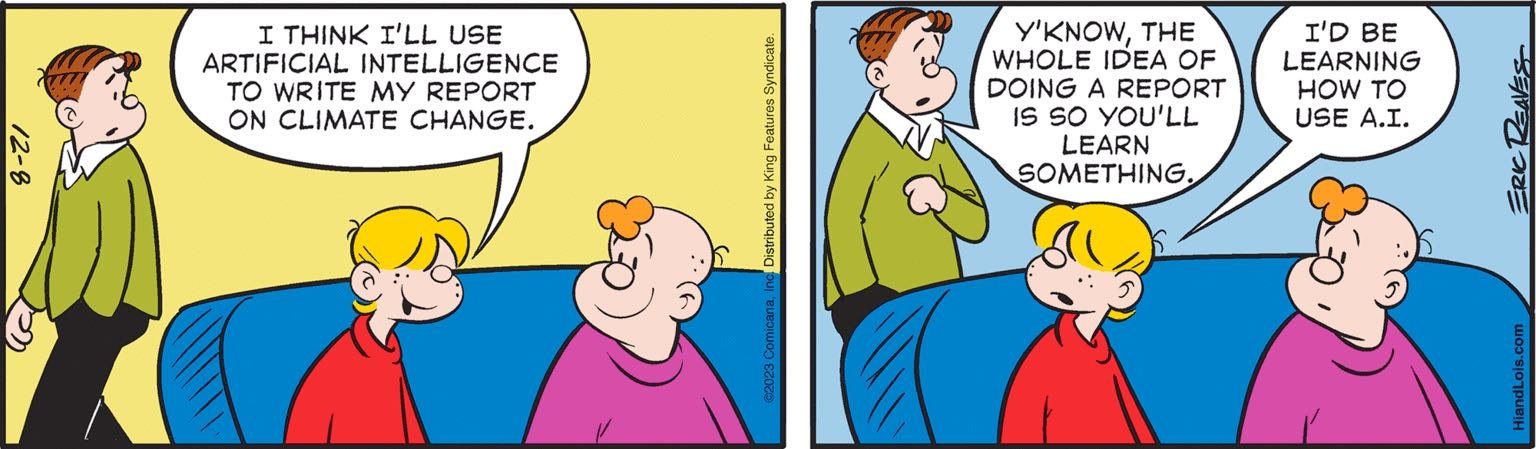
Asking is it cheating to use ai for university assignments deserves a straight answer, because the internet is full of confident nonsense on both sides — “it’s just a tool like a calculator” versus “any AI use is academic fraud”. Neither is right. The real answer depends on what you’re using it for, what your university’s policy says, and — most importantly — whether the AI is doing the thinking your degree is supposed to develop. Let me give you the nuanced truth.
First, the practical reality: most UK universities now have explicit AI policies, and they’re more sophisticated than students expect. The question isn’t really “is it cheating?” in the abstract — it’s “what does my course allow for this assignment?” Check that first; everything below is secondary to your institution’s actual rules.
Is it cheating to use AI for university assignments?
The spectrum: clearly fine to clearly misconduct
- Clearly fine (usually): using AI to explain concepts, brainstorm ideas, check your grammar, generate practice questions, summarise readings you’re also reading yourself, or get feedback on a draft you wrote. This is tutoring, not cheating.
- Grey area (check your policy): AI-assisted outlining, having AI restructure your draft, using AI to overcome writer’s block on specific paragraphs. Many universities allow this with declaration; some don’t.
- Clearly misconduct (almost everywhere): submitting AI-generated text as your own work, having AI write substantial sections you then lightly edit, using AI to fabricate data or references, or using AI in explicitly AI-prohibited assessments. This is where expulsions happen.
Why the line is drawn where it is
It’s not about the technology — it’s about what the assessment is measuring. If an essay assesses your ability to construct an argument from evidence, then AI constructing the argument means the grade measures nothing about you. The calculator analogy fails here: calculators automate arithmetic so you can do higher maths; AI essay-writing automates the thinking the essay exists to develop. But AI as a tutor — explaining, questioning, giving feedback — enhances the learning the assessment measures. Same technology, opposite educational effects. That’s why intent and use-case matter more than the tool.
The practical risks students underestimate
- Detection is better than you think: not (only) the software detectors, which are unreliable — but markers. Lecturers who’ve read thousands of student essays spot AI-generated work’s generic voice, suspiciously perfect structure, and hallucinated references with increasing accuracy.
- Fabricated references: AI invents academic citations with total confidence. Submitting fake references is trivially checkable and treated very seriously.
- Vivas and follow-ups: some departments now viva students on submitted work. If you can’t discuss and defend your essay’s arguments, the game is up.
- The competence debt: the deepest cost isn’t getting caught — it’s graduating without the skills your degree claims you have. Employers notice within weeks.
How to use AI well and stay safe
- Read your module’s AI policy — it varies by assignment, not just university.
- Declare AI use when required; many unis now ask for AI-use statements.
- Use AI as tutor and editor (see our guide to free AI writing assistants for students for the techniques).
- Keep your process evidence — drafts, notes, outlines. If your authorship is ever questioned, process evidence is your defence.
- Verify everything — especially citations, quotes, and factual claims.
The same principles apply earlier in education — our guide to teachers using AI responsibly covers the school side.
How universities are redesigning assessment (and what it means for you)
Here’s the part students often miss: universities aren’t just policing AI — they’re redesigning what they assess. The direction of travel is toward AI-resilient assessment: more in-class exams, vivas, and supervised work; more process-based assessment (drafts, reflections, portfolios showing your thinking); more tasks requiring personal experience, very recent events, or course-specific contexts that AI handles badly. The take-home essay — the format most vulnerable to AI — is slowly being reweighted in favour of formats that verify your understanding.
This is actually good news for honest students. The old system rewarded whoever wrote the smoothest essay — a skill AI now replicates. The new system rewards what AI can’t fake: genuine understanding demonstrated live, original thinking about your specific course material, and the ability to discuss and defend your ideas. These are also the skills employers actually want, which means the assessment shift aligns your degree better with your career.
What this means practically: take every in-person assessment seriously (they’re being weighted more heavily); keep your process evidence (notes, drafts, outlines — some courses now require submission of these alongside final work); and develop the discussion skills — seminar participation, the ability to think on your feet, the confidence to defend a position. These were always valuable; they’re now load-bearing. The Quality Assurance Agency publishes guidance on academic integrity in the AI era that’s worth reading — understanding how the system thinks helps you navigate it confidently and honestly.
One more thing worth internalising: the skills you’re building matter more than the grades — though the grades matter too. In the AI era, employers increasingly care about what you can do: think critically, solve novel problems, communicate clearly, work with others, learn quickly. These are exactly the skills that honest engagement with your degree develops — and exactly the skills that AI shortcuts bypass. Every time you wrestle with a difficult concept instead of asking AI for the answer, you’re building the capability that will differentiate you in the job market. The degree certificate gets you the interview; the thinking gets you the job and the career. Invest accordingly.
Your practical takeaway
The rule of thumb: if AI is helping you think better, it’s a tool; if it’s thinking for you on work assessed as your own thinking, it’s cheating. Check your specific policy, declare your use, keep your drafts, and verify every citation. Your degree is supposed to change how you think — make sure the technology serves that transformation rather than simulating it. The students who’ll thrive aren’t the ones who avoided AI or the ones who outsourced to it; they’re the ones who used it to become genuinely sharper.