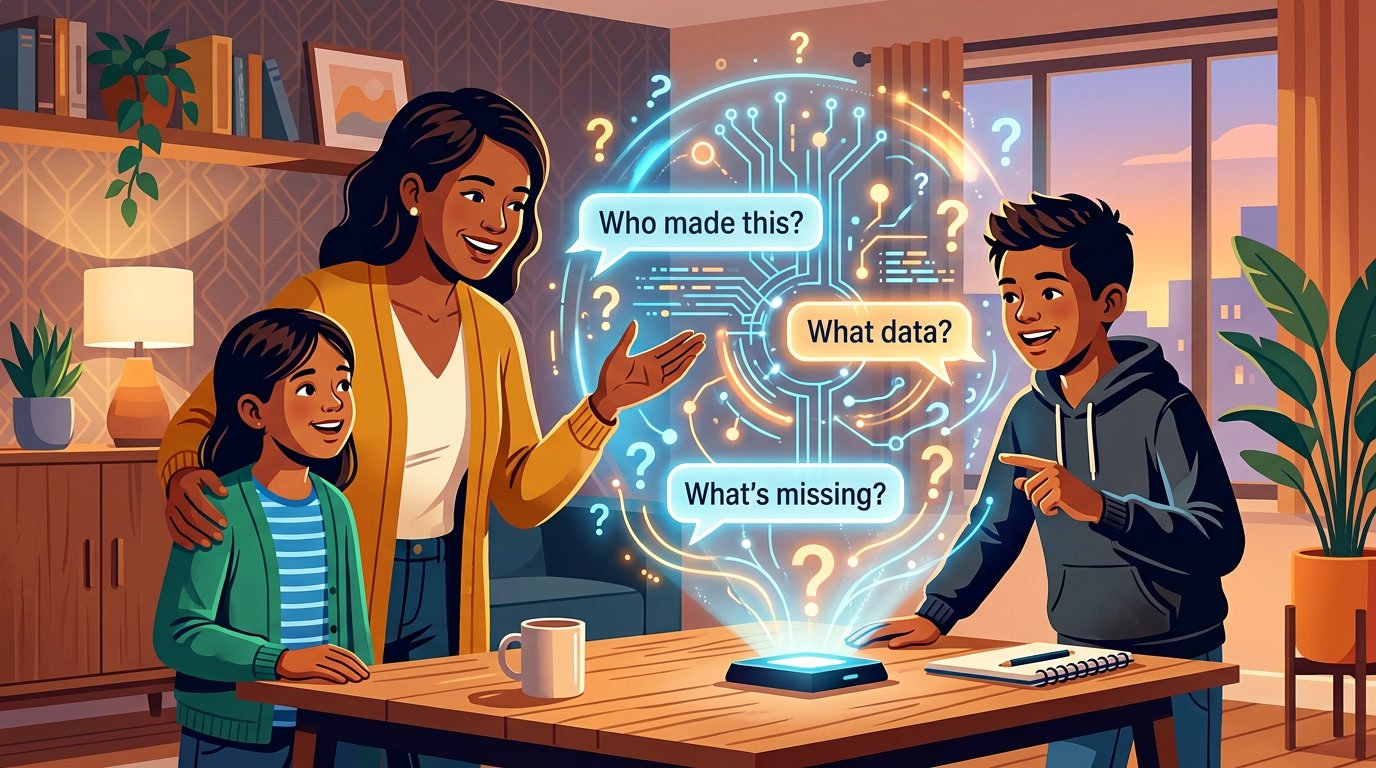
Knowing how do parents talk to children about ai deepfakes has become essential parenting in the age of synthetic media. Deepfakes — AI-generated videos, images, and audio that depict people saying or doing things they never did — have moved from celebrity novelty to something affecting ordinary families: fake videos of classmates, scam calls using a cloned grandparent’s voice, manipulated images shared in school group chats. If your child has a phone, this conversation isn’t optional anymore.
The good news: you don’t need to be technical to have it well. Kids grasp the core idea fast (“computers can now fake videos of anyone”) — what they need from you is the critical thinking and the emotional safety net.
How do parents talk to children about AI deepfakes?
1. Start with the wow, then the caution
Don’t lead with fear — lead with curiosity. Show them a fun, obviously harmless deepfake (there are plenty of clearly-labelled examples online) and let them be amazed. Then ask the key question: “If a computer can make a video of anyone saying anything… how do we know what’s real?” Let them arrive at the answer. Kids who feel like they discovered the problem take the solution more seriously than kids who were lectured at.
2. Teach the “pause and check” reflex
The single most important habit: when something online triggers a strong emotion — shock, outrage, excitement, fear — pause before believing or sharing. Deepfakes (and most misinformation) work by bypassing critical thinking through emotion. Teach them:
- Check the source: who posted this? Do you trust them? Is it reported anywhere reputable?
- Look for tells: weird hands, unnatural blinking, mismatched lighting, robotic voice cadence — though warn them these are getting harder to spot.
- Ask an adult: make it safe and normal to bring you anything confusing or upsetting. The child who shows you the weird video is protected; the child who hides it isn’t.
- Never share what you haven’t verified: forwarding a fake is participating in the harm, even innocently.
3. Cover the scenarios that actually happen to kids
- Fake images of classmates: manipulated photos shared to embarrass or bully. Teach them this is a form of bullying with serious consequences — schools and police treat it that way — and to tell a trusted adult immediately, whether they’re the target or a bystander.
- Voice-clone scams: “Mum, it’s me, I’m in trouble, send money” in a familiar voice. Establish a family verification word or question for any urgent money request, ever. This protects grandparents too — see our guide to explaining AI to grandparents.
- Fake celebrity/influencer content: endorsements, giveaways, and “DM me” scams using familiar faces. If it seems too good to be true, it is.
- Their own images: explain that photos they share can be manipulated — another reason for thoughtful sharing, covered in our guide to teaching kids to use AI safely.
4. Keep the tone right
Aim for empowered, not frightened. The message isn’t “the internet is full of lies and you can’t trust anything” (which breeds either anxiety or nihilism) — it’s “you’re smart enough to check, and here’s how.” Praise them when they spot something fake. Make media literacy a game, not a lecture: “spot the deepfake” challenges are genuinely fun family activities.
What schools and the law say
UK schools increasingly cover deepfakes in PSHE and computing curricula — ask what your child’s school teaches so you can reinforce it. Legally, creating or sharing non-consensual intimate deepfakes is a criminal offence in England and Wales under the Online Safety Act, and the law is expanding to cover more harmful deepfake uses. Make sure older teens understand: “it was just a joke” is not a defence. The Internet Matters site has excellent parent guides on this and related topics.
When your child encounters a deepfake in the wild
Despite your best preparation, it’ll happen: your child will see a fake video of a classmate, receive a suspicious voice message, or encounter manipulated content that upsets them. What matters isn’t preventing it (impossible) but how the aftermath goes. The golden rule: stay calm and curious, not alarmed and punitive. If their first experience of bringing you something weird is your panic, they won’t bring you the second thing. Thank them for showing you. Ask what they think about it. Work through the verification together.
The practical steps for an actual incident: don’t share it further (screenshot for evidence if needed, then stop the spread); report it on the platform; tell the school if it involves classmates (schools have safeguarding duties and experience with this); and support the target if someone’s being victimised — a message of support from a peer means enormously more than any adult intervention. If the content is threatening, harassing, or sexual, involve the school and potentially the police — these are serious matters with serious consequences, and treating them seriously protects everyone.
Afterwards, debrief without lecturing. “What tipped you off?” reinforces their detection skills. “How did it make you feel?” processes the emotional side. And revisit the family verification word — real incidents make abstract precautions concrete. Kids learn media literacy the way they learn everything: not from one big talk, but from guided experience. The incident you handle well together teaches more than ten lectures.
One more thing parents often overlook: model the behaviour yourself. Kids learn media scepticism less from lectures and more from watching you practise it. When you see a surprising headline, say out loud: “Hmm, that seems surprising — let me check if it’s real before I believe it.” When a family member shares something dubious, model the kind check. When you get a suspicious call, narrate your verification process. These micro-moments — dozens of them over the years — build the reflex far more effectively than any single conversation. You’re not just teaching them about deepfakes; you’re showing them what a thoughtful relationship with information looks like. That’s a gift that compounds for life.
Your practical takeaway
This weekend: have the 15-minute conversation — show a fun example, teach “pause and check”, agree your family verification word for scam calls, and make clear they can always bring you anything weird without getting in trouble. Revisit it every few months as the technology evolves. You’re not trying to make them paranoid; you’re giving them the same healthy scepticism about synthetic media that your parents gave you about strangers — updated for the world they actually live in.