Every autumn, the same ritual plays out in my house: someone at work starts coughing, the kids bring home a mystery bug from school, and suddenly we’re all mainlining Lemsip. If you’d rather not spend November to February in a cycle of colds, now — before flu season peaks — is the time to strengthen your immune system. Not with miracle juices or expensive supplements, but with the unglamorous habits that immunologists actually recommend.
Let’s clear something up first: you can’t “boost” your immune system like a phone battery. What you can do is stop undermining it — through poor sleep, chronic stress, bad diet and smoking — and give it the raw materials it needs to work properly. Here’s the evidence-based playbook.
Sleep: the immune system’s night shift
This is the big one, and the most neglected. While you sleep, your immune system releases proteins called cytokines, some of which help fight infection and inflammation. Studies consistently show that people sleeping under six hours a night are significantly more likely to catch colds than those sleeping seven-plus.
Adults generally need 7–9 hours, and consistency matters as much as duration — a regular bedtime trains your body clock, which in turn regulates immune function. If you’re staring at the ceiling at midnight, our guide on falling asleep faster without sleeping pills covers the wind-down routine that actually works. Think of good sleep as the foundation everything else builds on.
Eat to strengthen your immune system: the everyday foods that matter
No single food prevents illness, but a varied diet gives your immune cells the micronutrients they depend on. The good news: the most useful foods are cheap and boring.
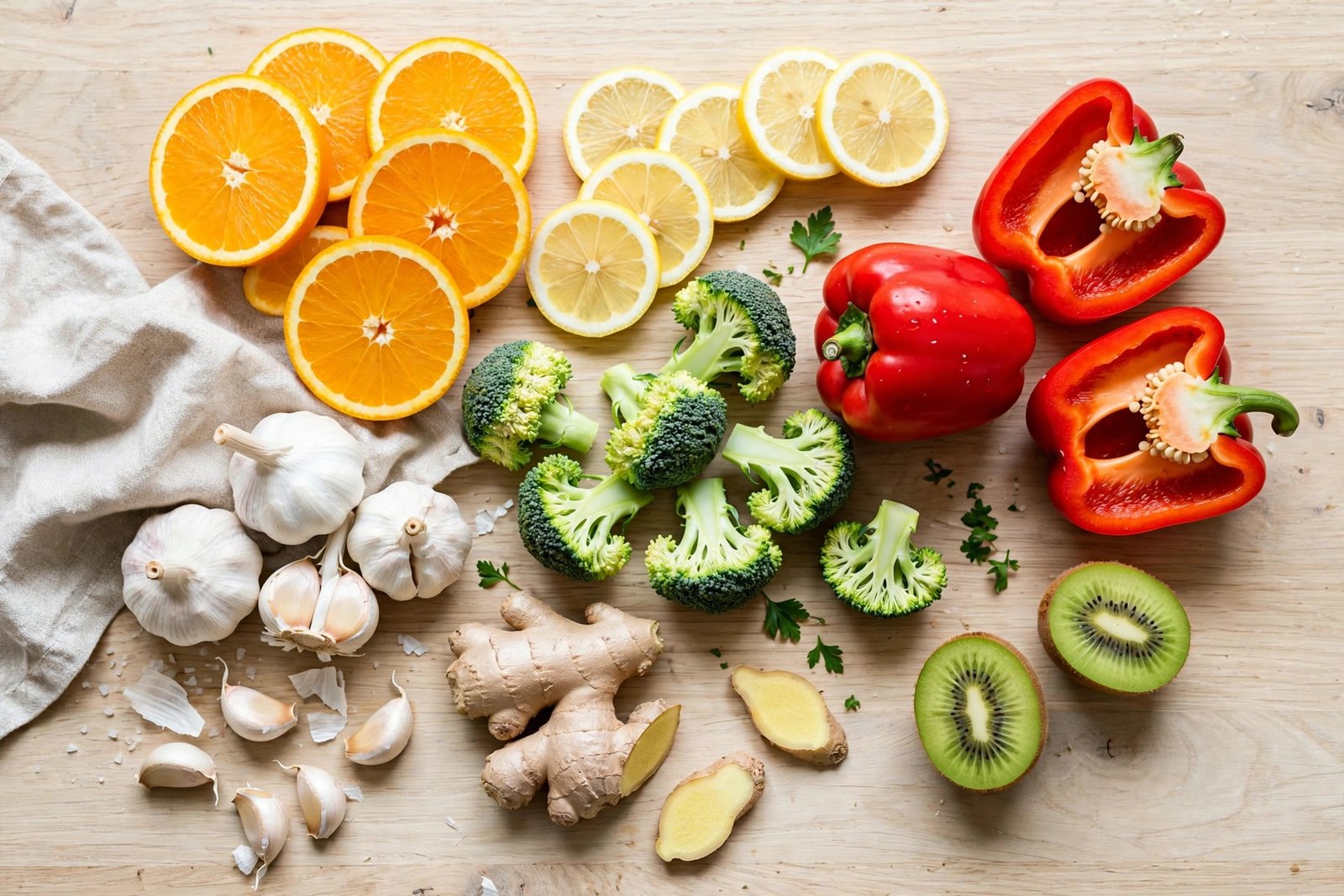
- Vitamin C sources: peppers, broccoli, kiwis, oranges, blackcurrants. You don’t need megadoses — regular intake beats occasional orange-juice binges.
- Vitamin D: the UK standout. From October to March, sunlight here is too weak for skin synthesis, so the government advises a daily 10-microgram supplement. Oily fish and fortified foods help, but most of us need the supplement.
- Zinc: meat, shellfish, chickpeas, lentils, seeds and nuts. Zinc lozenges at the first sign of a cold have modest evidence behind them.
- Fibre and fermented foods: around 70% of your immune tissue is associated with your gut. Fibre feeds beneficial gut bacteria; yoghurt, kefir and sauerkraut add live cultures. Our deep dive on improving gut health with everyday foods explains the connection properly.
- Protein: antibodies are made of it. If you’re eating on a budget, our guide to vegetarian protein sources shows how cheap it can be.
What about supplements? A basic vitamin D supplement in winter: yes. A £40 “immune blend” with 25 ingredients: save your money. The British Nutrition Foundation’s position is that a varied diet covers most needs, and no pill compensates for four hours of sleep and chronic stress.
Get the vaccines — they’re the real immune upgrade
Let’s be blunt: the single most effective thing you can do to strengthen your immune system’s defences against flu is the flu jab. It’s free on the NHS for over-65s, pregnant women, carers, frontline health workers and people with certain conditions — and available privately at pharmacies (Boots, Superdrug) for around £15–£20 for everyone else. Book it in September or October, before the virus starts circulating widely. The NHS flu vaccine page has eligibility details and booking info.
COVID autumn boosters follow a similar pattern for eligible groups. Vaccines don’t just protect you — they reduce the spread that hammers workplaces and schools every winter.
The lifestyle factors people underestimate
- Move regularly, moderately. Regular moderate exercise (brisk walking, cycling, swimming) improves immune surveillance. But note the caveat: extremely intense, prolonged exercise without recovery can temporarily suppress immunity — marathon training in December without rest days is not the play.
- Manage chronic stress. Prolonged stress floods your body with cortisol, which suppresses immune function. This isn’t about “thinking positive” — it’s about genuine stress management: boundaries at work, proper downtime, asking for help. Our piece on managing overwhelming work stress has practical starting points.
- Quit smoking. Smoking damages the lungs’ defences and impairs immune response throughout the body. If that’s on your list, our guide to quitting smoking for good lays out the free NHS support that triples your chances.
- Drink less alcohol. Heavy drinking suppresses immunity; even a few weeks of moderation before winter helps.
- Wash your hands. Old-fashioned, unglamorous, effective. Most winter bugs spread hand-to-face.
What actually weakens immunity (fix these first)
Before adding anything, it’s worth subtracting the things quietly undermining your immune system. These five have the strongest evidence, and most people are guilty of at least two.
1. Short sleep. This is the big one. People sleeping under six hours are roughly four times more likely to catch a cold when exposed to the virus than those sleeping over seven. One bad night measurably reduces natural killer cell activity. If you do one thing for your immune system, protect your sleep — everything else is marginal by comparison.
2. Chronic stress. Short-term stress is harmless or even helpful; months of grinding stress suppresses immune function and prolongs wound healing. You can’t always remove the stressor, but daily decompression — walking, talking, switching off — genuinely buffers the immune impact.
3. Regular heavy drinking. Alcohol disrupts gut barrier function and impairs immune cell response for 24+ hours after heavy intake. The “a glass of red wine is healthy” story doesn’t survive scrutiny; less is simply better for immunity.
4. Smoking and vaping. Both damage the respiratory tract’s defences — the cilia and mucus barriers that physically stop pathogens. Smokers get more respiratory infections and recover slower. Quitting is the fastest immune upgrade available.
5. Yo-yo dieting and very low calorie intake. Aggressive calorie restriction suppresses immune function; this is well documented in athletes and dieters alike. Eating adequately through winter isn’t indulgence, it’s maintenance.
Notice what’s not on the list: going out with wet hair, “catching a chill”, or touching door handles. Cold weather doesn’t cause colds — viruses do, and winter just brings the conditions (indoor crowding, dry air, low vitamin D) that help them spread. Fix the big five and you’ve done more than any supplement stack.
Your takeaway: start in September, not December
To strengthen your immune system before flu season, do the unsexy things consistently: sleep 7–9 hours, eat varied whole foods (plus vitamin D from October), get your flu jab early, move daily, manage stress, and wash your hands. There’s no shortcut and no superfood — just a body given what it needs to do its job. Start now, and this winter might be the one where the office plague passes you by.