
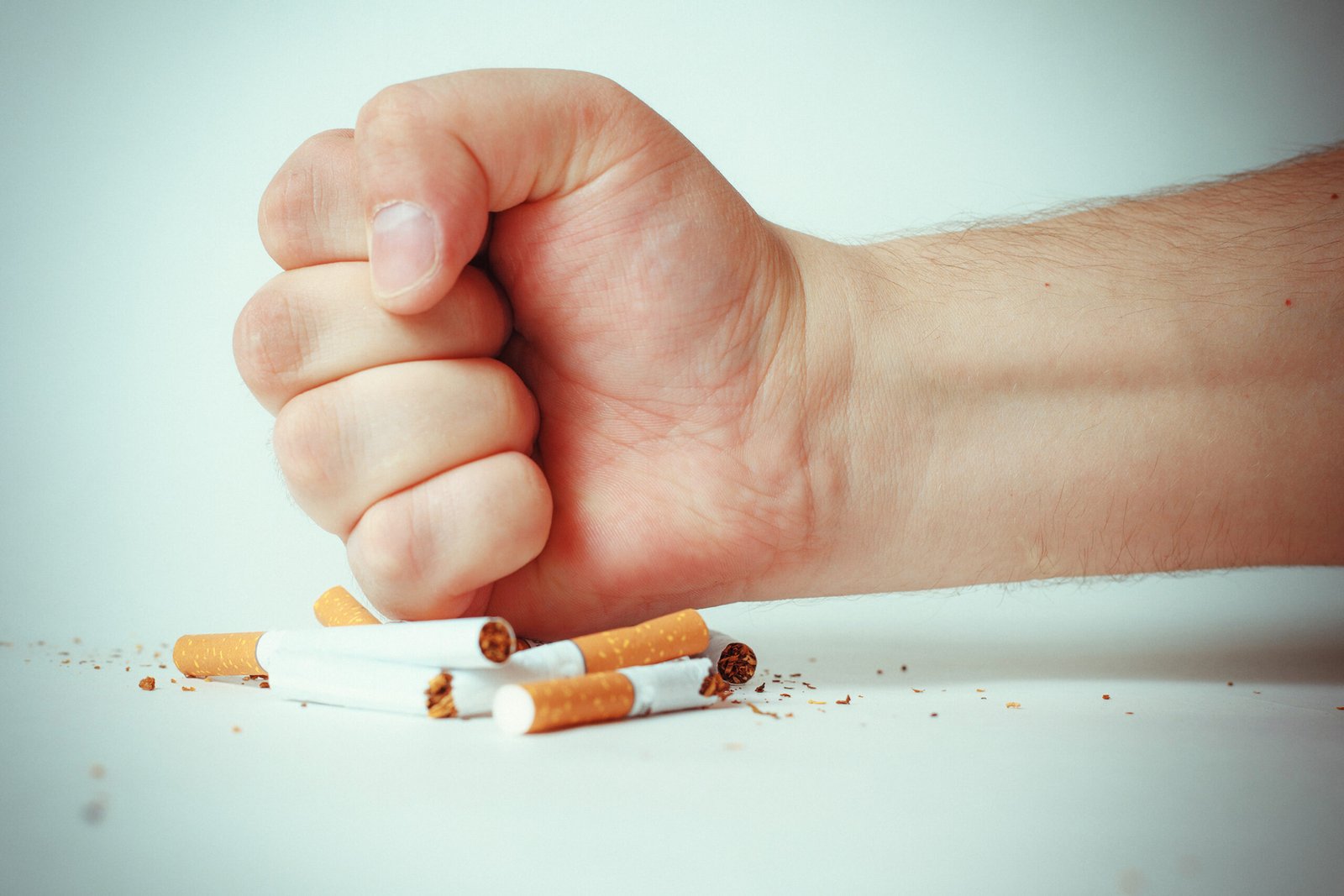
Every smoker I know has “quit” at least three times. The Monday-morning resolve, the last packet thrown dramatically in the bin, the smug first 48 hours — then Thursday happens. If that sounds familiar, you’re not weak-willed; you’re up against one of the most addictive substances on earth, wrapped in a habit you’ve rehearsed thousands of times. The best way to quit smoking for good isn’t about willpower at all — it’s about stacking the odds so heavily in your favour that willpower barely matters.
Here’s the encouraging bit: in the UK, you’re not doing this alone, and you don’t have to pay for help. NHS stop-smoking support is free, and smokers who use it are up to three times more likely to quit successfully than those who go cold turkey. Let’s build your actual plan.
Why willpower alone usually fails
Nicotine hooks your brain in about ten seconds per cigarette, and after years of smoking, your brain has literally rewired itself to expect it. On top of the chemical addiction, there’s the behavioural side: the cigarette with coffee, the one after a meal, the one when you’re stressed, the one at the pub. Cold turkey tackles neither properly, which is why only around 3–5% of unaided quit attempts succeed long-term.
That statistic isn’t meant to scare you — it’s meant to free you from the idea that you should just “be stronger”. The people who quit for good aren’t tougher than you; they just used better tools. Which brings us to what actually works.
The best way to quit smoking for good: combine support with treatment
The evidence is clear: the highest success rates come from combining behavioural support with a stop-smoking aid. Here’s your toolkit:
- Free NHS stop-smoking services. Your GP, local pharmacy or council service offers one-to-one or group support, often including free or discounted nicotine replacement. Find yours through the NHS Better Health quit smoking hub — it takes two minutes and genuinely changes your odds.
- Nicotine replacement therapy (NRT). Patches, gum, lozenges, inhalators or sprays — or better, a combination (patch for background cravings plus gum for spikes). Available on prescription, over the counter (£8–£25 depending on format), or free through stop-smoking services.
- Prescription medicines. Varenicline (Champix) and cytisine are tablets that reduce cravings and the pleasure of smoking. Ask your GP — they’re underused and effective.
- Vapes as a quitting aid. Public Health England’s reviews have consistently found vaping substantially less harmful than smoking, and the NHS now supports it as a quit tool. The key: it’s a bridge off cigarettes, not a new permanent hobby. Set a plan to taper the nicotine strength down over a few months.
Pick a quit date — and tell people
Choose a date within the next two weeks, ideally a normal-ish week (not the week of your wedding or a massive work deadline). Tell friends, family, colleagues — going public creates accountability. On the day itself, remove every trigger: bin the ashtrays, wash the “smoking jacket”, clean the car. Make smoking inconvenient and quitting visible.
Surviving the first two weeks
Let’s not sugar-coat it: days 3–5 are usually the worst. Cravings peak, then fade — most last under five minutes. Your job is simply to outlast each one:
- Delay, distract, deep-breathe. The classic 4 Ds (delay, deep breathe, drink water, do something else) sound simplistic because they are — and they work.
- Rewrite the rituals. Coffee without a cigarette feels wrong for about a week. Change the routine itself: different mug, different chair, a short walk instead of standing in the usual spot. Breaking the cue breaks the craving.
- Handle stress without lighting up. This is where most quits die, because smoking felt like stress relief (it was really just relieving withdrawal). Build alternatives now — a walk, a call to a mate, even a stress ball. Our guide on managing stress when work is overwhelming has practical techniques that don’t involve nicotine.
- Plan for alcohol. Drink is the number one relapse trigger in the UK. Either avoid it for the first couple of weeks or set a hard rule (no smoking area trips, tell the group in advance).
Sleep often goes strange for a week or two as well — vivid dreams are common with patches (take the patch off at night if so). If insomnia bites, the techniques in falling asleep faster without sleeping pills will help more than you’d expect.
What to do when you slip
Here’s the part most guides skip: a single cigarette is not a failure. It’s a data point. The danger isn’t the slip — it’s the story you tell yourself afterwards (“I’ve ruined it, may as well buy a pack”). Smokers who treat a lapse as a blip and get straight back on plan are far more likely to end up smoke-free than those who spiral.
After a slip, do a quick debrief: what triggered it? What will you do differently next time that trigger appears? Then carry on as if it never happened. Your quit is measured in years, not in one bad evening.
The money maths that keeps you going
A 20-a-day habit at current UK prices costs roughly £5,000–£6,000 a year. That’s a holiday, a house deposit contribution, or a very nice emergency fund. Put the daily saving in a separate pot — even a literal jar — and watch it grow. Plenty of ex-smokers say the visible money was the motivation that carried them through month two, when the health benefits still felt abstract.
Your takeaway: stack the odds, then start
The best way to quit smoking for good is a combination: free NHS support plus NRT, vapes or prescription treatment, a quit date within two weeks, rewritten rituals, and a plan for your personal danger zones (stress, alcohol, coffee). Don’t wait for the “right time” — there isn’t one. Set the date, get the support, and give yourself the same compassion you’d give a friend. A year from now, you’ll be the one telling someone else it was the best thing you ever did.


