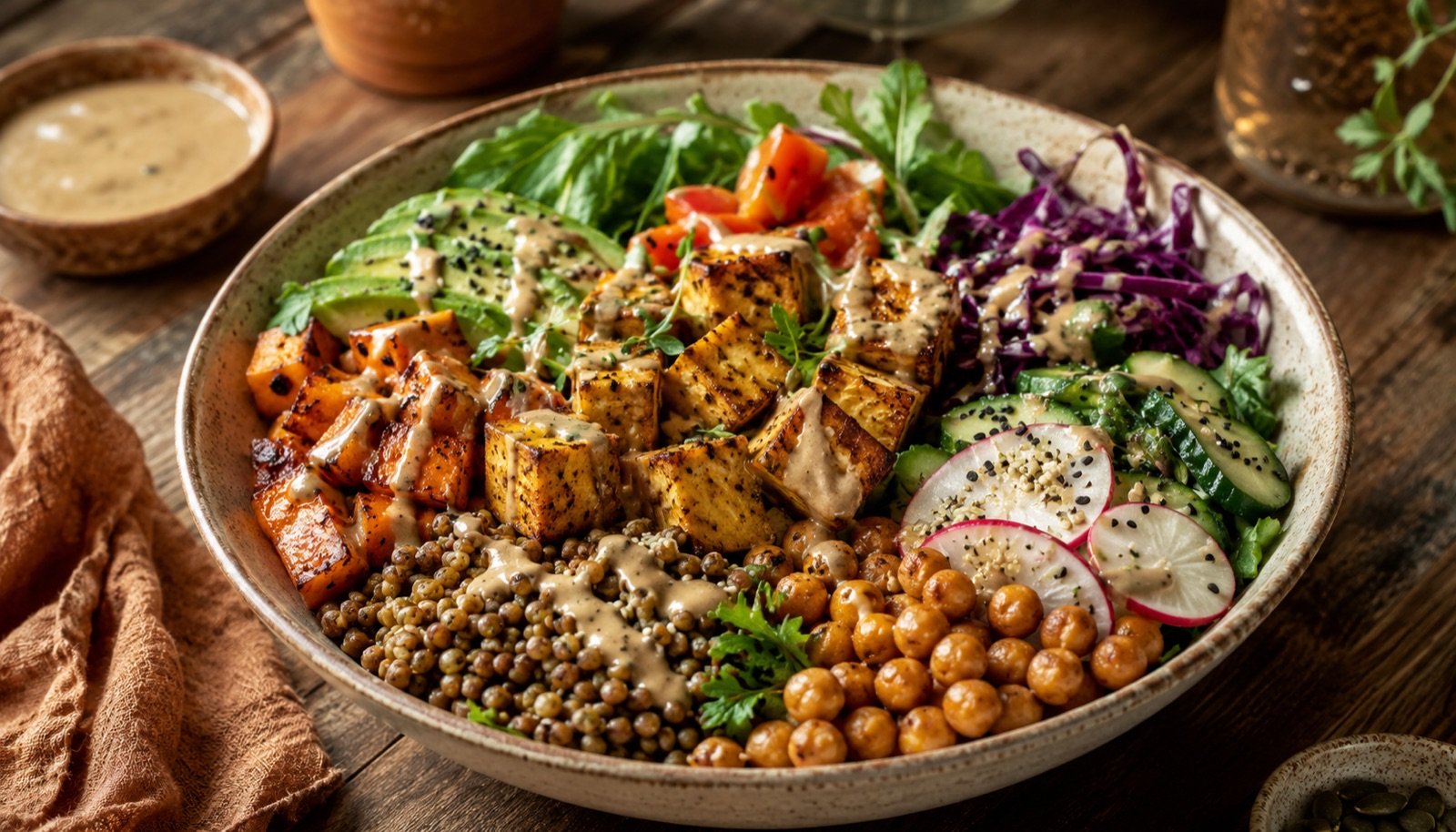
“But where do you get your protein?” — every vegetarian in Britain has heard it, usually from an uncle at a family barbecue. The assumption is that protein lives in meat and vegetarians are somehow scraping by. The reality: hitting your protein needs without meat is easy, cheap, and often healthier. Here are the best sources of protein for vegetarians in the UK, from the everyday staples to the ones people always forget.
First, how much do you actually need? The UK reference is about 0.75g per kilogram of body weight daily — roughly 45g for the average woman and 55g for the average man. Active people, older adults and anyone building muscle need more (1.2–1.6g/kg). It’s a target most vegetarians hit without thinking, once they know where to look.
The best protein for vegetarians: the everyday list
- Eggs — 6g each, the most bioavailable protein outside meat. Two eggs on toast = 15g+ before 9am.
- Greek yoghurt — 10g per 100g (double regular yoghurt). The breakfast and snack MVP.
- Cottage cheese — 11g per 100g, oddly unfashionable, nutritionally superb.
- Lentils — 9g per 100g cooked, plus iron and fibre. Red lentil dahl is about 30p a portion.
- Chickpeas and beans — 8–9g per 100g cooked. Hummus, chilli, curries, salads — endlessly versatile.
- Tofu and tempeh — 12–19g per 100g. Press it, marinate it, roast it hot — the “tofu is bland” complaint is a cooking problem, not a tofu problem. Available in every major supermarket now.
- Quinoa — 4g per 100g cooked, and one of the few plant complete proteins (all essential amino acids).
- Nuts and nut butters — 20–25g per 100g. A spoonful of peanut butter is 8g. Calorie-dense, so portion-aware.
- Seeds — hemp (30g/100g), pumpkin, chia, sunflower. Sprinkle on everything.
- Cheese — 25g per 100g for cheddar. Delicious, but watch portions and saturated fat.
- Milk — 3.4g per 100ml; a pint is 19g without trying.
- Whole grains — oats (13g/100g), wholemeal bread (4g a slice), brown rice. They add up across the day.
- Peas, edamame, sweetcorn — the vegetables that pull double duty. Edamame (11g/100g) as a snack is elite.
- Meat alternatives — Quorn, THIS, Richmond veggie sausages: 12–20g per serving, convenient, though pricier and more processed. Fine as part of the mix.
What about “complete” protein?
You’ve probably heard plant proteins are “incomplete”. Mostly outdated worry: while individual plant foods may be lower in certain amino acids, eating a variety across the day covers everything — rice and beans, hummus and pitta, porridge with nuts. You don’t need to combine them in single meals; your body pools amino acids over 24 hours. The Vegetarian Society has a clear breakdown of protein combining myths versus reality.
A sample high-protein vegetarian day (~80g)
Breakfast: porridge with milk, peanut butter and seeds (20g). Lunch: lentil soup with wholemeal bread and cheese (22g). Snack: Greek yoghurt with berries (15g). Dinner: tofu and vegetable stir-fry with brown rice (20g). That’s 77g+ without supplements, powders or effort — and it aligns perfectly with eating healthily on a tight budget, since lentils, beans and oats are the cheapest proteins in the shop. Your gut bacteria will thrive on the fibre too.
Nutrients to watch alongside protein
Protein is the easy part. Vegetarians should pay more attention to: vitamin B12 (supplement or fortified foods — this one’s non-negotiable), iron (pair plant iron with vitamin C for absorption), vitamin D (supplement October–March like everyone else), omega-3s (flax, chia, walnuts or algae oil), and iodine (often low without dairy/fish — a small amount of iodised salt helps). The NHS Eatwell Guide covers vegetarian nutrition comprehensively.
A week of high-protein vegetarian eating: the template
Hitting 70–90g of protein daily as a vegetarian isn’t hard once you see the pattern. Here’s a template week — mix and match days, swap freely, keep the structure.
The daily skeleton (~75–85g protein):
- Breakfast (~20g): Greek yoghurt (200g) with oats, nuts and berries — or two eggs on wholegrain toast with a handful of spinach. Both land around 18–22g without trying.
- Lunch (~20g): lentil soup with wholemeal bread and cheese; or a quinoa salad with chickpeas, feta and pumpkin seeds. The grain-plus-pulse-plus-dairy/egg formula is the reliable 20g.
- Dinner (~25g): tofu or tempeh stir-fry with brown rice; paneer curry with chickpeas; bean chilli with rice and cheese. Dinner is the easiest high-protein meal because portions are bigger.
- Snacks (~10g): a handful of almonds, an apple with peanut butter, or a small pot of edamame. Snacks are where most vegetarians leak protein — plan them, don’t graze randomly.
Monday: overnight oats with Greek yoghurt and peanut butter; lentil and spinach dhal with rice; tofu ramen with edamame.
Tuesday: scrambled eggs on wholemeal toast; chickpea and feta quinoa salad; paneer tikka with chickpeas and brown rice.
Wednesday: protein porridge (oats cooked with milk, stirred-through Greek yoghurt, nuts); black bean soup with cheese toastie; tempeh stir-fry with cashews and rice.
Thursday: Greek yoghurt bowl with granola and berries; falafel wrap with hummus; mushroom and lentil shepherd’s pie topped with cheesy mash.
Friday: peanut butter on toast plus a boiled egg; minestrone with parmesan and bread; halloumi and vegetable fajitas with black beans.
The weekend takes care of itself if you keep the skeleton. Notice no protein powders, no fake meats, no special shopping — just normal ingredients combined with intent. The vegetarians who struggle with protein are almost always the ones skipping it at breakfast and lunch, then trying to catch up at dinner. Front-load the day and the numbers take care of themselves.
One caveat for the very active: if you’re training hard (running, lifting, sport 5+ days a week), aim for the higher end — 1.6g per kg body weight — and consider a straightforward whey or pea protein shake on training days. For everyone else, food does the job.
Your takeaway: variety beats anxiety
The best sources of protein for vegetarians — eggs, dairy, lentils, beans, tofu, nuts, seeds and whole grains — make hitting your target straightforward and cheap. Eat a variety across the day, don’t stress about “complete” proteins, and pay attention to B12 and vitamin D. The uncle at the barbecue can rest easy.