
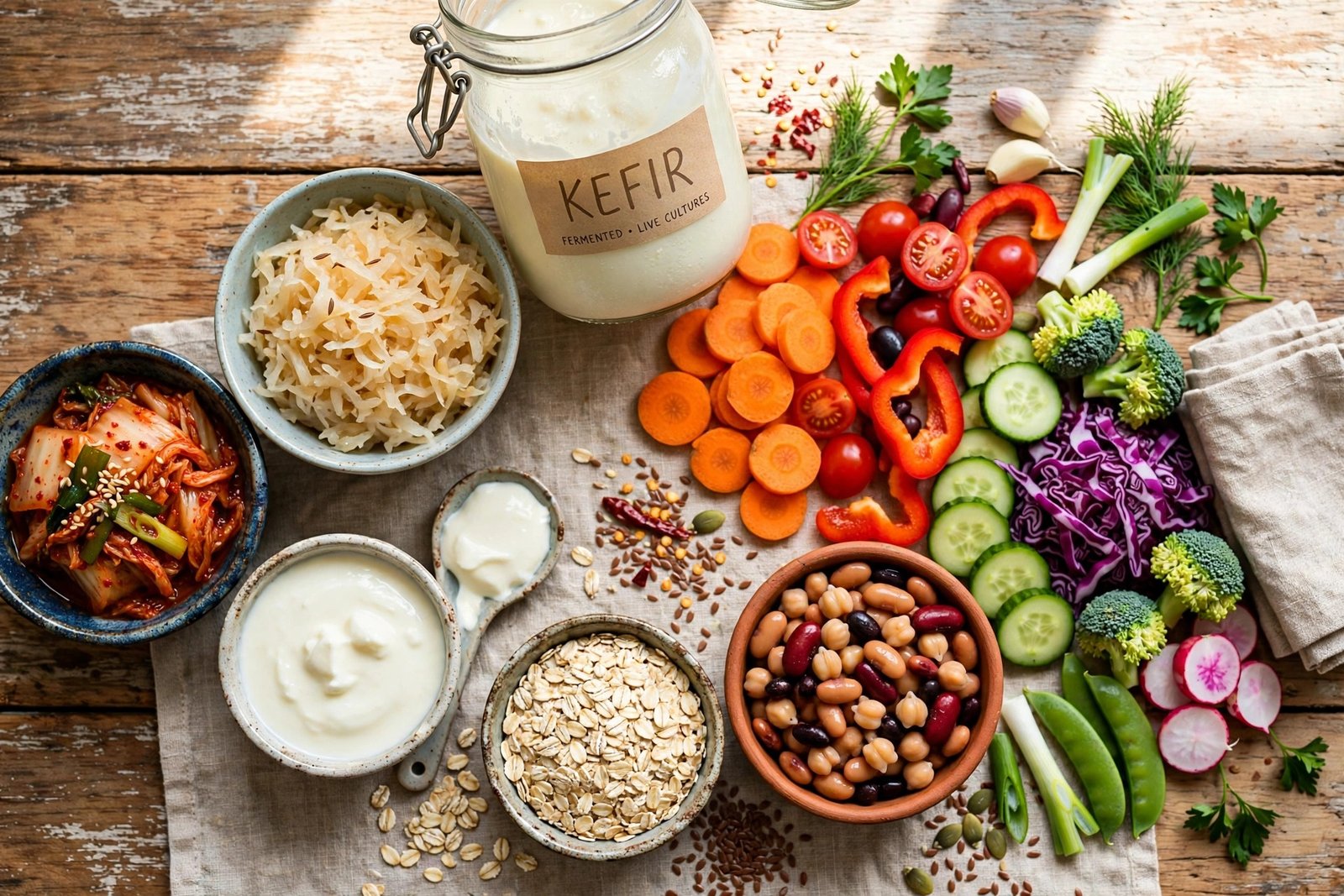
Gut health has gone from obscure science to supermarket buzzword in about five years — every yoghurt now promises to “support your digestive wellbeing”. Strip away the marketing, and the science underneath is genuinely exciting: your gut microbiome (the trillions of bacteria in your intestines) influences digestion, immunity, and even mood. The good news? You can improve your gut health with ordinary food from any UK supermarket. No expensive powders required.
Here’s what your gut bacteria actually want: variety, fibre, and fermented foods. Most British diets deliver none of the three in abundance — the average UK adult eats about 20g of fibre a day against a recommended 30g. Let’s fix that with food you’d eat anyway.
The fibre fix: improve your gut health from within
Fibre is essentially food for beneficial gut bacteria, which ferment it into short-chain fatty acids that nourish your gut lining and calm inflammation. Different fibres feed different bacteria, so variety matters more than any single “superfood”. Easy wins:
- Beans, lentils and chickpeas. The undisputed champions — a tin of baked beans has around 10g of fibre. Add lentils to bolognese, chickpeas to curries, beans to everything.
- Oats and barley. Porridge for breakfast covers a third of your needs before 9am.
- Vegetables with skins on. Potatoes (skin on), carrots, broccoli, sweetcorn — eat the rainbow, keep the skins.
- Whole grains. Swap white bread, rice and pasta for wholegrain versions. It doesn’t have to be all at once — start with one swap.
- Nuts, seeds and fruit. A small handful of almonds, chia seeds on yoghurt, an apple with skin — fibre adds up in handfuls.
- The 30-plants-a-week challenge. Research from the American Gut Project (echoed by UK dietitians) found people eating 30+ different plant foods weekly had far more diverse microbiomes. Count them: every veg, fruit, nut, seed, herb, spice, bean and whole grain counts. Herbs and spices are the cheat code — a varied curry can score six plants in one meal.
This pairs naturally with eating healthily on a tight budget — beans, lentils, oats and frozen veg are the cheapest foods in the shop.
Fermented foods: add live cultures the tasty way
Fermented foods deliver live beneficial bacteria directly. You don’t need much — a small daily portion is the evidence-based habit:
- Live yoghurt and kefir. Look for “live cultures” on the label. Kefir (about £2 for 500ml in most supermarkets) is the most potent everyday option — a small glass daily.
- Sauerkraut and kimchi. Buy unpasteurised from the chilled section (pasteurisation kills the cultures). A forkful with meals is plenty.
- Miso. A teaspoon in hot (not boiling) water makes an instant gut-friendly soup.
- Kombucha. Fine as an occasional drink, but watch the sugar content — some brands are basically fizzy pudding.
One caution: if you have IBS or significant digestive symptoms, increase fibre gradually and introduce fermented foods one at a time. A sudden fibre avalanche causes exactly the bloating you’re trying to fix. And persistent gut symptoms deserve a GP visit, not just more sauerkraut.
What harms gut health (the everyday saboteurs)
- Ultra-processed food overload. You don’t need to eliminate it, but when most of your diet is UPFs, bacterial diversity drops. The NHS Eatwell Guide helps you build meals around whole foods instead.
- Too much alcohol. Regular heavy drinking disrupts the gut barrier. Cutting back helps more than any probiotic.
- Chronic stress. The gut-brain axis is real — stress genuinely alters gut function. Managing it (see our stress guide) is gut care too.
- Unnecessary antibiotics. Take them when prescribed — they save lives — but don’t pressure your GP for them “just in case”. They carpet-bomb your microbiome.
- Artificial sweeteners in excess. Emerging evidence suggests some may alter gut bacteria. Another reason to reduce sweetness dependence overall rather than swapping sugar for substitutes.
Do you need probiotic supplements?
For most healthy people: probably not. The British Nutrition Foundation notes that evidence for general probiotic supplements in healthy adults is limited — fermented foods deliver similar benefits with better evidence and lower cost. Specific strains help specific conditions (some IBS cases, antibiotic-associated diarrhoea), but that’s a conversation with your GP or dietitian, not Holland & Barrett.
A sample gut-friendly day
Breakfast: porridge with berries, chia seeds and live yoghurt. Lunch: lentil soup with wholegrain bread. Snack: apple and almonds. Dinner: stir-fry with brown rice, mixed veg and a forkful of kimchi. That’s 30g+ of fibre and multiple fermented foods without a single “wellness” product. Cheap, filling, and your protein needs are covered too.
The gut-health shopping list: a week of everyday foods
Theory is nice, but here’s what a gut-friendly week actually looks like in a normal UK supermarket shop. Nothing exotic, nothing expensive.
Vegetables (aim for variety across the week): onions, garlic, leeks (the prebiotic alliums — the single highest-impact group), broccoli, carrots, spinach, sweet potatoes, peas, sweetcorn. Frozen counts fully — frozen veg is often more nutritious than “fresh” veg that’s been in transit for a week.
Fruit: bananas (slightly underripe have more prebiotic starch), apples, berries (frozen berries are a bargain), pears, kiwis. Two to three portions a day is plenty; fruit isn’t the enemy, but it isn’t the main event either.
Fermented: live yoghurt or kefir (check the label says “live cultures”), sauerkraut or kimchi from the chilled section (not the shelf-stable jars — heat kills the cultures), miso paste for soups and dressings. One small serving daily is the evidence-backed dose.
Whole grains and pulses: oats, brown rice, wholemeal bread, lentils, chickpeas, kidney beans. The fibre workhorses. If your diet is currently low-fibre, increase gradually over two weeks — a sudden jump is the classic cause of “fibre makes me bloated” complaints.
Nuts and seeds: a small handful of mixed nuts, ground flaxseed or chia on breakfast. Cheap in the world-foods aisle or Aldi/Lidl.
A sample day: porridge with ground flaxseed and berries; lentil soup with wholemeal bread; stir-fry with garlic, ginger and mixed veg over brown rice; live yoghurt as a snack. Nothing you’d describe as health food — just normal dinners with the fibre turned up and something fermented on the side.
Your takeaway: fibre, variety, ferments
To improve your gut health with everyday foods, aim for 30g of fibre daily, 30 different plants a week, and one small fermented food daily. Increase gradually, don’t expect overnight miracles (microbiome shifts take weeks), and see your GP about persistent symptoms. Your gut bacteria are low-maintenance tenants — feed them fibre and variety, and they’ll look after you.


