Gary Barlow Net Worth, Biography, Age, Family and Career
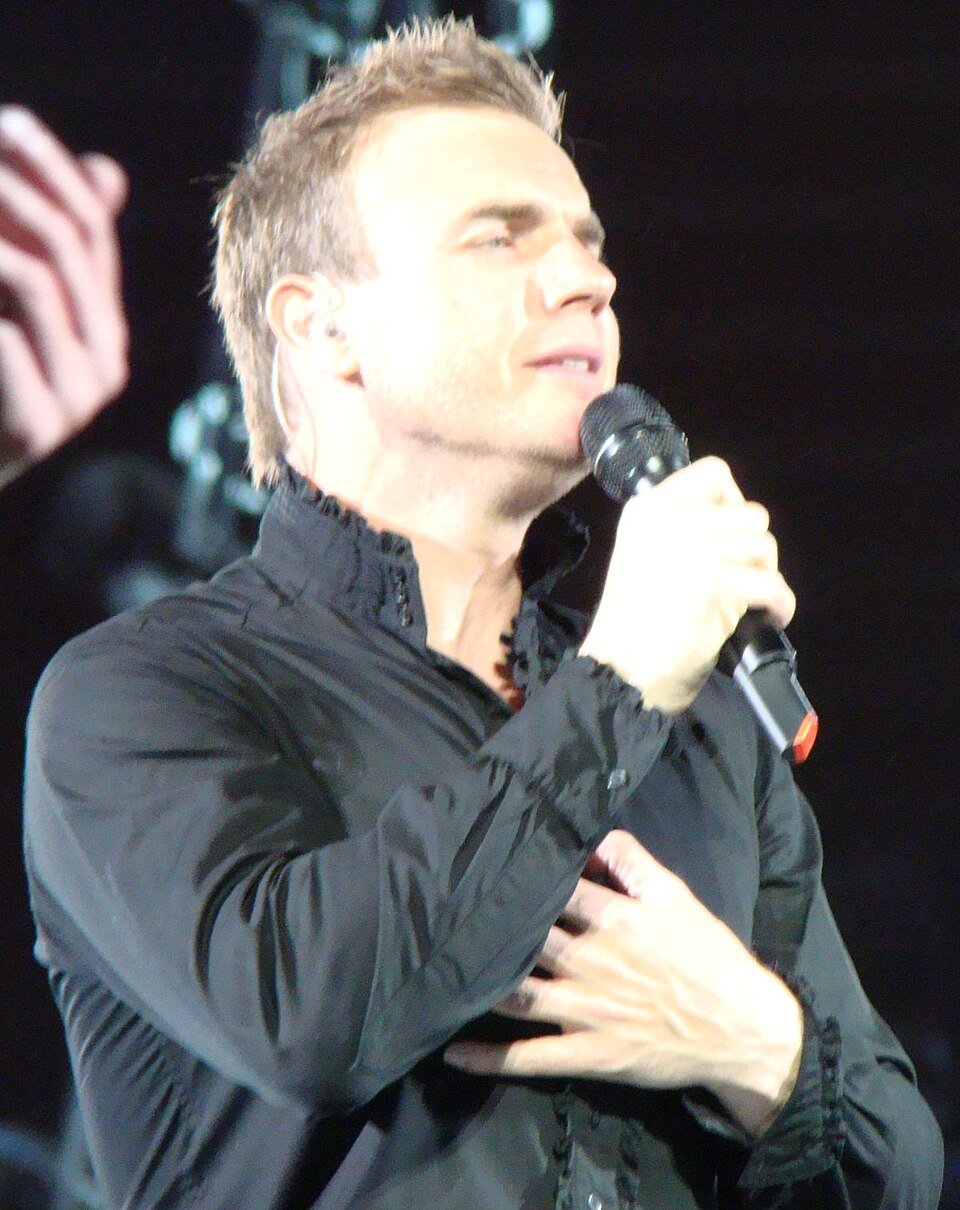
Gary Barlow is a singer, songwriter, pianist and record producer whose work as the principal songwriter of Take That, and as a solo artist in his own right, has made him one of the most consistently successful figures in popular music over more than three decades. Celebrity Net Worth puts his net worth at $125 million, while the Sunday Times Rich List has been reported at £90 million, a disagreement between the two allowed sources that is recorded in full in this profile. He remains active as a performer and writer, and his catalogue continues to earn from recordings, touring and publishing.
Take That, the Wilderness and the Return
1990–1996: Take That and the First Fame
Take That were signed, built and launched as a response to the American group New Kids on the Block, but they outgrew the comparison quickly, in large part because Barlow’s songs gave them material of a durability their rivals lacked. After a slow start, the group’s cover of It Only Takes a Minute reached the top ten in 1992, and the album Everything Changes (1993) produced four number one singles, among them Pray, written by Barlow, which won Brit Awards and established him as a songwriter of substance rather than merely the group’s frontman. Back for Good, released in 1995, was the summit of the first era: a ballad written, by his account, in a matter of minutes, it reached number one in the United Kingdom and across Europe and became a top ten hit in the United States, the group’s only substantial American success. The album Nobody Else (1995) collected the period. When Robbie Williams left in 1995 and the remaining four disbanded in February 1996, the announcement was treated as a national event, complete with a telephone helpline for distressed fans — a measure of how completely the group, and Barlow’s writing within it, had entered the culture.
1996–2005: The Solo Years and the Wilderness
Barlow’s solo career began as the industry expected it to: at the top. His first solo single, Forever Love (1996), reached number one, and the album Open Road (1997) did the same. The second album, Twelve Months, Eleven Days (1999), did not, and the contrast with Williams’s flourishing solo career hardened into a public narrative in which Barlow was the loser of the split. His record deal ended, and for several years he worked largely out of sight, writing and producing for other artists and rebuilding, by his own later account, both his confidence and his understanding of the business. The period matters to his biography because it was neither brief nor painless: he has written candidly about weight gain, depression and the loss of professional standing, and about the slow work of songwriting for others — among them Charlotte Church and Delta Goodrem — that kept his craft, and his publishing income, alive while his own name carried little commercial weight.
2005–2014: The Return of Take That
The reunion, when it came, was total. A television documentary in 2005 led to a sell-out tour in 2006 by the four-piece group, and the album Beautiful World (2006), led by Barlow’s Patience, returned them to number one and outsold the work of their first era. The Circus (2008) followed, with Greatest Day among its singles, and its stadium tour became one of the fastest-selling of its era. In 2010 Williams rejoined, and the five-piece album Progress became the fastest-selling album of the century to that date in the United Kingdom, followed by a stadium tour of record scale. Barlow’s parallel public role grew in the same years: he organised the Children in Need Rocks concerts, wrote and performed Sing (2012), the official song for the Diamond Jubilee, recorded with the Commonwealth Band and featuring Prince Harry among its credited performers, and was appointed OBE in 2012 for services to entertainment and charity. He also served as a judge on The X Factor between 2011 and 2013, a television role that completed his rehabilitation in the public mind from discarded pop star to national institution. His solo album Since I Saw You Last (2013), his first in fourteen years, reached number two.
2015–2026: The Trio, the Stage and the Catalogue
Take That continued as a trio of Barlow, Howard Donald and Mark Owen after 2014, releasing III (2014), Wonderland (2017) and This Life (2023), the last of which returned them to number one and was followed by an extensive tour. Barlow’s work widened beyond the group: he composed the music for the stage musical Finding Neverland, co-created the musical The Band, built around Take That’s songs, and released the solo albums Music Played by Humans (2020), an orchestral and big-band record, and The Dream of Christmas (2021). His songwriting tally across the whole career stands, on the commonly cited count, at fifteen number one singles and twenty-four top ten hits as a writer, with record sales as part of Take That and as a solo artist in the tens of millions. In February 2026 he signed an exclusive global publishing agreement with BMG covering his entire songwriting catalogue, existing and future — a transaction that underlines where the durable value in his career has always lain: not in any single performance, but in the songs themselves, which continue to be played, covered and licensed more than thirty years after the first of them was written. Readers interested in the cost of starting out in a performance discipline themselves may find a useful comparison in this guide to learning squash as a beginner and what it costs in Durham, a reminder that the club circuit on which Barlow served his apprenticeship remains the ordinary starting point for most performers.
A One-Page Guide to Gary Barlow
| A One-Page Guide to Gary Barlow | Details |
|---|---|
| Born | 20 January 1971, Frodsham, Cheshire |
| Age | 55 years old |
| Height | 5 ft 9 in (1.75 m) |
| Weight | No reliable published figure exists |
| Wife | Dawn Andrews (married 2000) |
| Children | Three: Daniel, Emily and Daisy |
| Parents | Colin Barlow and Marjorie Barlow |
| Family | Son of Colin and Marjorie Barlow; married into the Andrews family in 2000 |
| Net Worth | Estimated $125 million (Celebrity Net Worth); £90 million reported from the Sunday Times Rich List |
| @officialgarybarlow |
The $125 Million Against the £90 Million
Celebrity Net Worth puts Gary Barlow’s net worth at $125 million. The Sunday Times Rich List figure reported for him is £90 million. The two figures are printed here in full because they do not agree, and because they are not directly convertible into one another: they were compiled by different methods, at different times, and in different currencies, and at any recent exchange rate the Celebrity Net Worth total is the larger of the two by a considerable margin. No figure from Forbes exists for him as an individual. Both sources agree on the composition, if not the total: the fortune rests on songwriting publishing above all, then on touring income from two eras of Take That stadium success, on record sales, and on his work as a writer and producer for other artists.
The publishing point deserves emphasis, because it distinguishes his finances from those of most performers of his generation. As Take That’s principal songwriter he holds a writer’s share in songs — Back for Good, Patience, Rule the World, Greatest Day among them — that generate royalties every time they are sold, streamed, broadcast or synchronised, whether or not he performs them. The 2026 BMG agreement, covering that catalogue exclusively and worldwide, is the clearest recent evidence of its continuing commercial value. His finances have not been without public difficulty: in 2016 it was reported that Barlow, Donald and Owen had collectively repaid more than £20 million to HM Revenue and Customs in settlement of a tax avoidance scheme into which they had been advised to invest, a matter he addressed publicly at the time. The episode is part of the record and is included here for completeness; it does not alter the attributed totals above, which postdate it.
He stands, by either measure, as one of the wealthiest songwriters of his pop era — a position built less on the brief first fame of the 1990s than on the longer, steadier second career that followed it, and on owning the rights to the work throughout.
The Early Years: Frodsham, with Music in the House
Gary Barlow was born on 20 January 1971 in Frodsham, Cheshire, the son of Colin Barlow and Marjorie Barlow, née Cowan. He grew up in Frodsham, a market town where his interest in music declared itself early and, by his own account, completely. The piano came first, and with it an absorption in the songwriters of the previous generation whose records were played at home. He taught himself to play, began writing songs as a schoolboy, and was performing in working men’s clubs and social clubs while still in his teens, learning the practical craft of holding a room that later served him in arenas.
His schooling was at Frodsham High School, but music was never a sideline to it. By the age of fifteen he had entered a BBC Christmas song competition with a composition of his own, an early indication of the direction of travel, and he spent the later 1980s as a jobbing singer and keyboard player, recording demos and pursuing the publishing deal that would turn a club performer into a professional songwriter. The decisive change came in 1990, when the manager Nigel Martin-Smith assembled a new vocal group in Manchester and Barlow, still only nineteen, was placed at its centre not simply as a singer but as its writer. The group was Take That, and the arrangement — a boy band with its own resident songwriter — was unusual then and explains much of what followed.
Colin, Marjorie and a Father Lost in 2009
His parents were Colin and Marjorie Barlow of Frodsham. His father died on 15 October 2009, during the period of Take That’s greatest second success, and Barlow has spoken of the loss as the hardest of his life; the family’s closeness, and Frodsham itself, recur throughout his memoir writing as the fixed points against which the volatility of fame was measured. The family he grew up in was not a showbusiness family, and his parents’ attitude — supportive of the music, unimpressed by the celebrity — is a theme he returns to often.
He married Dawn Andrews on 12 January 2000. She had been a dancer on Take That’s Nobody Else tour in 1995, and they had been together for some years before the marriage. The bank label of wife is therefore carried with its verified status plain: Dawn Barlow is his wife of more than twenty-five years, and the marriage has endured through both the wilderness years described in this profile and the second fame that followed them, a continuity he credits openly in interviews and in his autobiography.
The couple have three children: Daniel, born in 2000, Emily, born in 2002, and Daisy, born in 2009. Their fourth child, a daughter, Poppy, was stillborn in August 2012, days before Barlow was due to perform at the closing ceremony of the London Olympic Games, which he did, in circumstances that drew widespread public sympathy. He has since spoken and written about Poppy regularly and without evasion, and supports charities concerned with stillbirth. His two older children have pursued studies in medicine and physiology rather than music, a fact he reports with evident approval. His presence on Instagram, under the handle @officialgarybarlow, is principally professional — tour announcements, studio photographs and charity appeals — interspersed with family occasions he chooses to share.