Goldie Hawn Net Worth, Biography, Age, Family and Career
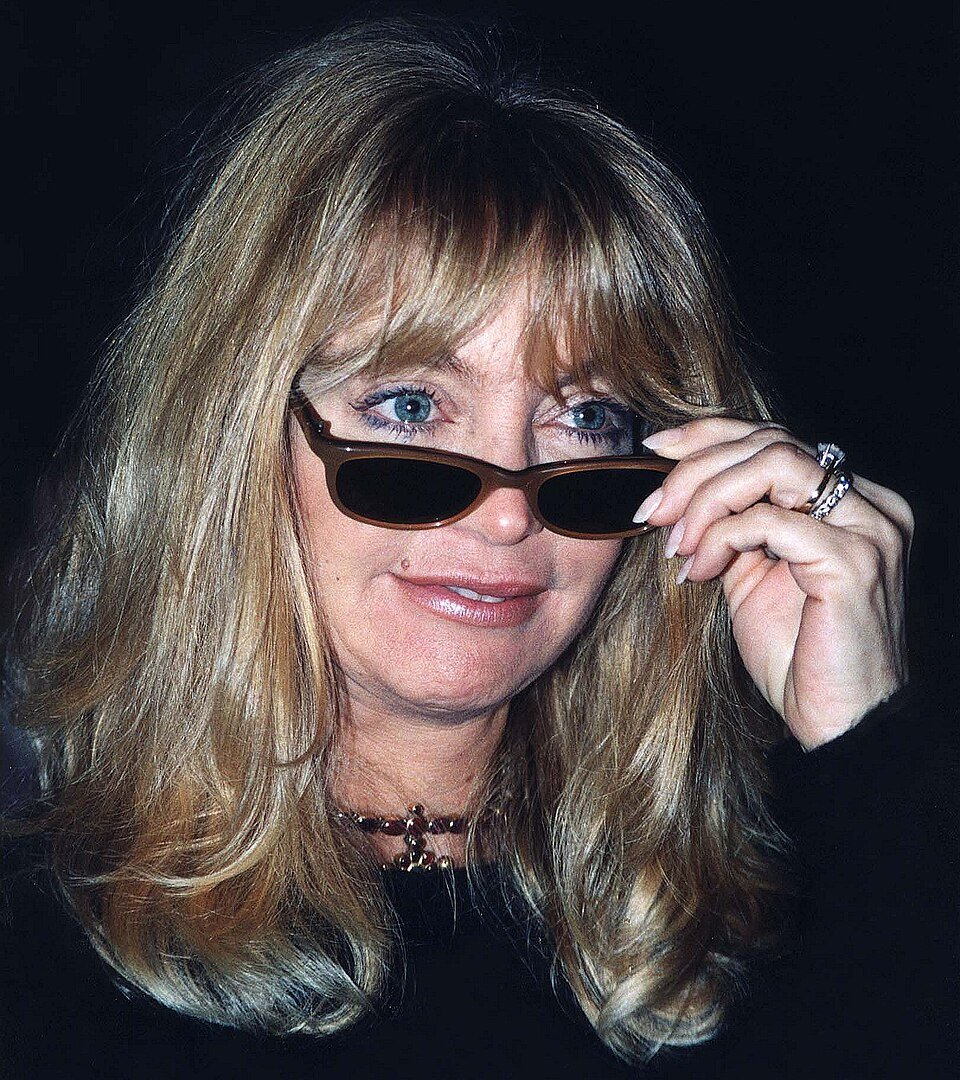
Goldie Hawn is an actress and producer whose career began in television sketch comedy in the late 1960s, produced an Academy Award before she was twenty-five, and settled, across the following four decades, into one of the most durable starring careers in Hollywood comedy. Celebrity Net Worth puts her net worth at $90 million, a figure examined later in this profile. In later life her public work has centred on the MindUP programme for children’s mental health, which she founded in 2003 and which has become, by reach, as significant a legacy as the films.
The $90 million Estimate Explained
Celebrity Net Worth puts Goldie Hawn’s net worth at $90 million. No competing total from Forbes or the Sunday Times Rich List exists for her, and the figure is therefore presented on its single allowed source, without embellishment. It should not be combined with her partner’s fortune: Hawn and Russell are not married, their finances are reported separately, and combined household figures that appear in some coverage are not used here, because they answer a different question from the one this profile asks. The $90 million estimate rests on more than fifty years of film salaries — she was among the best-paid comedy actresses of the 1980s and 1990s, with salaries reported in the range of $3 million to $4 million a picture at her peak — on her executive producer participation in Private Benjamin and other vehicles, on residuals from a body of films in constant circulation, and on book sales and property held over a long career.
The shape of the fortune is instructive. Unlike performers whose wealth depends on a single franchise, hers was accumulated across some forty films in five decades, several of them — Private Benjamin, Overboard, Death Becomes Her, The First Wives Club — still generating income long after release, and it survived a fifteen-year voluntary absence from acting without public financial difficulty of any kind. The foundation’s work is funded separately and is not part of the personal estimate.
She stands, on the attributed figure, as one of the wealthiest comedy actresses of her generation — an Academy Award winner at twenty-four who was still leading hit films at fifty-one, and who then did something rarer than either: she stopped, on her own terms, and built a second public life that has now lasted longer than Laugh-In.
How Laugh-In Built a Career
1968–1972: Laugh-In and an Academy Award
Her national breakthrough came in 1968 as a cast member of Rowan & Martin’s Laugh-In, the rapid-fire sketch programme that dominated American television at the end of the 1960s. Her character — the giggling, bikini-clad dancer who delivered jokes she appeared not quite to understand — made her famous in a season, and fixed a public image of cheerful ditziness that she spent much of her later career both using and quietly correcting: the intelligence of the performance was in its precision, and the industry noticed. Her first substantial film role, in Cactus Flower (1969), opposite Walter Matthau and Ingrid Bergman, won her the Academy Award for Best Supporting Actress, at twenty-four, for only her second feature film. She left Laugh-In in 1970, at the height of its success, to pursue film work, and followed the Oscar with leading roles including There’s a Girl in My Soup (1970) and Butterflies Are Free (1972). Few performers have converted a television comedy persona into the industry’s highest acting honour so quickly, and the award gave her a standing with directors and studios that outlasted the persona itself.
1974–1987: The Spielberg Film, Private Benjamin and Producer
The 1970s established her as a film actress of range. She starred in The Sugarland Express (1974), Steven Spielberg’s first theatrical feature, in a dramatic role far from the Laugh-In image; in the hit comedy Shampoo (1975); and in The Duchess and the Dirtwater Fox (1976) and Foul Play (1978), the latter a substantial commercial success in the Hitchcock-comedy vein. The decisive professional step came with Private Benjamin (1980), in which she starred as a wealthy widow who joins the army, and on which she also served as executive producer — then a rare assertion of control by a female star, taken because studios had doubted the material. The film was one of the largest hits of its year, grossing some $70 million in the United States, and brought her an Academy Award nomination for Best Actress. The producing precedent mattered as much as the hit: it demonstrated that she could originate and protect her own vehicles. Seems Like Old Times (1980), Best Friends (1982), Swing Shift (1984) — the film on which she met Kurt Russell, discussed later in this profile — Wildcats (1986) and Overboard (1987), opposite Russell, followed, the last of them becoming one of her most enduringly popular pictures through decades of television repeats and home viewing.
1990–2002: The First Wives Club and the Mature Hits
Her 1990s work opened with Bird on a Wire (1990), opposite Mel Gibson, another large commercial success, and continued with Death Becomes Her (1992), opposite Meryl Streep and Bruce Willis, a black comedy whose reputation has grown steadily since release, and Housesitter (1992), opposite Steve Martin. The commercial summit of the decade was The First Wives Club (1996), in which she starred with Bette Midler and Diane Keaton as divorced women taking revenge on the husbands who had traded them in; the film grossed $181 million worldwide and became a cultural reference point, notable at the time for proving that a comedy carried entirely by three actresses over fifty could lead the box office. She closed the period with Woody Allen’s musical Everyone Says I Love You (1996), The Out-of-Towners (1999), Town & Country (2001) and The Banger Sisters (2002), opposite Susan Sarandon, after which she stepped away from acting for fifteen years — a withdrawal she has explained simply: she was content, and the work on offer did not tempt her back.
2017–2026: The Return and MindUP
She returned to the screen in Snatched (2017), opposite Amy Schumer, and played Mrs Claus opposite Russell’s Santa Claus in The Christmas Chronicles (2018) and its sequel (2020), appearances that introduced her to a new generation of family audiences. The larger work of these years, however, has been the Goldie Hawn Foundation and its MindUP programme, founded in 2003, which teaches children techniques drawn from neuroscience and contemplative practice to manage stress, attention and emotion, and which the foundation reports has reached millions of children in dozens of countries. Her books — the memoir A Lotus Grows in the Mud (2005) and 10 Mindful Minutes (2011) — belong to the same project. The question her later career poses, of how early financial and emotional habits are formed, is one she now addresses in classrooms rather than cinemas; parents considering the domestic side of the same subject may find this discussion of whether teaching children about money is worth it a useful companion. In 2026 she expanded the work into children’s fiction as a co-author, a continuation rather than a new departure.
Roots in Washington, D.C.
Goldie Jeanne Hawn was born on 21 November 1945 in Washington, D.C., the daughter of Edward Rutledge Hawn, a band musician who played at major events in the capital, and Laura Hawn, née Steinhoff, who owned a jewellery shop and a dance school. She was named after an aunt of her mother’s. Her father was of German and English descent and a Presbyterian; her mother was Jewish, the daughter of immigrants from Hungary. The family lived in Takoma Park, Maryland, just outside Washington.
Dance came first, as it had for her mother: she began ballet and tap lessons at the age of three, danced in the chorus of a production of The Nutcracker at ten, and was teaching dance herself in her teens. She attended Montgomery Blair High School in Silver Spring, Maryland, where she was a cheerleader, and went on to American University in Washington to study drama. She left before graduating to pursue dancing professionally, ran her own ballet school briefly, and in 1964 worked as a professional dancer in New York, including as a go-go dancer, while studying acting. A summer stock engagement took her to California, where an agent noticed her, and television work followed. The training matters to the career that resulted: her comic timing, the quality on which everything else rested, was a dancer’s timing, learned in studios and chorus lines long before she had a line of dialogue to deliver.
The Actress From Washington, D.C. in Brief
| The Actress From Washington, D.C. in Brief | Details |
|---|---|
| Born | 21 November 1945, Washington, D.C. |
| Age | 80 years old |
| Height | 5 ft 6 in (1.68 m) |
| Weight | No reliable published figure exists |
| Partner | Kurt Russell (partner since 1983; not married) |
| Children | Three: Oliver Hudson, Kate Hudson and Wyatt Russell |
| Parents | Edward Rutledge Hawn and Laura Hawn |
| Family | Daughter of band musician Edward Rutledge Hawn and dance school owner Laura Hawn, of Takoma Park, Maryland |
| Siblings | Sister: Patti Hawn; brother Edward Jr. died in infancy |
| Net Worth | Estimated $90 million (Celebrity Net Worth) |
| @goldiehawn |
Marriage, Home and Washington, D.C. Roots
Her parents both died before her later career began: her father, Edward Rutledge Hawn, in 1982, and her mother, Laura Hawn, in 1993. Her siblings are a settled part of the record and are covered here because the pattern is in her set: she has one sister, Patti Hawn, an entertainment publicist, born in 1938, and the sisters also had a brother, Edward Jr., born in 1937, who died in infancy before Patti was born — a fact, often repeated in accounts of the family, that the sisters themselves did not learn until they were grown. The family she grew up in, musical on both sides and rooted in the Washington suburbs, remained her reference point; she was raised in her mother’s Jewish faith alongside her father’s Presbyterianism, and has described the household as warm, funny and disciplined about work.
She has been married twice, both marriages ending in divorce: first to the dancer and later director Gus Trikonis, from 1969 to 1976, and then to the musician Bill Hudson, from 1976 to 1982, the father of her two older children. Since Valentine’s Day 1983 she has been in a relationship with the actor Kurt Russell, whom she had first met as a teenager on a film set in 1966 and met again on Swing Shift. The bank label of partner is therefore exact, and its verified status should be stated as plainly as they state it themselves: Hawn and Russell are partners of more than forty years’ standing and are not married, a deliberate and frequently explained choice by two people who had each been divorced and who regard the commitment, rather than the ceremony, as the substance. She is also stepmother to Russell’s son Boston, from his first marriage.
Her three children have all become actors. Oliver Hudson, born on 7 September 1976, and Kate Hudson, born on 19 April 1979, are her children with Bill Hudson, though both were raised principally by Hawn and Russell and refer to Russell as their father in every practical sense; Kate Hudson’s career, including her Academy Award nomination for Almost Famous, has made her nearly as prominent as her mother. Wyatt Russell, born on 10 July 1986, is her son with Kurt Russell. She has eight grandchildren. Her Instagram account, @goldiehawn, is given largely to family photographs, MindUP work and public anniversaries of the partnership, and is one of the warmer corners of that platform.