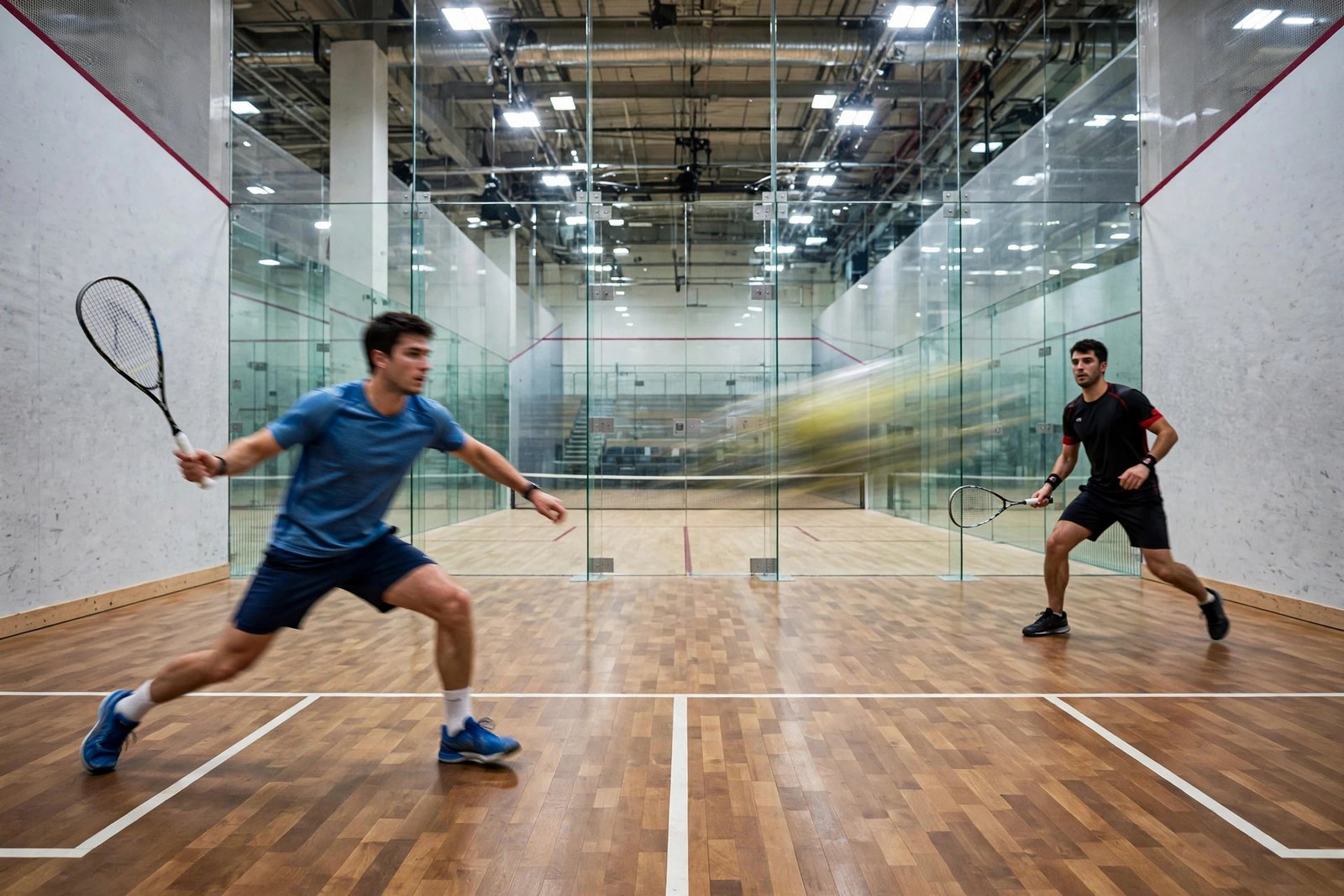
Squash is Britain’s great underrated racket sport: ferociously good exercise, cheap to start, playable year-round regardless of weather, and — in a university city like Durham — surrounded by courts and players. Yet beginners hesitate, unsure what it costs or how to begin. The honest answer: squash is one of the cheapest sports to learn, the learning curve is delightfully fast, and an hour on court burns calories like few other activities. This guide covers the real costs in Durham, how to start, the fundamentals, and how to find games.
You will learn the true cost breakdown, where to play in Durham, essential kit, the beginner’s technique priorities, how to find playing partners, and why squash players become evangelists.
The true costs: pleasantly cheap
Squash’s economics are simple because the needs are few. Court hire: £5–£12 per 40-minute session at most leisure centres, split between two players — £3–£6 each. University and club members often pay less or nothing. A beginner racket: £25–£45 buys a perfectly good starter racket; the £150 pro models offer nothing a beginner can use. Balls: £5–£8 for a tin; beginners should use double-yellow-dot… actually no — beginners should use the bouncier blue-dot or red-dot balls, which stay warm and lively at slower swing speeds. (The double-yellow “pro” ball dies quickly unless hit hard — a classic beginner mistake.)
Shoes: non-marking court shoes (£30–£55) — essential, as outdoor trainers mark courts and clubs enforce this. Eye protection (£10–£20): strongly recommended for beginners, whose lack of court awareness raises the (small but real) risk of racket or ball contact. Coaching: group beginner sessions £8–£12; a 4-week beginner course (£30–£50) teaches grip, swing, and movement fundamentals. Total first-month honest budget: £60–£100 including racket. Monthly playing cost thereafter: £15–£30 for weekly games. In Durham, the university’s sports facilities, the local leisure centres, and private clubs offer the full range — and many run beginner-friendly open sessions. Learning any new physical skill follows the same adult-learning principles as any new skill: short, frequent, coached-early practice.
How to start: the first four weeks
Week 1: solo hitting. Book a court alone for 40 minutes and just hit the ball against the front wall — forehands, backhands, getting a feel for the bounce and the swing. No pressure, no partner needed, pure discovery. This solo practice is squash’s secret weapon: unlike tennis, you can train meaningfully alone. Week 2: add a beginner session or coaching — grip (the handshake grip, relaxed), the basic swing (compact, wrist firm), and court movement (the T position — squash’s tactical centre).
Week 3: first games with a fellow beginner — agree to keep rallies going rather than playing to win; cooperative squash builds skills faster than competitive squash at this stage. Week 4: join the ecosystem — club beginner nights, box leagues for novices, or the university’s social sessions. The single best accelerator: play twice weekly rather than once — racket skills are motor patterns, and frequency beats duration for motor learning. Within two months of twice-weekly play, most beginners rally competently, understand basic tactics, and are thoroughly hooked.
Technique priorities (and what to ignore)
Prioritise: watching the ball onto the racket (beginners watch opponents or the wall — eyes on ball contact transforms consistency); the ready position and T recovery (returning to the T after every shot is squash’s foundational habit — it halves the court you must cover); compact swings (big tennis-style swings are too slow for squash’s pace — short backswing, firm wrist, follow-through); and length over winners (deep shots to the back corners win beginner games; attempting kills loses them).
Ignore initially: fancy shots (drops, boasts, trickery — all built on the basics you are still learning); perfect footwork patterns (movement improves naturally with play — formal drills come later); and equipment obsession (strings, tensions, racket weights are irrelevant until your technique is consistent). The beginner’s match formula mirrors tennis: keep the ball in play, hit deep, recover to the T, and let the opponent make errors. Fitness note: squash is intensely stop-start — build general fitness alongside, and warm up properly; the explosive lunges punish cold muscles. As a rewarding active pursuit, it sits comfortably among the most engaging hobbies adults adopt.
Finding games and community in Durham
Squash communities are welcoming because they need players — the sport constantly recruits. Club noticeboards (physical and digital) list players seeking games at every level; box leagues group you with similar standards for regular competitive-but-friendly matches; beginner courses end with ready-made playing partners. The university’s squash setup, if you have access, is ideal: cheap courts, abundant players, structured social sessions.
Do not fear playing better opponents — most experienced players enjoy mentoring rallies with beginners (it is good practice for their control), and you improve fastest against slightly superior players. Offer to warm them up, be reliable about bookings, and learn the etiquette: let balls pass that are clearly going out, call lets honestly, shake hands after. Squash etiquette is simple and sportsmanlike — the enclosed court demands mutual respect, and the culture reflects it. Within months, “anyone for squash Thursday?” becomes a standing fixture, and the sport’s social glue is half the addiction.
Why squash players become evangelists
Ask a squash player and you will get a sermon: the fitness (600–800 calories an hour, full-body, in 40 minutes — unmatched time efficiency); the mental chess (every rally is tactical — angles, deception, pressure); the weather-proofing (indoor, year-round, bookable in minutes); and the longevity (players compete vigorously into their 60s and beyond — the low-impact-unless-you-choose-otherwise nature suits ageing athletes).
The deeper reason is flow: squash’s pace forces total presence — there is no mental space for work worries when a ball is hurtling at you in an enclosed court. Forty minutes of forced mindfulness, disguised as sport. That combination — intense exercise, tactical depth, social connection, and mental escape, all for a few pounds a session — is why beginners become lifers. Try it for a month; the racket will tell you the rest.
Conclusion
Learning squash as a beginner in Durham costs £60–£100 to start and £15–£30 monthly thereafter — among the cheapest sports available. Start with solo wall-hitting, add a beginner course, prioritise watching the ball and recovering to the T, use bouncy blue-dot balls, and find your community through clubs and box leagues. Two sessions a week for two months, and you are a squash player. The evangelism will follow naturally.
Frequently Asked Questions
Is squash hard for complete beginners?
The basics come quickly — most people rally within a few sessions. Mastery takes years, but enjoyable play arrives fast, which is the perfect learning curve.
What is the difference between squash ball dots?
Blue/red dots are bouncier (beginner-friendly); single yellow is medium; double yellow is the slow pro ball. Beginners should use blue or red dots — the pro ball will frustrate you.
Do I need lessons or can I self-teach?
A short beginner course (£30–£50) is excellent value — it prevents grip and swing faults that are painful to unlearn. After that, play is the teacher.
Is squash dangerous for the eyes?
The risk is small but real, especially for beginners. Polycarbonate eye protection (£10–£20) is cheap insurance — wear it until your court awareness develops. BBC Sport covers the professional game for inspiration, and England Squash lists clubs and beginner programmes.