Frank Sinatra Net Worth, Biography, Age, Family and Career
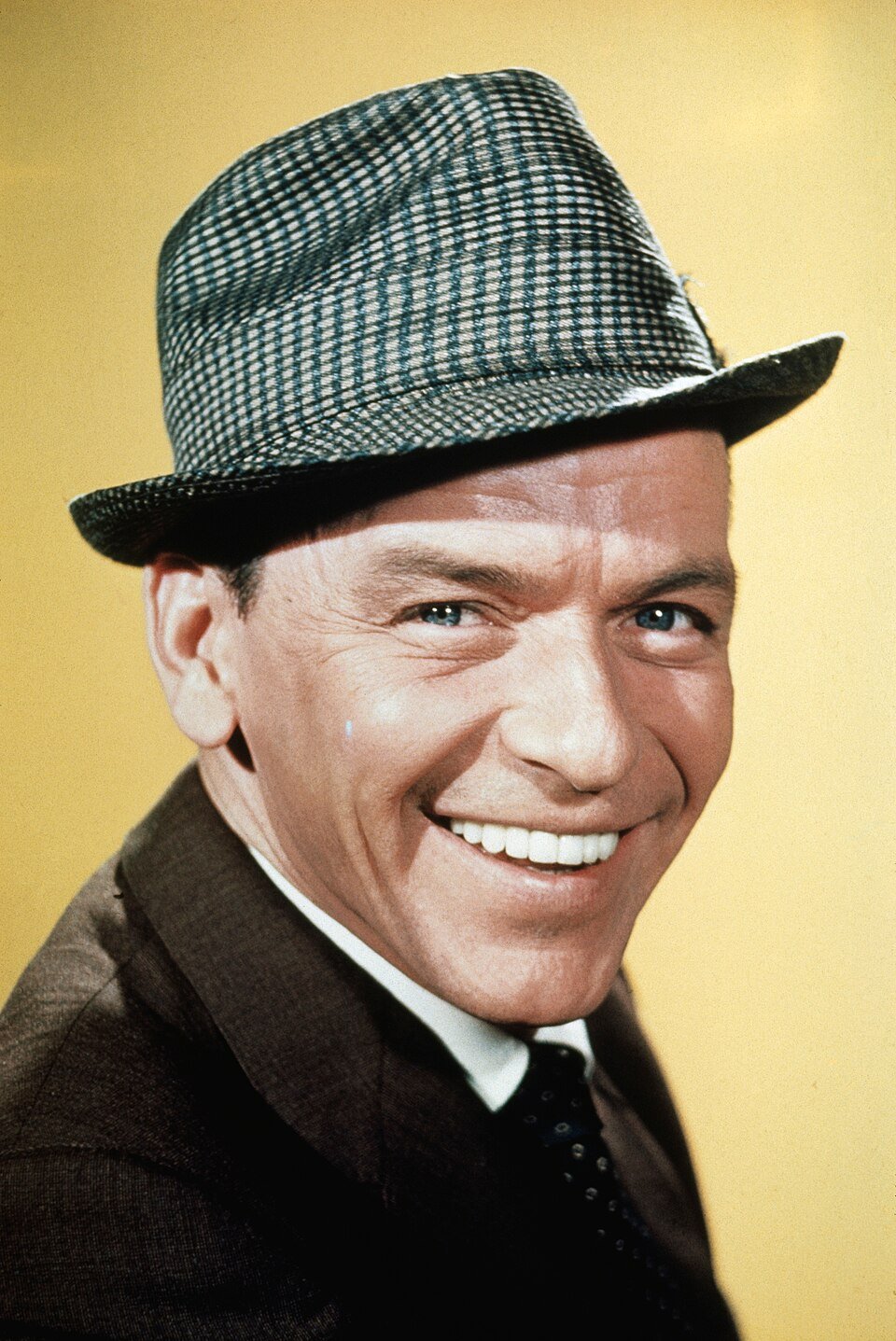
Frank Sinatra was a singer and actor whose career of more than fifty years set the standard for popular singing in the twentieth century, from the dance-band years through the Capitol albums of the 1950s to My Way and the concert stages of his final decade. Celebrity Net Worth puts his net worth at the time of his death at $200 million, while noting that contemporary estimates of his estate ranged as high as $600 million, a disagreement recorded in full later in this profile. He died in Los Angeles on 14 May 1998, aged 82, with his wife Barbara at his side.
After Harry James: The Career Takes Off
1939–1942: Harry James, Tommy Dorsey and the Band Years
His break came in 1939, when the trumpeter and bandleader Harry James heard him singing on a radio broadcast from a New Jersey roadhouse and signed him. With James he made his first commercial recordings, including All or Nothing at All, which sold modestly at the time and became a major hit when reissued four years later. In January 1940 he moved to Tommy Dorsey’s orchestra, then the most successful dance band in the country, and it was with Dorsey that he became a star. His recordings with the band, among them I’ll Never Smile Again, which spent twelve weeks at number one in 1940, taught him breath control, phrasing and the long line that defined his mature style; he credited Dorsey’s trombone playing as his model. When he left Dorsey at the end of 1942 to go solo, the departure was the subject of hard negotiation and lasting rumour, but its effect was simple: the band era’s leading singer became its first great solo attraction.
1943–1952: The Voice, the Bobby-Soxers and the Fall
As a solo artist on Columbia Records he was, for a few extraordinary years, the most feverishly adored singer in the country. His appearance at the Paramount Theatre in New York in 1943, and his return there in October 1944, when thousands of young fans — the bobby-soxers — rioted in the streets, made him a phenomenon beyond music. Songs of this period, including Nancy (with the Laughing Face), written for his daughter, sold in the millions. Then, at the start of the 1950s, it collapsed with a speed that matched the rise: his voice deteriorated, his record sales fell, his agency dropped him, his marriage ended and in 1951 he attempted to take his own life in a period of despair over Ava Gardner. By 1952 he was, in the trade’s judgement, finished at 36.
1953–1962: From Here to Eternity and the Capitol Years
The recovery began with a single part. He campaigned, at a much reduced salary, for the role of Private Angelo Maggio in From Here to Eternity (1953) and won the Academy Award for Best Supporting Actor for it, one of the most famous comebacks in entertainment history. In the same year he signed to Capitol Records and began the sequence of albums on which his reputation principally rests, working above all with the arranger Nelson Riddle: Songs for Young Lovers (1954), In the Wee Small Hours (1955), a sustained study of lost love that is routinely placed among the finest albums ever made, Songs for Swingin’ Lovers! (1956), with its definitive I’ve Got You Under My Skin, Come Fly with Me (1958) and Only the Lonely (1958). His screen work of the period, including The Man with the Golden Arm (1955), Guys and Dolls (1955), High Society (1956) and Pal Joey (1957), kept the two careers running side by side at the highest level.
1963–1979: Reprise, My Way and the Rat Pack Years
In 1960 he founded his own label, Reprise Records, an assertion of control that gave him his later nickname of Chairman of the Board and that he eventually sold to Warner Bros. while remaining its leading artist. The Las Vegas years with Dean Martin, Sammy Davis Jr. and the rest of the Rat Pack, and their joint appearance in Ocean’s 11 (1960), fixed his public image of ease and command. The recordings continued at the highest standard: Strangers in the Night (1966) was a number one single and won him a Grammy, That’s Life followed it into the top five, the album September of My Years (1965) won the Grammy for Album of the Year, and in 1969 he recorded My Way, Paul Anka’s adaptation of a French song, which became his signature whether he wished it or not — in Britain it spent 75 weeks in the top 40. He announced his retirement in 1971, gave a farewell concert that June, and was back within two years with the album Ol’ Blue Eyes Is Back (1973).
1980–1998: Theme from New York, New York, Duets and the Final Concerts
Theme from New York, New York, recorded in 1979 and released in 1980, gave him a last anthem, adopted by the city it celebrates and sung at its ballparks ever since. Through the 1980s he performed constantly, in concert halls and arenas and on long tours with fellow stars, and his voice, though weathered, retained its phrasing and authority on the ballads that mattered most to him. In 1993, at 77, he returned to Capitol for Duets, recording his standards alongside contemporary singers by means of studio technology that allowed the parts to be made separately; the album reached number two and became the best-selling release of his entire career. Duets II followed in 1994. His final public concert was in Japan in December 1994, and his last public singing appearance was in Los Angeles in February 1995. Record sales across his career exceeded 150 million worldwide.
The Singer From Hoboken, New Jersey in Brief
| The Singer From Hoboken, New Jersey in Brief | Details |
|---|---|
| Born | 12 December 1915, Hoboken, New Jersey |
| Age | 82 years old at death (died 14 May 1998) |
| Height | 5 ft 8 in (1.73 m) |
| Weight | No reliable published figure exists |
| Wife | Barbara Sinatra (married 1976; his wife until his death) |
| Children | Three: Nancy, Frank Jr. and Tina |
| Net Worth | Estimated $200 million at death (Celebrity Net Worth); contemporary estimates ranged to $600 million |
| House | Twin Palms, Palm Springs; homes in Beverly Hills, Malibu and Rancho Mirage |
Family Ties to Hoboken, New Jersey
His parents remained in Hoboken, where his mother Dolly was killed in a light aircraft accident in January 1977, on her way to join him in Las Vegas; his father had died in 1969. He was an only child, and the family he made was the centre of a private life that was otherwise conducted very publicly.
He married four times. His first wife was Nancy Barbato, his Hoboken sweetheart, whom he married on 4 February 1939 and with whom he had his three children; they separated in 1950 and divorced in 1951. He married the actress Ava Gardner in November 1951; the marriage was turbulent, they separated in 1953 and divorced in 1957, and he spoke of her with regard for the rest of his life. He married the actress Mia Farrow in July 1966; they divorced in 1968. In July 1976 he married Barbara Marx, a former showgirl and model who had previously been married to Zeppo Marx. The bank label of wife is therefore carried with its verified history attached: Barbara Sinatra was his fourth wife, his wife of twenty-two years and his widow, and she was with him when he died. She died in 2017.
His three children, all with Nancy Barbato, were Nancy, born in 1940, who had a substantial singing career of her own including the number one single These Boots Are Made for Walkin’ in 1966; Frank Jr., born in 1944, a singer and conductor who worked as his father’s musical director in the later concert years and who died in 2016; and Tina, born in 1948, who became a producer and the family’s principal steward of his legacy. In December 1963 Frank Jr. was kidnapped from a Lake Tahoe hotel and ransomed for $240,000, which his father paid; the young man was released unharmed after two days and the kidnappers were caught and convicted, an episode that marked the family deeply.
His final years were lived quietly and largely out of sight. He suffered a heart attack in January 1997 and was not seen in public again. On the evening of 14 May 1998 he was taken to Cedars-Sinai Medical Center in Los Angeles after a further heart attack and died there, aged 82, with Barbara at his side. His funeral was held on 20 May 1998 in Beverly Hills, with some four hundred mourners inside and thousands of fans outside, and he was buried beside his parents at Desert Memorial Park in Cathedral City, under a marker inscribed with the title of one of his songs: The Best Is Yet to Come.
Where Frank Grew Up
Francis Albert Sinatra was born on 12 December 1915 in Hoboken, New Jersey, the only child of Anthony Martin Sinatra and Natalina Sinatra, known to everyone as Dolly. His father worked in the Hoboken fire service, rising to the rank of captain, and also boxed professionally in his youth under another name and ran a tavern during the Prohibition years. His mother was a midwife and a forceful figure in local Democratic politics in Hoboken, well known in the neighbourhood long before her son was famous. The birth was difficult and left its marks: he was delivered with forceps, which scarred his left cheek and ear and perforated an eardrum, injuries that stayed with him and that he was conscious of for the rest of his life.
He grew up in Hoboken in comfortable enough circumstances by the standards of the place and time, an only child in a city of docks and tenements. He sang from an early age, first for change in his father’s tavern and then, after hearing Bing Crosby, with a single-minded ambition to sing professionally. He attended A. J. Demarest High School but left without graduating, and worked as a delivery boy, a riveter in a shipyard and a sports reporter on a local newspaper while singing wherever he could: on the radio, in roadhouses and with local bands. In 1935 he appeared with a Hoboken singing group, the Hoboken Four, on the Major Bowes Amateur Hour radio programme, and the group won and toured. He was, by then, entirely set on the course his life took.
The Money Behind the Fame: $200 million
Celebrity Net Worth puts his net worth at the time of his death at $200 million, and its account of his finances is unusually candid about the range around that figure: contemporary estimates placed his overall fortune between $200 million and $600 million, and the exact amount was never publicly established, because a significant part of his holdings had been placed in a living trust and did not pass through the public probate process. The disagreement is therefore printed in full, as his source prints it: $200 million as the tracker’s headline figure, with contemporary estimates running to $600 million. No competing total from Forbes or the Sunday Times Rich List exists for the period. His financial history was not a straight line. In 1981, seeking the renewal of a Nevada gaming licence, he submitted a financial statement putting his net worth at just over $14 million, a low point after decades of high spending, tax difficulties and generosity on a scale his accountants deplored. The fortune of his final years was rebuilt on concert earnings, royalties and the catalogue.
His will guaranteed Barbara at least $3.5 million and left her substantial property, including the homes in Beverly Hills, Malibu and the Palm Springs area. His three children each received $200,000 directly under the will, with considerably more valuable assets and rights held outside it in trusts and other arrangements. The house most closely associated with him was Twin Palms in Palm Springs, the modernist residence he commissioned in 1947 for a reported $150,000, with its piano-shaped swimming pool, which he shared first with Nancy and then, in its most storied years, with Ava Gardner. His later desert base was a compound at Rancho Mirage, and he kept homes in Beverly Hills and Malibu through his final decades. The contrast with the rural properties described in guides to the best hidden gems in the Cotswolds is a measure of his world: desert modernism and coastal California, chosen for sun, privacy and proximity to the studios and stages where he worked. In 2007, nine years after his death, Warner Music Group paid $50 million for a 50 per cent interest in the company formed to manage the licensing of his name, likeness and legacy — a posthumous transaction, recorded here as part of the estate’s history and not as part of the figure at death.
He died, by the measure of his own industry, in a class of one: the singer by whom others were judged, whose best albums have never been out of print, and whose estate, somewhere between $200 million and $600 million on the contemporary estimates, was as difficult to count exactly as his influence was easy to hear.