Running shoes are the most consequential purchase in a runner’s life and the most marketing-saturated: carbon plates, energy-returning foams, gait analysis theatre — all promising to transform your running while emptying your wallet. The truth about choosing the right running shoes is simultaneously simpler and more interesting than the adverts: fit and function matter enormously, brand and price matter far less, and most of what you need to know fits in a single shoe-shop visit done properly. This guide explains how running shoes actually work, how to choose the right pair for your feet and goals, and how to avoid paying for technology you do not need.
You will learn what actually matters in a running shoe, the pronation story (and what the industry oversells), how to get fitted properly, the budget buyer’s playbook, when to replace shoes, and the myths to ignore.
What actually matters: fit, purpose, and cushioning
Fit is 80% of the decision. Running feet swell and slide: you need a thumb’s width (about 1–1.5cm) between your longest toe and the shoe’s end, no heel slip when walking, no pressure points anywhere, and width that does not squeeze your forefoot. Try shoes on in the afternoon (feet swell during the day), wearing your running socks, and jog around the shop — any discomfort in the shop becomes pain at kilometre eight. Shoes do not “break in” meaningfully; comfort from the first wear is the test.
Purpose is the next 15%: road shoes for pavement (durable, cushioned), trail shoes for off-road (grippy, protective), and racing flats only if you are actually racing. Most beginners need a neutral daily road trainer — the workhorse category where competition is fiercest and value best. Cushioning preference is personal: some runners love plush maximal shoes, others prefer firmer ground feel. Neither is objectively superior; injury studies stubbornly refuse to crown a cushioning winner. The remaining 5% — weight, drop, rocker geometry — matters to experienced runners fine-tuning performance, not to beginners choosing their first pair. Getting the fundamentals right protects the joints that carry you, complementing sensible training habits like building a walking base before running volume climbs.
Pronation, gait analysis, and what is oversold
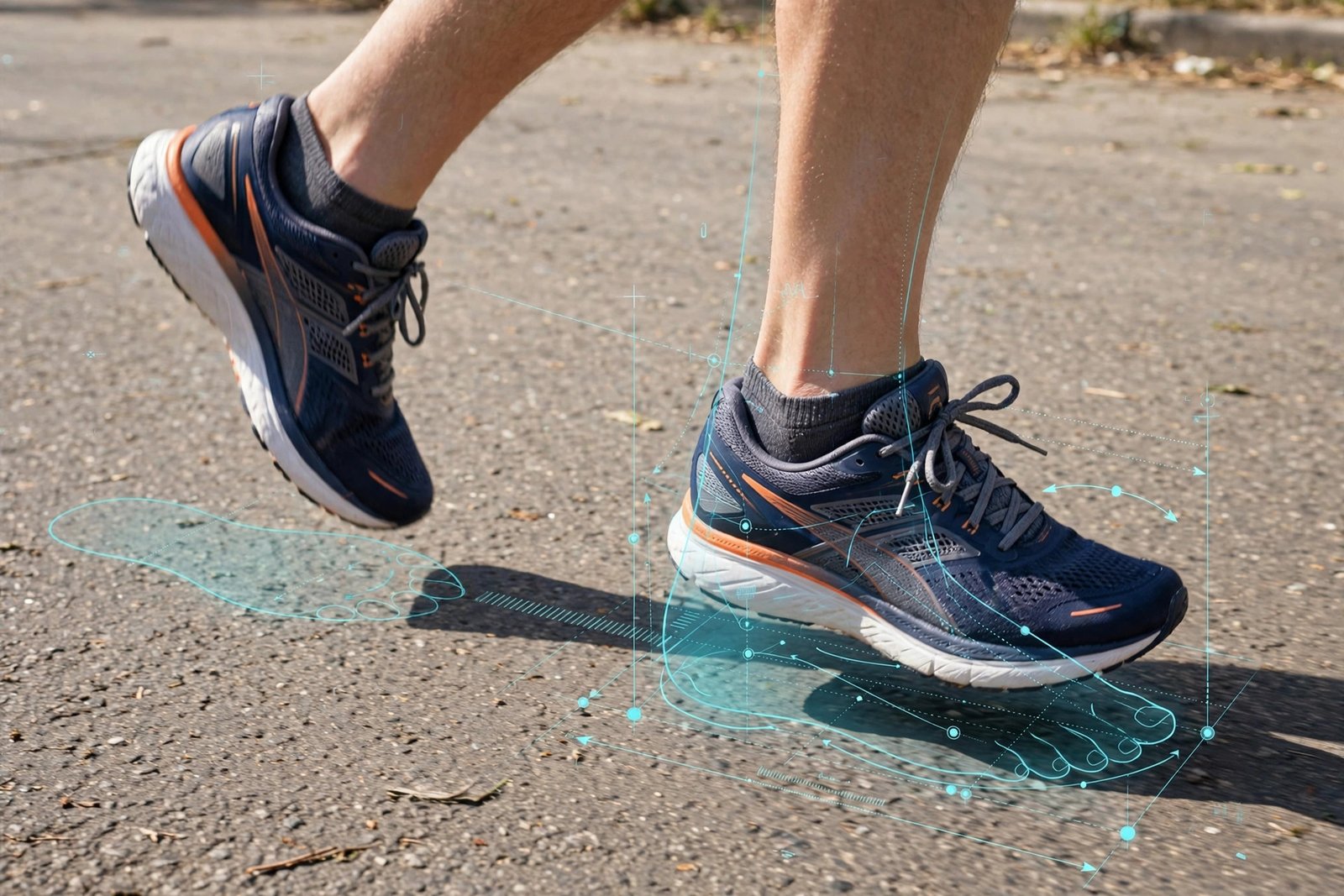
Pronation — the foot’s natural inward roll on landing — is normal and necessary; it is shock absorption. The industry built a empire on categorising runners as neutral, overpronators, or underpronators (supinators) and prescribing “stability” shoes to correct the roll. Here is what the evidence actually says: prescribing shoes by pronation type has not been shown to reduce injury rates in the large studies that tested it. Comfort — the shoe feeling right — predicts injury outcomes better than any gait category.
This does not make gait analysis useless: watching yourself run can reveal genuine issues (heavy overstriding, obvious asymmetries) worth addressing through form work. But the common outcome — being sold motion-control shoes for mild pronation that never needed correcting — is commerce, not science. If a shop’s analysis funnels you exclusively toward their most expensive stability models, get a second opinion. The honest fitter talks about comfort first, categories second. And remember that strength work does more for “overpronation” than any shoe: choosing well-made trainers matters, but strong feet and hips matter more.
The budget buyer’s playbook
Running shoe pricing is largely fashion: last season’s £130 shoe becomes this season’s £65 shoe with zero functional change beyond cosmetic updates. The playbook: identify 2–3 well-reviewed daily trainers from major brands, then buy last year’s version online or in outlet stores at 40–60% off. Mid-range models (£60–£90 at discount) from established brands outperform most £150+ fashion-forward releases for beginner needs.
Timing matters: new models typically launch in spring and autumn, discounting predecessors. Try on in a proper running shop first (use their expertise, buy the discounted version elsewhere guilt-free — or better, ask if they price-match), then reorder the same model online when replacements are needed. Avoid: supermarket “running” shoes with no running heritage (cushioning compounds matter and cheap ones collapse fast), second-hand running shoes (the midsole is already compressed to someone else’s gait), and buying purely on colour. A beginner’s honest budget: £50–£80 for shoes that will comfortably carry 500–800km.
When to replace: reading the wear
Running shoes die gradually, then suddenly: the midsole foam compresses, cushioning fades, and niggles appear that were not there before — new knee aches, shin soreness, general leg fatigue on familiar runs. The 500–800km guideline is real but individual: heavier runners and hard-surface runners wear shoes faster. Track distance with a free app, but trust your body over the odometer.
Inspect the outsole for worn-through patches and the midsole for deep creasing — visible compression lines signal dead foam. Rotate two pairs if you run frequently: foam recovers between runs, extending each pair’s life, and rotation subtly varies the stress on your legs. When replacing, the same model in a new version is usually the safe choice — manufacturers change fits between versions often enough that a quick try-on remains wise. Do not hoard: stockpiled shoes’ foam degrades with age even unworn, so buy for the next 6–9 months, not the next three years.
Myths to ignore
“Expensive shoes prevent injuries” — no evidence; comfort and gradual training do. “You need different shoes for different distances” — beginners do not. “Carbon plates will make you faster” — they help elite marathoners marginally; for a 30-minute 5k runner they are jewellery. “Barefoot is the natural answer” — transition injuries are real and the evidence is mixed; interesting, not beginner advice. “One brand fits all feet” — lasts vary enormously between brands; the brand that fits your friend may torture you.
The meta-myth is that equipment choice determines running success. It does not — consistency does. The runner in £60 last-season trainers who trains three times a week will always beat the runner in £200 super-shoes who trains sporadically. Buy sensibly, then forget about shoes and focus on the running. The NHS Couch to 5K programme embodies this philosophy: the plan matters, the shoes just need to fit. Sport England also publishes guidance on getting active affordably.
Conclusion
Choosing the right running shoes comes down to fit first (thumb’s width, no heel slip, comfortable immediately), purpose second (neutral daily road trainers for most beginners), and price last (last season’s models at half price). Ignore the pronation upsell, replace at 500–800km or when niggles appear, and remember that the shoes enable the training — they are not the training. Get fitted once, buy smart, and run.
Frequently Asked Questions
How much should a beginner spend on running shoes?
£50–£80 buys excellent last-season models from reputable brands. Above £100 you are paying for marginal gains and fashion; below £40, cushioning quality drops off sharply.
Do I need gait analysis?
It is helpful but not essential. A good shop fitting focused on comfort achieves 90% of the benefit. Do not let analysis funnel you into overpriced “corrective” shoes.
Can I run in my regular trainers?
For the first couple of weeks, yes — but proper running shoes’ cushioning and structure matter as volume builds. Upgrade before niggles start, not after.
How do I know my shoes are worn out?
New aches on familiar runs, visibly compressed midsoles, and worn outsoles. Track roughly 500–800km, but let your body cast the deciding vote.