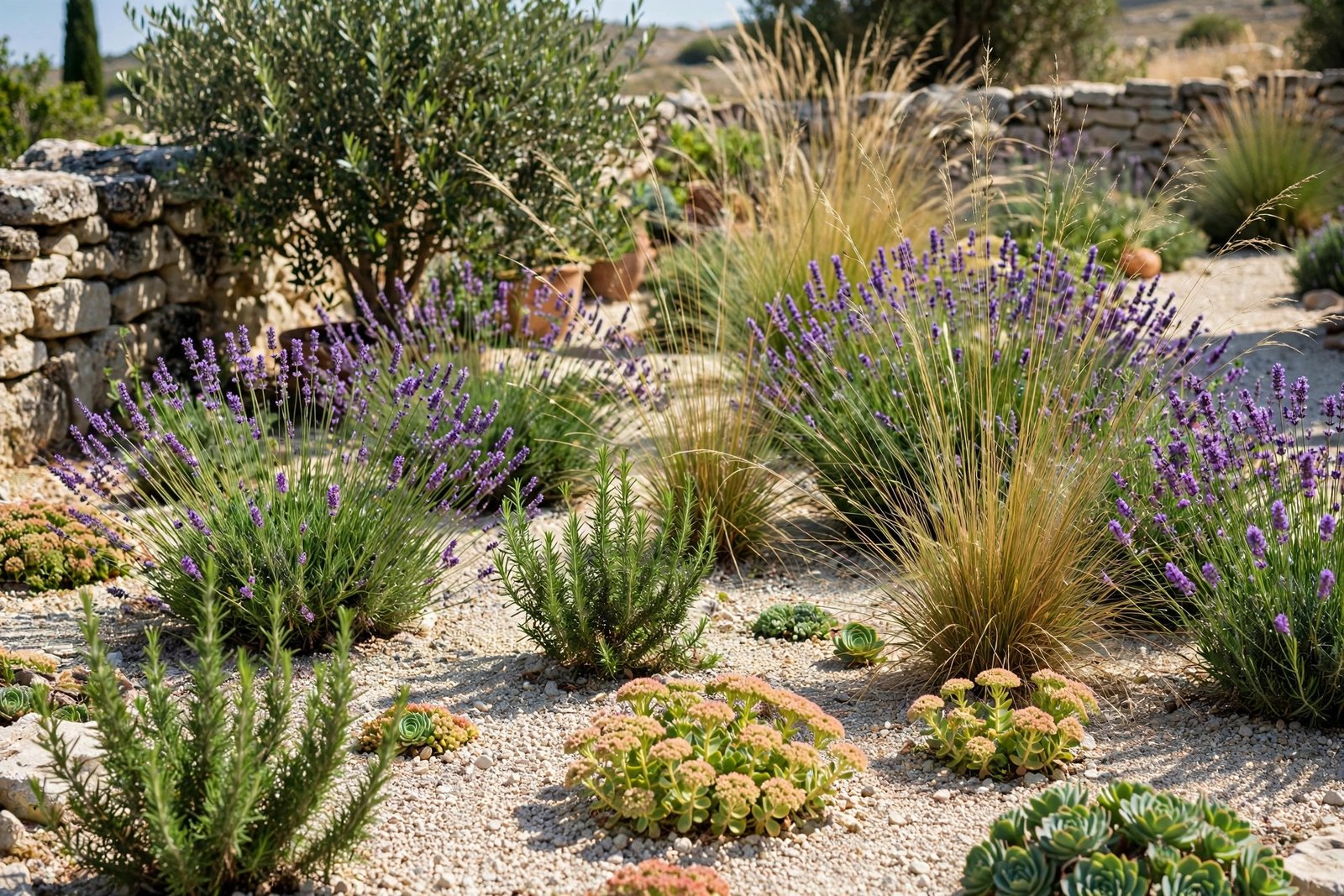
The summer of 2022 gave British gardeners a preview of the future: 40°C in Lincolnshire, hosepipe bans across the South East, and lawns that looked like shredded wheat. Climate projections suggest such summers will become routine rather than freakish — drier, hotter, and harder on traditionally thirsty planting. Drought-resistant gardening is the adaptation: not a gravel car park with delusions of grandeur, but a lush, colourful, wildlife-friendly garden designed around plants that thrive on neglect. For complete beginners, it is paradoxically one of the easiest styles to start — because the plants want less from you, not more.
What Drought-Resistant Gardening Actually Means
Forget “drought-tolerant” as a euphemism for “survives misery.” The best drought-resistant plants genuinely prefer dry, sunny, poor conditions — they evolved in Mediterranean hillsides, American prairies and South African scrub, and they sulk in rich, damp soil. The design principle is right plant, right place taken seriously: match plants to the conditions you have (sunny, free-draining) rather than fighting to create conditions you don’t (irrigated, humid).
The aesthetic is not desert — it is the prairie-Mediterranean fusion pioneered by designers like Beth Chatto (whose famous gravel garden in Essex is never watered) and epitomised by the Olympic Park plantings: ornamental grasses swaying with echinacea, salvias, lavender and sedum. Lush, just differently lush.
The Beginner’s Plant List: 20 That Forgive Everything
Structural grasses: Stipa tenuissima (Mexican feather grass — the billowing blonde cloud), Miscanthus sinensis cultivars, Pennisetum (fountain grass). Summer flowers: Echinacea purpurea (coneflower — bees adore it), Rudbeckia fulgida, Salvia nemorosa (‘Caradonna’ is bulletproof), Verbena bonariensis (self-seeds everywhere, beloved by butterflies), Gaura lindheimeri, Eryngium (sea holly — architectural silver-blue). Scented classics: lavender (‘Hidcote’, ‘Munstead’), rosemary (upright ‘Miss Jessopp’s’ for hedging), santolina. Ground level: sedum (stonecrop — the autumn bee magnet), Erigeron karvinskianus (daisy that colonises walls and cracks), thyme (between pavers). Bold accents: Phlomis russeliana (Jerusalem sage), Cistus (rock rose), Agapanthus (mild areas).
Every one of these is widely available, cheap (£4–£8 in 9cm/1L pots), and — critically — needs watering only in its first summer. After establishment (one to two growing seasons), they handle UK droughts unaided. The RHS plant finder filters by drought tolerance for expanding the list.
The Method: Establishment Is Everything
Here is the secret beginners miss: drought-resistant plants are not drought-resistant until established. Year one, they need exactly the cosseting you’d expect — regular watering while roots grow deep. The technique that builds resilience:
- Plant in autumn or early spring — roots establish in cool, moist soil before summer demand.
- Water deeply but infrequently in year one — a weekly deep soak trains roots downward; daily sprinkles train them shallow (and shallow roots are drought-vulnerable).
- Mulch with gravel, not bark — 5cm of pea gravel or crushed slate suppresses weeds, keeps crowns dry (many Mediterranean plants rot in winter wet under bark), and reflects heat up into the plants.
- Don’t improve the soil too much — these plants prefer poor, free-draining soil; rich compost produces soft, floppy, thirsty growth. Dig in grit on heavy clay, then leave it lean.
- Year two: withdraw. Reduce watering through the second summer; by year three, established plants need nothing in all but extreme drought.
Design Basics for Beginners
Preparing the Soil for Dry Conditions
Drought-resistant planting starts below ground. Dig in generous amounts of horticultural grit on heavy clay — drainage matters more than fertility, because winter wet kills more Mediterranean plants than summer drought ever will. Then add organic matter (garden compost or well-rotted manure) at a modest rate: it acts as a sponge, holding moisture where roots can reach it without waterlogging the crown. The ideal dry-garden soil is lean, gritty and alive — poor enough to keep growth compact and tough, structured enough to bank winter rain for summer use. One barrow of grit and one of compost per square metre, dug in before planting, sets the bed up for a decade.
Drifts, not dots: plant in groups of 5–9 for impact — the prairie look comes from repetition. Height graduation: tall grasses and verbena at the back, mid-height echinacea and salvias in the middle, sedum and thyme at the front. Year-round structure: leave grasses and seed heads standing through winter (stunning in frost, vital for overwintering insects) — cut down in late February. Gravel as mulch and path: unify beds and paths with the same gravel for the cohesive dry-garden look. One water feature, no watering: a small pond or rill adds the reflective contrast that makes dry gardens sing — and needs topping up far less than irrigation would.
For the broader low-maintenance approach, low-maintenance garden ideas for busy people overlap substantially, and budget garden design keeps the plant bill down (buy small, plant densely, divide and swap after year two).
What About the Lawn?
The honest answer: in a drought-resistant garden, the traditional lawn is the problem child — thirsty, labour-intensive, ecologically barren. Options: shrink it (keep a small usable rectangle, convert the rest), replace with alternatives (chamomile lawns for scented low-traffic areas, thyme lawns, or simply gravel with stepping stones), or accept the brown (an unwatered lawn goes dormant, not dead — it greens up with autumn rain; the brown-lawn stigma is cultural, not horticultural). Wildflower-meadow conversion (sow yellow rattle to suppress grass, then meadow mix) turns lawn liability into biodiversity asset.
Conclusion
Drought-resistant gardening for beginners is gloriously counterintuitive: choose plants that prefer neglect, plant them in autumn, water deeply in year one, mulch with gravel, and then — the hardest part for keen gardeners — leave them alone. The result is a garden that looks better in a heatwave than its thirsty neighbours, needs a fraction of the water and work, feeds pollinators all summer, and stands beautiful through winter frost on its skeletons. Start with a single sunny border this autumn: nine salvias, five echinaceas, three grasses, gravel mulch. By the third summer, you’ll be the gardener giving other people advice during the hosepipe ban.
Frequently Asked Questions
Will drought-resistant plants survive a wet British winter?
Mostly yes, with one caveat: winter wet kills more Mediterranean plants than winter cold. The gravel mulch, free-draining soil and raised planting positions in this guide are specifically anti-wet measures. In very exposed northern gardens, choose the hardiest cultivars (‘Munstead’ lavender over French types) and avoid frost pockets.
How much water do established drought-resistant plants need?
In most UK summers: none. In extreme heatwaves (35°C+ for weeks): an occasional deep soak for the most prized specimens. Containers are the exception — pots always need watering. The whole point is a garden decoupled from the hosepipe.
Is a drought-resistant garden expensive to create?
Cheaper than a traditional border: the plants are common and inexpensive (£4–£8 each), gravel mulch is cheap in bulk bags, and there is no irrigation system to buy. A 3m x 2m border can be planted for £80–£150. The savings compound — no irrigation, minimal feeding, little replanting.
Can I convert an existing border gradually?
Yes — the easiest route. Each autumn, replace the thirstiest failures with drought-resistant alternatives; within three years the border has converted itself. Keep any plants that are already thriving (they’ve proven their adaptation) and edit out the strugglers without guilt.
Do drought-resistant gardens help wildlife?
Enormously — echinacea, verbena, salvia, sedum and lavender are among the UK’s top pollinator plants, and the undisturbed winter skeletons shelter overwintering insects. A dry garden managed without pesticides is a wildlife garden by default. The Wildlife Trusts actively promote drought-resilient planting for nature recovery.