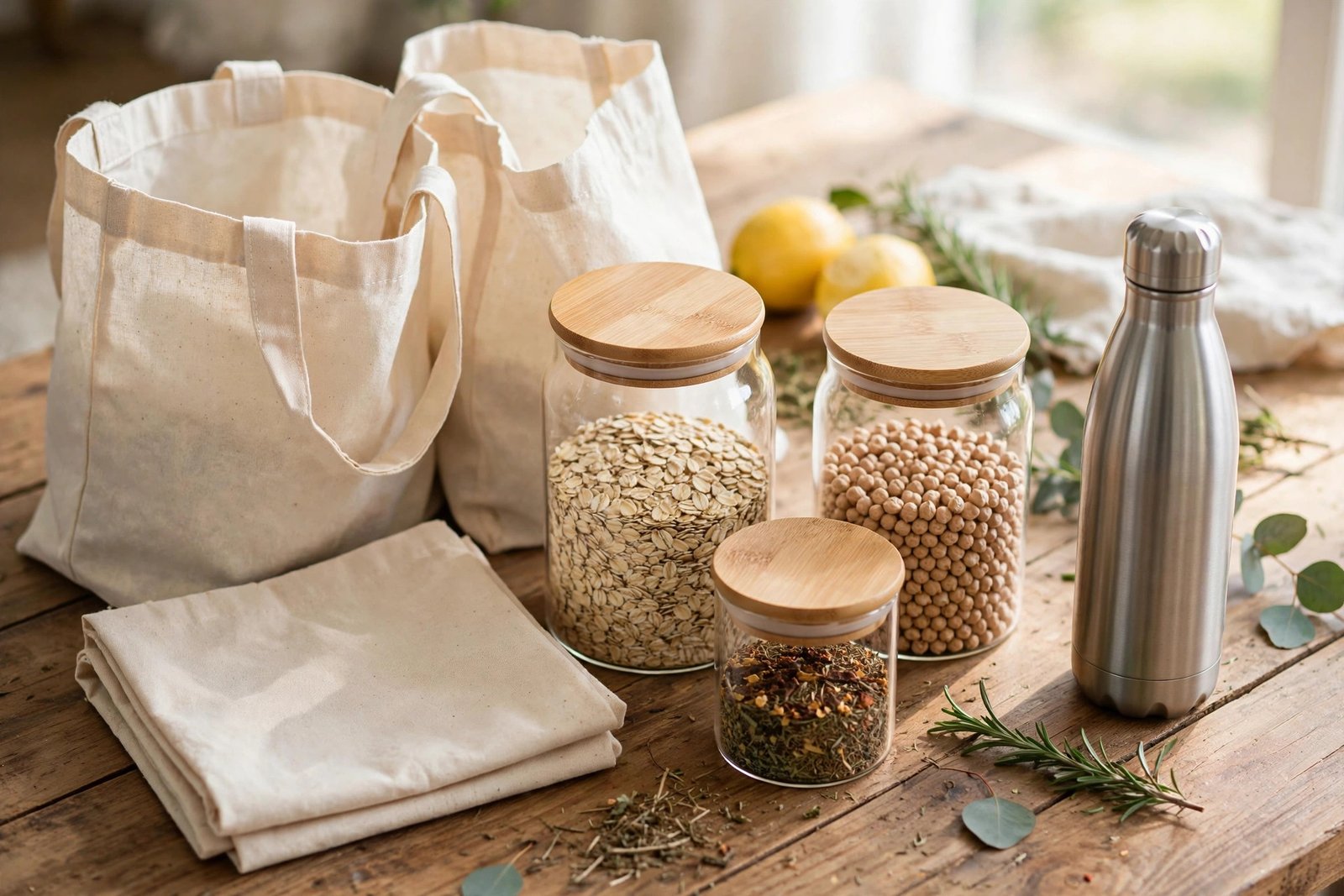
The average UK household throws away staggering amounts of single-use plastic yearly — and most of us feel vaguely guilty about it while changing nothing, because the advice is either preachy (“just go zero-waste!”) or pointless (“carry a tote bag” — you already own twelve). Reducing single-use plastic without wasting money or sanity is a systems problem, not a virtue problem. The wins are specific, cheap and high-impact. Here is the practical guide.
Target the Big Five First
A small number of items dominate household plastic waste. Attack these and you have done most of the work:
1. Plastic bottles: the UK’s most visible single-use item. A reusable bottle (£8–£15, one-off) plus the UK’s increasingly available refill stations and the cultural normality of tap water eliminates hundreds of bottles a year. GOV.UK’s resources on the plastic packaging tax show the policy direction — refill is the future; join it early.
2. Carrier bags: the 25p charge already cut usage enormously. Keep reusables by the door, in the car and in your work bag — the failure mode is forgetting, so redundancy beats willpower.
3. Food wrapping: the biggest category by weight. Loose fruit and veg (usually cheaper too), bakery paper bags, butcher/deli counters with your own containers, and choosing cardboard-packaged options where the price is equal.
4. Takeaway containers and cups: a reusable coffee cup (£10–£15, many cafés discount 25–50p per use — it pays for itself) and saying “no cutlery, no bag” on delivery orders.
5. Bathroom plastics: shampoo and conditioner bars (£6–£10, lasting as long as two bottles), soap bars instead of hand-wash pumps, bamboo toothbrushes. The bathroom is the easiest room to de-plastic because the swaps are like-for-like.
Notice what is not on the list: agonising over the plastic window on a pasta box. Perfectionism is the enemy — the big five deliver 80% of the reduction for minimal effort.
The Kitchen: Where the Real Reduction Happens
Food shopping is the plastic frontline. Practical moves that cost nothing extra: choose loose produce (it is often cheaper per kilo — the plastic-wrapped “convenience” pack is a markup), bring reusable produce bags (£5 for a set, washable), buy bread from bakeries in paper, and switch milk to glass-bottle delivery where available (many UK dairies now deliver — comparable price, zero plastic, nostalgic joy).
For storage, the swaps pay for themselves: beeswax wraps (£10–£15 for a set, lasting a year) replace cling film; glass containers with lids replace disposable tubs; a set of silicone lids stretches over half-used tins and bowls. None of this requires a lifestyle overhaul — it is the same kitchen, minus the bin full of film and tubs. And reducing food waste multiplies the benefit, since wasted food wastes its packaging too — reducing household food waste is the companion habit.
Shopping Smarter, Not Harder
Refill stations are the structural fix: bring containers, pay by weight for grains, pulses, oils, cleaning products. The UK refill network has grown substantially — search for your nearest. They are often price-competitive with supermarkets for staples, and the ritual becomes satisfying rather than sacrificial. For cleaning products specifically, concentrated refills and dissolvable tablets (£1–£3 per bottle made) eliminate the endless spray-bottle graveyard under the sink.
The honest economics: some swaps save money (bottles, bags, bars, loose produce), some cost slightly more (certain refills, glass milk). Budget the premium swaps against the savings — most households break even or better overall. What wastes money is the performative version: £40 “zero-waste starter kits” of bamboo gadgets you will never use. Buy swaps to replace things as they run out, not as a shopping event. The same clear-eyed consumer thinking applies to cutting energy waste — systems beat gestures in every domain.
What About Recycling?
Recycling is the last resort, not the solution — and UK plastic recycling rates are sobering, with much “recycled” plastic historically exported. So: reduce first, reuse second, recycle third. When you do recycle, do it right: rinse containers (food contamination ruins batches), check local rules (they vary by council — what is recyclable in Leeds may not be in Bristol), and never “wish-cycle” (tossing non-recyclables in hopefully contaminates good recycling). Soft plastics (bread bags, wrappers) are now collectable at many supermarket front-of-store points — a genuine improvement worth using.
And keep perspective on corporate versus individual responsibility: the biggest plastic flows are industrial and commercial. Individual action matters — it shifts culture and markets — but support systemic change too: deposit return schemes, packaging taxes and extended producer responsibility are the policies that move the needle at scale. Your tote bag and your vote are complements, not competitors.
The Systemic Picture: Beyond the Household
Household action matters, but the plastic crisis is overwhelmingly industrial — packaging design decisions made in corporate offices, not kitchens. The encouraging news is that UK policy is moving: the plastic packaging tax penalises packaging with less than 30% recycled content, extended producer responsibility is shifting disposal costs onto producers, and deposit return schemes are in development. These policies do more in a year than a million tote bags, which is why supporting them — through consultations, voting and consumer pressure — multiplies your household efforts.
The charity WRAP leads much of the UK’s evidence work on plastics and packaging, publishing data on what actually reduces waste versus what merely feels virtuous. Their findings consistently favour the unglamorous: refill systems, standardised recyclable packaging, and producer accountability over consumer guilt. Read their reports before your next eco-purchase and you will spend smarter — the most sustainable product is often the boring one with the credible data behind it.
Conclusion
Reducing single-use plastic without the guilt trip is a targeting exercise: hit the big five (bottles, bags, food wrap, takeaway packaging, bathroom plastics), make the kitchen swaps that pay for themselves, use refill stations for the structural win, recycle correctly as the last resort, and skip the performative £40 starter kits. You will not reach zero — nobody does, and the system is not built for it yet. But 70–80% reduction for minimal cost and effort is available to every household, starting with the very next shop you do.
Frequently Asked Questions
What is the biggest source of household plastic waste?
Food and drink packaging dominates — bottles, wrapping, containers and bags. Targeting these five categories delivers most of the achievable reduction.
Do reusable products actually save money?
Most do: bottles, coffee cups (with café discounts), shopping bags, soap and shampoo bars all pay back within weeks to months. Buy swaps as replacements, not as kit hauls.
Is recycling plastic effective in the UK?
Partially — rates are modest and rules vary by council. Treat recycling as the last resort after reducing and reusing, and follow local rules precisely to avoid contaminating batches.
What are refill stations and are they cheaper?
Shops where you fill your own containers with staples and cleaning products, paying by weight. Often price-competitive with supermarkets for basics, with zero packaging.
Can one household make a difference?
Yes — culturally and economically, since demand shifts markets. But pair individual action with support for systemic policies (deposit schemes, packaging taxes) that tackle industrial-scale flows.