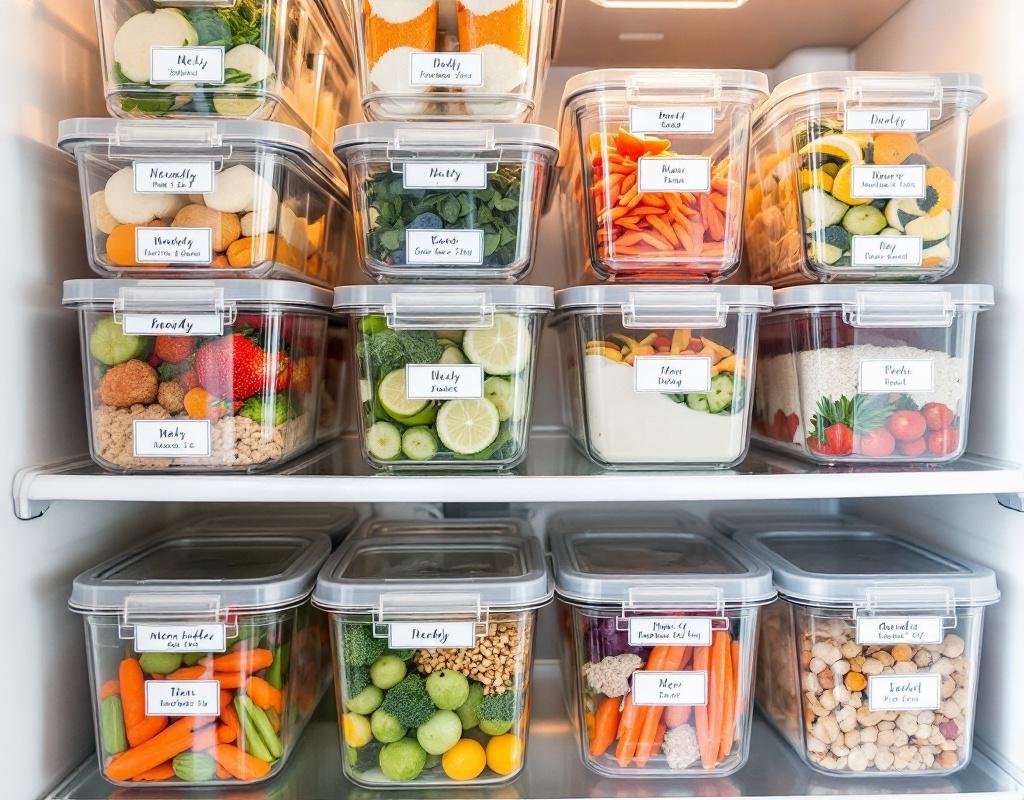
The average UK household throws away around £1,000 worth of food every year. Read that again: a grand, in the bin, in slimy bags. If you want to reduce food waste in your household, the good news is that most of it isn’t about being a better person — it’s about fixing a handful of systems that are quietly working against you: the overambitious weekly shop, the fridge you can’t see into, and the leftovers nobody wants to eat.
Our household cut our food waste by about two-thirds in three months, saved roughly £60 a month, and — unexpectedly — started eating better. Here’s the system.
How to reduce food waste in your household: fix the shop first
Most food waste is bought, not cooked. It enters the house already doomed — the third bag of salad you’ll never open, the “bargain” multipack of yoghurts that expires Thursday. The shop is where waste starts, so it’s where the fix starts:
- Shop from a list, built from a meal plan. I know, everyone says this. But the specific trick is planning only 4–5 dinners, not 7 — real life always includes a takeaway night, a “can’t be bothered” evening, or eating at someone else’s. Planning seven meals guarantees waste.
- Do a 2-minute fridge and cupboard audit before you shop. Open the fridge, check what’s actually in there, and build the plan around what needs using. The “use it up” meal once a week — stir-fry, frittata, soup, curry — exists precisely for this.
- Be suspicious of multibuys. Three-for-two on perishables is only a deal if you’d have bought three anyway. For most households, it’s a fast track to the bin. Buy the single item at full price — it’s cheaper than three in the bin.
- Shop more often, buy less each time. Two smaller shops a week wastes far less than one heroic weekly shop, because you’re buying for days you can actually predict.
- Frozen is your friend. Frozen veg, frozen berries, frozen fish — nutritionally equivalent to fresh, and they wait patiently instead of rotting. The Love Food Hate Waste campaign has brilliant data on how much the average family could save by switching just a few items to frozen.
Dates decoded: the label confusion costing you money
A huge amount of edible food gets binned over misunderstood labels:
- “Use by” — about safety. Respect it for meat, fish, dairy, and ready meals. Don’t eat past it.
- “Best before” — about quality, not safety. Biscuits, pasta, tinned food, and crisps are fine well past this date. Use the sniff-and-look test.
- “Display until” / “Sell by” — for shop staff, not you. Ignore them entirely.
- Eggs have a best-before date but last weeks longer in the fridge; the float test (sink = fresh, float = bin) is reliable.
Supermarkets are finally helping — many now remove best-before dates from fruit and veg — but the habit of binning by date alone is worth breaking deliberately.
Storage: the unsexy superpower
How you store food matters as much as what you buy:
- The fridge audit, weekly. One shelf designated “eat me first” for things nearing their date. Move older items to the front whenever you unpack shopping — the simple act of rotating stock (first in, first out) prevents most fridge waste.
- Know your fridge zones. The door is the warmest spot — keep condiments there, never milk. Bottom shelves are coldest — meat and fish. Crisper drawers actually work for salad if you keep them closed.
- Bread: freeze half the loaf on day one. Slices defrost in the toaster in minutes. This single habit saves more bread than any other trick.
- Herbs: treat like flowers. Soft herbs (coriander, parsley) last a week in a jar of water in the fridge with a bag over the top. Woody herbs (rosemary, thyme) freeze brilliantly in olive oil in ice cube trays.
- Potatoes, onions, garlic: cool, dark, ventilated — and keep potatoes away from onions, which make them sprout faster.
Leftovers: from obligation to asset
The reason leftovers get binned is that nobody wants to eat the same thing twice. So don’t — transform them:
- Roast chicken → next-day curry, pie filling, or soup. The carcass makes stock that beats anything from a carton.
- Cooked rice → fried rice (cooled rice fries better anyway — just refrigerate within an hour and use within 24 hours for safety).
- Vegetables → frittata, soup, or bubble-and-squeak. Almost any sad vegetable becomes soup with an onion and stock.
- Stale bread → breadcrumbs (freeze them), croutons, bread-and-butter pudding, or panzanella.
- Overripe fruit → smoothies, crumbles, banana bread. “Too ripe” is just “perfect for baking.”
Growing even a little of your own makes you waste less too — when you’ve waited eight weeks for those tomatoes, you don’t let them rot. Our guide to growing vegetables in a small UK garden is a good starting point, and it pairs naturally with saving money on groceries each week — waste reduction and budget shopping are really the same skill.
Get the household on board
Food waste systems fail when only one person runs them. Get buy-in with the lowest-effort version: a whiteboard on the fridge where anyone writes what needs using up, and a house rule that the “eat me first” shelf gets raided before anything new is opened. With kids, make it a game — the “use it up” dinner where they invent a meal from what’s left teaches creativity and thrift in one go. Teenagers respond to the money angle: show them the £60 a month figure and offer to split the savings towards something they want. Suddenly everyone’s checking dates.
The takeaway
To reduce food waste in your household: plan 4–5 meals not 7, audit the fridge before shopping, learn the difference between use-by and best-before, give your fridge an “eat me first” shelf, freeze bread on day one, and transform leftovers instead of reheating them. You’ll save around £60 a month, eat more varied food, and stop feeling guilty every bin day. The planet benefits too — but honestly, the money is what’ll keep you doing it.