
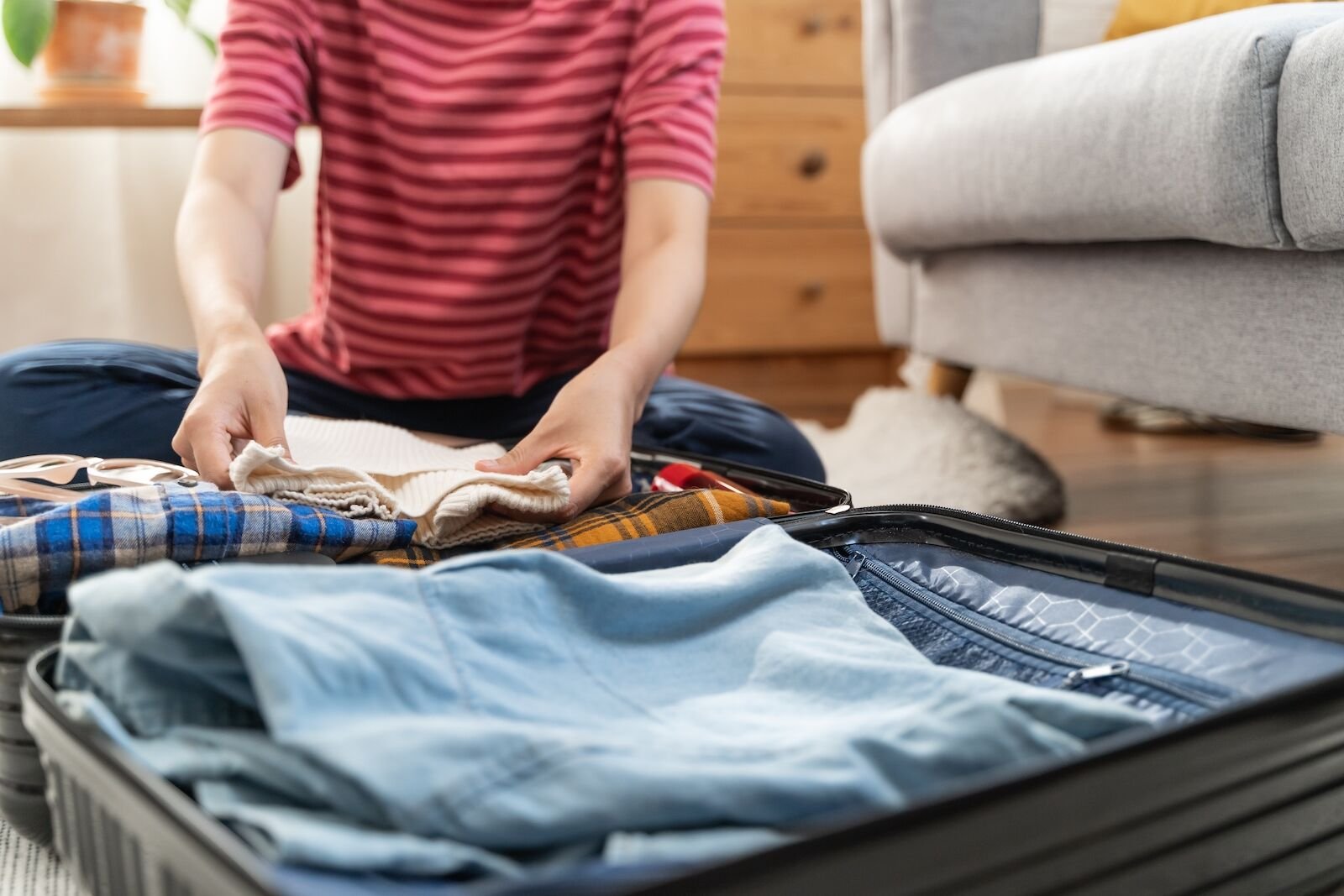
Eleven hours in a metal tube, in a seat designed by someone who has clearly never sat in one. Long-haul economy is an endurance event, and like any endurance event, preparation determines whether you arrive functional or feral. Knowing what to pack for a long haul flight in economy isn’t about bringing everything — it’s about bringing the right 3kg of things that transform the experience.
What to pack for a long haul flight in economy: the comfort kit
These are the non-negotiables — the difference between suffering and merely enduring:
- A proper neck pillow. Not the flimsy U-shaped ones — a memory foam or structured pillow (Trtl, Cabeau) that actually supports your head. £25–£35, worth every penny on flights over 6 hours.
- Noise-cancelling earbuds or headphones. The engine drone is exhausting even when you don’t notice it. ANC cuts it dramatically — for sleeping, for films, for sanity. Even cheap ANC earbuds (£30–£50) transform the flight.
- An eye mask and earplugs. The contoured eye masks (not the free flat ones) block light properly. Silicone earplugs for sleeping when you don’t want the headphones.
- Compression socks. Unsexy, essential on 8+ hour flights. They reduce swelling and lower DVT risk — your ankles will thank you on arrival.
- Layers. Planes are either freezing or boiling, sometimes both. A hoodie or pashmina, warm socks, and a t-shirt underneath cover every scenario. Wear the bulkiest layers; pack the rest.
- Lip balm and moisturiser. Cabin humidity sits around 12% — drier than most deserts. Your skin will stage a protest without supplies.
The personal item: pack it like a survival kit
Your under-seat bag is your lifeline — the hold bag might not make it, but this will. Pack:
- Documents: passport, boarding pass (screenshot + paper backup), hotel address, travel insurance details, a pen (for landing cards — nobody ever has one).
- Medications: in original packaging, in your personal item, never in hold luggage. Plus painkillers, antihistamines, and any prescriptions with a copy of the prescription.
- Entertainment: phone/tablet/Kindle loaded BEFORE the airport (wifi is slow and expensive) — films, series, podcasts, audiobooks, music. A power bank (fully charged) and all cables. The seatback screen is a bonus, not a plan.
- Snacks: airline food is unpredictable; a hungry 3am is miserable. Nuts, protein bars, dried fruit — things that don’t need refrigeration and won’t annoy neighbours with smell.
- Toiletries (under 100ml, in the clear bag): toothbrush and mini toothpaste, face wipes, deodorant, hand cream. Brushing your teeth mid-flight is the closest thing to a reset button.
- A change of clothes: at minimum fresh underwear and a t-shirt in a ziplock bag. If your hold bag goes missing, you’ll be grateful beyond words.
- Water bottle (empty through security): fill after security, ask crew to refill. Hydration is the single biggest factor in arriving well — drink far more water than you think you need.
Check gov.uk’s hand luggage rules before you pack — liquids, electronics, and sharp objects all have specific requirements, and UK airports are rolling out new CT scanners that are changing the liquids rules.
What NOT to pack (common mistakes)
- Too many “just in case” outfits. You’re sitting in a seat for 11 hours. One spare top is plenty. Our pack light for two weeks guide covers the minimalist wardrobe system.
- Full-size anything. Decant toiletries; every gram counts against your allowance.
- Valuables in hold luggage. Electronics, jewellery, documents, medication — always in the cabin. Always.
- Smelly food. Your tuna sandwich affects 300 people. Don’t be that passenger.
- Brand-new shoes. Feet swell on long flights. Wear broken-in, loose footwear you can slip off.
Arriving human: the in-flight routine
- Set your watch to destination time immediately. Eat and sleep on the new schedule from takeoff — it jump-starts the adjustment.
- Move every 2–3 hours. Walk the aisle, do ankle circles, stretch in the galley area. It’s about circulation, not fitness.
- Sleep strategically. On overnight flights, eat then sleep — don’t watch three films first. The eye mask, earplugs, and neck pillow earn their place here.
- Skip the alcohol (or limit it). One drink is fine; three dehydrates you and wrecks the sleep you’d get. Caffeine timing matters too — none in the last third of the flight if you want to sleep on arrival night.
Pair this with our guide to making long flights more comfortable in economy for the full comfort system — packing right is half the battle; using the hours well is the other half.
Jet lag: the packing connection
What you pack affects how you handle jet lag. An eye mask and earplugs let you sleep on the plane’s schedule; compression socks and comfortable layers let you move; the water bottle keeps you hydrated (dehydration worsens jet lag significantly). Pack melatonin (0.5–1mg, legal in the UK as a supplement) for the first couple of nights if you’re crossing 5+ time zones — taken 30 minutes before target bedtime, it helps reset faster. And pack sunglasses in your personal item: light exposure is the strongest jet-lag tool, and managing it deliberately from arrival beats stumbling around squinting. Our guide to surviving jet lag on long flights covers the full protocol.
Travelling with kids: the extra kit
Long-haul with children needs its own packing layer: a new (cheap) toy per three hours of flight, sticker books, colouring, downloaded shows, headphones that fit small heads, changes of clothes per child (two — trust me), nappies/pull-ups for far more hours than the flight (delays happen), baby food and milk (exempt from liquid rules — declare at security), and a familiar comfort object. The parents who survive long-haul with kids aren’t luckier — they’re better packed. Bribe snacks are not cheating; they’re strategy.
The takeaway
What to pack for a long-haul flight in economy: a comfort kit (neck pillow, ANC earbuds, eye mask, compression socks, layers), a personal item packed like a survival kit (documents, meds, entertainment, snacks, toiletries, change of clothes, empty water bottle), and nothing you don’t need. Pack for the 11 hours in the seat, not the two weeks after — and arrive feeling like a traveller, not a survivor.


