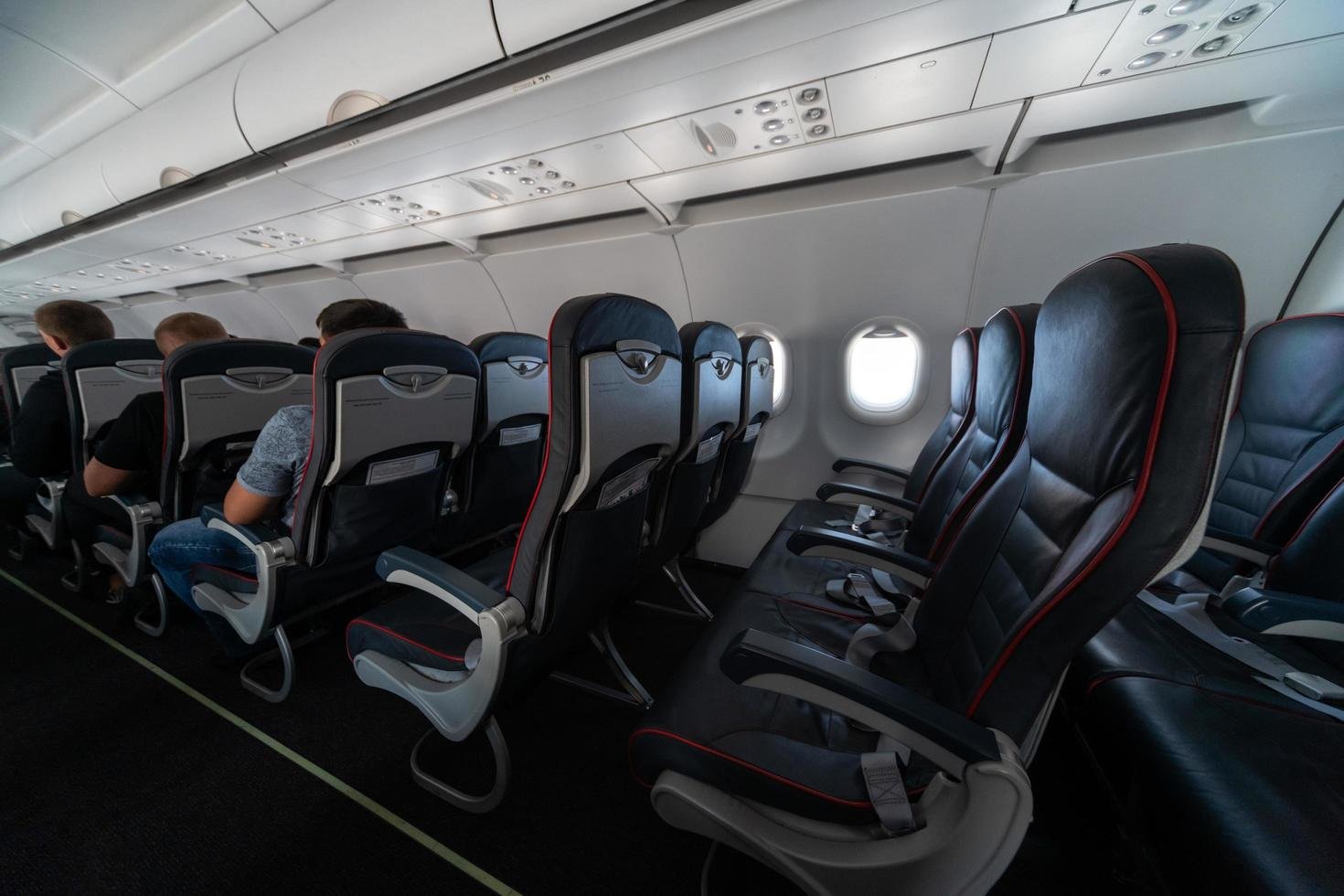
There’s a particular dread to settling into an economy seat for eleven hours: the knees-against-the-seat-in-front, the armrest wars, the slow realisation that sleep will be theoretical. But veteran long-haul travellers know something the rest don’t — a long flight in economy is dramatically improvable with strategy. Not money (though that helps), but knowledge: which seats, what timing, which small comforts compound into something survivable, even pleasant.
How to make a long flight more comfortable in economy class: win the seat lottery
Your seat determines 70% of the experience. Choose actively:
- Check SeatGuru before selecting. SeatGuru’s seat maps show which seats have extra legroom, which don’t recline, which are near noisy galleys or toilets. Ten minutes of research beats eleven hours of regret.
- Exit rows and bulkheads: the legroom jackpot. Often £30–£80 extra — worth it on 8+ hour flights. Bulkhead seats have fixed armrests (tray tables in the armrest narrow the seat slightly) but unbeatable legroom and no one reclining into you.
- The back of the plane: emptier on quiet flights (aisle seats near the back are often in half-empty rows), but you’re last off and near the toilets. Window seats at the very back sometimes have extra space where the fuselage curves.
- Avoid: seats that don’t recline (exit rows directly in front of exits, last row), seats near galleys (noise, light, crew chat at 3am), and the middle seat of the middle block (the worst seat on any aircraft).
- Check in exactly when it opens (usually 24–48h before). The best free seats go first. Set an alarm — the early bird gets the exit row.
- Ask at the gate. Politely ask the gate agent if there are any empty rows or better seats — especially if the flight looks quiet. It costs nothing to ask, and gate agents have more power than the app.
The sleep system
Sleep is the holy grail of long-haul, and it’s achievable with the right kit and timing:
- The full kit: contoured eye mask, silicone earplugs or ANC earbuds, a proper neck pillow (memory foam, not the flimsy U), and a blanket or large scarf. This is the uniform of people who actually sleep on planes.
- Time it right: on overnight flights, eat when served, then sleep — don’t watch three films first. Every hour of plane sleep is an hour less jet lag.
- Recline (politely). Recline slowly, glance behind first, and don’t recline during meal service. The recline wars are silly — the seat reclines; use it considerately.
- Window seat for sleeping (wall to lean on, no one climbing over you), aisle for moving (freedom to walk without disturbing). Choose based on your priority.
- Melatonin: 0.5–1mg about 30 minutes before you want to sleep helps many people. It’s a supplement, not a sedative — gentle and non-habit-forming.
Move, hydrate, repeat
- Water constantly. Cabin air is desert-dry. Drink 250ml every hour — yes, it means toilet trips, but that’s movement too. Decline the second wine; alcohol dehydrates and fragments sleep.
- Walk every 2–3 hours. Aisle laps, calf raises at the back, shoulder rolls in your seat. It’s about circulation — DVT risk is real on long flights, and movement is the prevention.
- Compression socks. Especially for 8+ hours. Unsexy, effective — your ankles won’t balloon and your circulation thanks you.
- Stretch in the galley. The crew don’t mind (they’re used to it). Touch your toes, twist your spine, roll your neck — five minutes every few hours transforms how you feel.
Entertainment strategy (don’t wing it)
- Download before the airport. Films, series, podcasts, audiobooks, music — on YOUR device, not relying on the seatback screen (which might be broken, old, or have a terrible selection).
- The 3-3-3 rule: roughly 3 hours entertainment, 3 hours sleep attempt, 3 hours mix (eating, walking, reading) — then repeat. Structure prevents the “I’ve watched four films and feel terrible” spiral.
- Noise-cancelling headphones. Worth repeating: they cut engine drone, crying babies (partially), and chatty neighbours. The single best comfort investment for frequent flyers.
- A physical book or Kindle. Screens fatigue eyes over 11 hours; paper doesn’t. Alternate.
Eat and drink smart
- Eat light. Heavy airline meals + immobility = bloating and discomfort. Eat moderately, favour the lighter option, and bring your own healthy snacks (nuts, fruit, protein bars).
- Time your caffeine. Coffee with the “breakfast” service helps reset to destination time; caffeine in the last third of the flight sabotages arrival-night sleep.
- Special meals are often better. Ordering a vegetarian, Asian vegetarian, or other special meal (free, ordered 24h+ ahead) often gets you served first and the food is frequently fresher than the standard options.
- Brush your teeth mid-flight. The psychological reset is disproportionate — you feel human again in two minutes.
For the full packing list that makes all of this possible, see our guide to what to pack for a long-haul flight in economy — and for the aftermath, surviving jet lag covers the recovery protocol.
The premium economy question
Is premium economy worth it? On 10+ hour flights, often yes — if the price gap is small. The rule of thumb: if premium economy costs less than double the economy fare (it often does on sales, sometimes just £150–£250 more), the extra space, better food, and improved sleep quality pay for themselves in arrival condition. Check at check-in too — airlines often sell discounted upgrades at the airport when premium economy is empty. A £180 upgrade offer at the gate for an 11-hour flight is one of travel’s better deals. But don’t pay triple — at that point, the money’s better spent on a hotel night to recover.
The takeaway
To make a long flight more comfortable in economy: choose your seat actively (SeatGuru, check in early, ask at the gate), build a sleep system (eye mask, earplugs, neck pillow, timed right), move and hydrate relentlessly, download entertainment in advance, and eat light. Economy comfort isn’t about the seat you’re given — it’s about the preparation you bring. Eleven hours is a long time, but it’s also just eleven hours. You’ll land, you’ll recover, and with this system, you might even sleep.