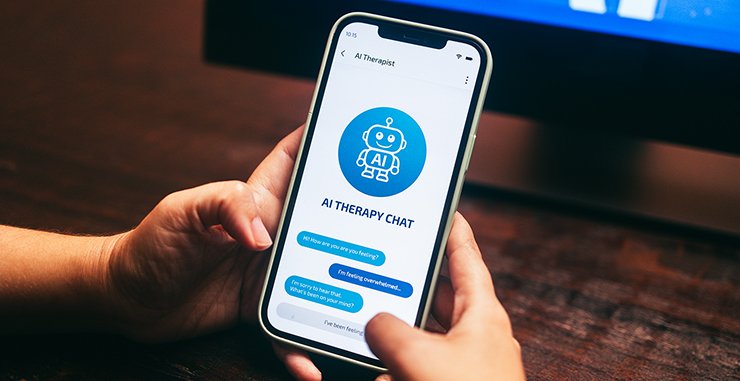
Asking what is the best ai chatbot for mental health support deserves a careful, honest answer — because when someone is struggling, the tool they turn to at 2am matters enormously. Let me be direct about the two truths here: AI chatbots can be genuinely helpful for everyday mental wellbeing (and are already used by millions for exactly that), but they are not therapists, and the difference matters most precisely when you’re most vulnerable. This guide covers both the useful options and the critical boundaries.
First, the important framing: if you’re in crisis, the right response isn’t an app — it’s a human. In the UK: Samaritans 116 123 (free, 24/7), text SHOUT to 85258, or call 999 in an emergency. Save those numbers now; everything below is for non-crisis support.
What is the best AI chatbot for mental health support?
The options, honestly assessed
- Wysa (free tier + paid): the most established mental-health-specific AI chatbot, used in NHS pilots. CBT-based exercises, mood tracking, and conversations designed by clinicians. The free tier covers the core self-help tools. Best pick for structured, evidence-based support.
- Woebot: similar CBT foundations, conversational check-ins, well-studied. Availability varies by region — check current UK access.
- General AI assistants (ChatGPT, Claude): many people use these as sounding boards — journaling prompts, reframing anxious thoughts, talking through problems at 2am. They’re flexible and available, but they’re not designed for mental health, have no clinical guardrails, and their advice quality varies. Useful as a complement, risky as a primary support.
- Mind’s resources / NHS Every Mind Matters: not chatbots, but the NHS Every Mind Matters site offers evidence-based self-help plans. Worth knowing alongside any app.
What AI support can genuinely help with
- Everyday stress and overwhelm: talking through what’s on your mind, breaking problems into steps, guided breathing and grounding exercises.
- CBT techniques: thought-challenging, behavioural activation, worry scheduling — the structured exercises apps like Wysa deliver well.
- Availability: 3am anxiety doesn’t wait for office hours. A non-judgemental conversation at any hour has real value.
- Lowering the barrier: many people find it easier to open up to an AI first — and that first step toward articulating feelings often leads to seeking human help.
The critical limitations
- Not a therapist: AI can’t read your history, notice what you’re not saying, hold clinical responsibility, or provide the human relationship that’s central to therapy’s effectiveness.
- Crisis handling is imperfect: AI chatbots have given dangerously inadequate responses to users expressing self-harm. Purpose-built apps have escalation protocols; general chatbots may not. This is the sharpest edge — know it.
- Privacy of your innermost thoughts: mental health conversations are the most sensitive data imaginable. Check data policies ruthlessly — our AI safety guide and privacy checklist apply with maximum force here. Prefer apps with explicit health-data protections.
- False reassurance: an AI telling you “you’re fine” is not a clinical assessment. Deteriorating mental health needs human professional evaluation.
The right relationship with these tools
Think of AI mental-health support as self-care infrastructure, not treatment — like a meditation app or a journal, not like a therapist. Use it for daily maintenance, coping techniques, and the 2am moments. But pair it with human support: friends, family, your GP (who can refer to NHS talking therapies — self-referral is available in most of England), or private therapy if accessible. Our guide to reducing anxiety without medication covers complementary non-AI strategies.
Building your wider support system (beyond any app)
An AI chatbot can be part of your mental-health toolkit, but it works best as one element of a broader support system — not the whole thing. Think in layers. Daily maintenance: the habits that keep you steady — sleep, movement, daylight, routine, and yes, a check-in with an app if that helps. Human connection: friends, family, community — the relationships where you’re truly known. Loneliness isn’t just unpleasant; it’s a health risk comparable to smoking, and no chatbot fixes it. Professional support: GP, NHS talking therapies (self-referral, free, evidence-based), private therapy if accessible. Crisis resources: Samaritans 116 123, SHOUT 85258, 999 — saved in your phone now, not searched for in crisis.
The mistake is treating these as alternatives — “I’ll use the app instead of therapy” or “I don’t need friends, I have AI”. They’re complements. The app handles the 2am moments and the daily techniques; humans handle the understanding, the accountability, and the care. And there’s a one-way ratchet worth knowing: using AI support often makes it easier to seek human help, not harder — articulating your feelings to a chatbot is practice for articulating them to a person. That’s a feature, not a failure.
If you’re supporting someone else who’s struggling, the same layered thinking applies — and your role matters enormously. You don’t need to fix them; you need to listen without judgement, take them seriously, and help them connect with professional support. Suggesting an app can be a gentle first step for someone resistant to “getting help” — it’s less intimidating than a therapist’s office. But stay alert to the signs that more is needed: withdrawal, hopelessness, talk of being a burden. Trust your instincts; it’s always better to overreact with care than to underreact with regret.
One more important distinction: prevention vs intervention. The most valuable mental-health work happens before crisis — the daily habits, the coping techniques, the support systems built in calm times. AI tools are excellent for this preventive layer: the daily check-in that notices your mood trending down, the CBT exercise that becomes a habit, the journaling prompt that surfaces stress before it accumulates. Think of it like physical fitness: you don’t start exercising during a heart attack. Build the mental-fitness infrastructure now, in the good times, and it’s there when you need it. The app on your phone is most powerful as a daily practice, not an emergency service.
Your practical takeaway
For structured self-help: try Wysa’s free tier. For 2am conversations: a general AI assistant is okay as a sounding board, with the boundaries above firmly in mind. But memorise the human numbers (Samaritans 116 123, SHOUT 85258), know that NHS talking-therapies self-referral exists, and treat AI as a bridge toward human support — never as a substitute for it. Your mental health deserves both the convenience of technology and the irreplaceable value of being truly heard by another person.