A single return flight from London to New York emits around 1.6 tonnes of CO2 per passenger — roughly 15% of the average Briton’s entire annual footprint, burned in a few hours at 35,000 feet. For frequent flyers, aviation can be half of everything. And yet flying is also the engine of family reunions, careers, and the broadening of minds that travel uniquely provides. “Is flying less often actually worth it?” is therefore not a simple question — it is a collision between the single most carbon-intensive thing most people do and some of life’s most valued experiences. This guide weighs it properly: the numbers, the alternatives, and how to fly less without becoming a hermit.
The Numbers: Why Aviation Dominates Footprints
Aviation’s climate impact is brutally efficient at concentrating emissions:
- Short-haul return (London–Edinburgh): ~0.3 tonnes CO2e — comparable to a month of average driving.
- Medium-haul return (London–Athens): ~0.7 tonnes.
- Long-haul return (London–New York): ~1.6 tonnes; London–Sydney: ~3.5+ tonnes.
- Class multiplier: business class footprints run ~3x economy (space = fuel); first class ~4x+.
- The frequent-flyer skew: ~15% of the UK population takes ~70% of flights. For that 15%, flying is typically their largest emission source by far. For the ~50% who don’t fly at all in a given year, the question is moot.
And the headline figures understate it: aviation’s non-CO2 effects (contrails, nitrogen oxides at altitude) roughly double the warming impact — the honest multiplier used by researchers is ~1.9x the CO2 alone. There is no consumer technology on the horizon that changes this: electric planes for short hops are decades from scale, and “sustainable aviation fuel” currently supplies a tiny fraction of fuel at multiples of the cost.
Is It Worth It? The Honest Ledger
Worth it, because: for frequent flyers, cutting one long-haul return a year (~1.6 tonnes) exceeds the combined savings of LED bulbs, shorter showers, recycling, reusable bags and a green tariff. No other single personal action cuts as much carbon per unit of effort. The financial savings are substantial (£300–£800 per avoided return flight). And the “worth” compounds: flying less usually means travelling slower and closer, which many people end up preferring.
The honest costs: seeing far-flung family less often (the hardest trade-off, and not one to minimise — for migrants and expats, flights are love made logistically possible); career impacts in fly-to-meet industries (though video has permanently shifted this calculus); and the genuine loss of long-haul exploration. The answer is not “never fly” — it is fly deliberately: fewer, longer, more meaningful trips rather than reflexive weekend hops.
The Playbook: Flying Less Without Missing Out
Substitute: the train and the staycation
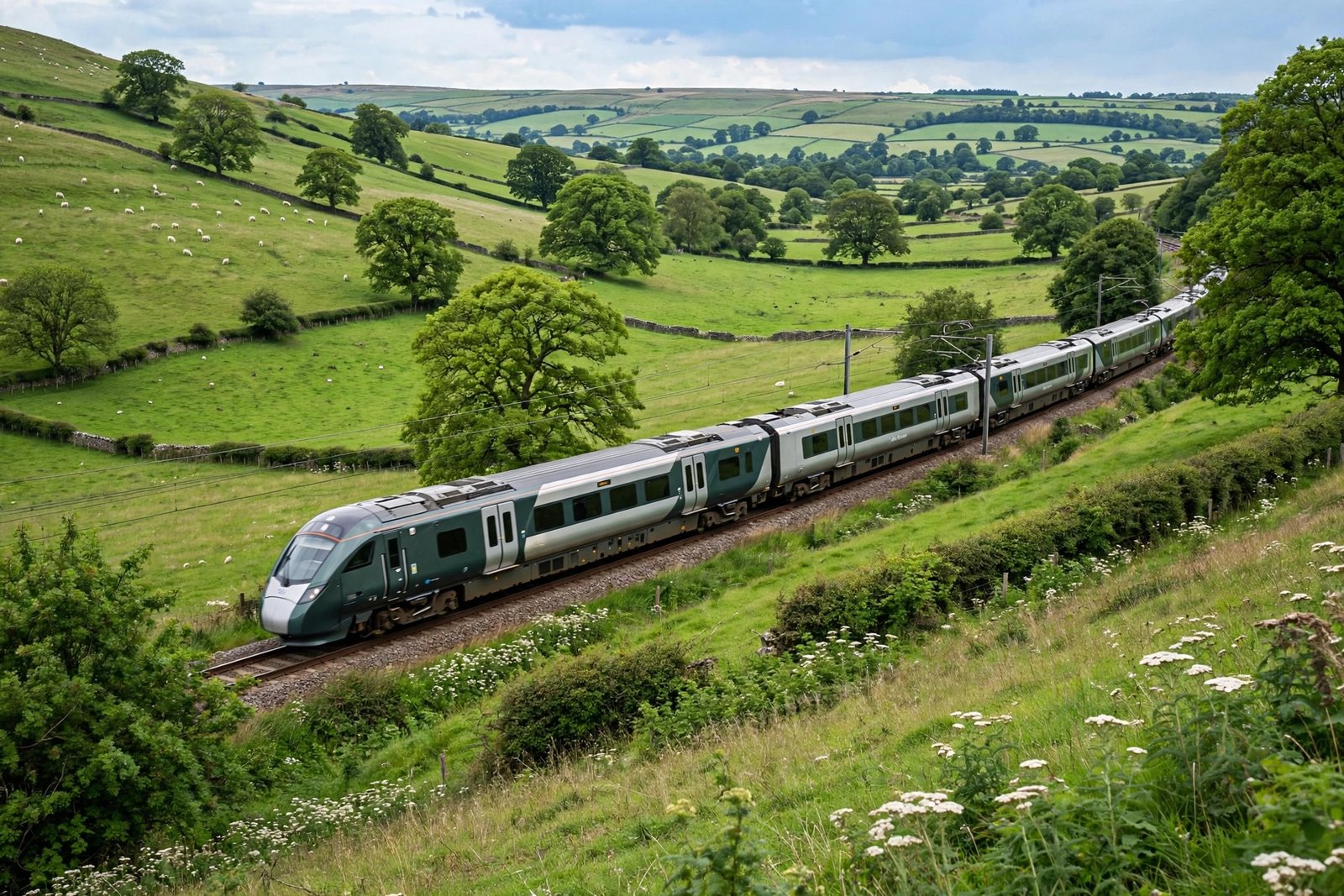
For UK and near-Europe travel, rail increasingly competes: London–Edinburgh by train (~4.5 hours city centre to city centre) beats flying door-to-door on total time, emits ~90% less, and the affordable UK train travel guide makes it economical. Eurostar to Paris/Brussels/Amsterdam is the classic flight-killer. And the UK staycation — done well, not as a consolation prize — covers an astonishing range: the cheap European flights guide is worth knowing for when you do fly, so the flights you take are the ones that count.
Consolidate: fewer, longer trips
One three-week trip beats three long weekends on every metric: lower per-day emissions, deeper experience, often lower total cost. The “slow travel” reframing — one big annual journey instead of scattered hops — is how frequent flyers cut 50–70% of aviation emissions while arguably travelling better.
Video-first for work travel
The pandemic proved most business travel was habit, not necessity. Maintain the discipline: default to video, fly only when physical presence genuinely changes the outcome (negotiations, relationship-building, site-specific work). Many firms now have internal carbon budgets for travel — align with them.
Rethink the default: the flight-free experiment
Try one flight-free year — not as a vow of permanent abstinence, but as an experiment with a defined end. People who do this consistently report the same discovery: the trips they assumed required flying mostly didn’t, the slower alternatives were more memorable, and the constraint bred creativity (the sleeper train to the Alps, the cycling tour of the Hebrides, the long-stay workation reached by rail). A single experimental year generates the personal evidence that permanent, calmer reduction is not sacrifice but upgrade — and it typically cuts a frequent flyer’s largest emission source by half or more in one stroke.
When you fly, fly better
Economy over business (3x difference), direct over connecting (take-offs burn disproportionate fuel), newer aircraft and fuller flights where you have the choice, pack light (weight = fuel), and offset only as the last resort after reduction — via Gold Standard-certified projects, treated as a nudge rather than absolution.
The Family Question
The hardest case deserves direct address: if flying less means seeing your parents, children or grandchildren less, the carbon maths collides with love. The honest framework: protect the essential flights, cut the discretionary ones ruthlessly. The annual family visit is essential; the third stag weekend in Prague is not. Longer stays per visit (work remotely from the family home for two weeks instead of a long weekend) maintain connection while halving flight counts. And invest the savings — financial and carbon — visibly: “we fly half as often and stay twice as long” is a story families understand.
Conclusion: The Verdict
Is flying less often worth it for a beginner? For anyone who flies more than once or twice a year: emphatically yes — it is the highest-carbon, highest-cost, most concentrated saving available, achievable without lifestyle martyrdom through substitution, consolidation and video-first defaults. For non-flyers, the question answers itself. Start with the audit: count last year’s flights, price their carbon (~1.6 tonnes per long-haul return), and cancel or consolidate just one. That single decision likely outweighs everything else in this guide’s companion pieces combined. Fly less, but fly like you mean it.
Frequently Asked Questions
How much CO2 does one flight really produce?
Rule of thumb: ~0.15–0.25 tonnes CO2 per 1,000km flown in economy, roughly doubled for full warming impact including non-CO2 effects. Independent calculators like atmosfair let you price any specific flight’s emissions before booking. London–New York return ≈ 1.6 tonnes CO2 (≈3 tonnes warming-equivalent); London–Edinburgh return ≈ 0.3 tonnes. Business class multiplies by ~3.
Are carbon offsets for flights worth buying?
As a last resort after reduction, via certified schemes (Gold Standard, Verra) — better than nothing, but quality varies enormously and they don’t undo the contrail warming. Treat offsets as a donation to climate projects plus a personal carbon price signal, not as erasing the flight.
Will sustainable aviation fuel solve this?
Not at scale within the next decade-plus: SAF currently supplies well under 1% of aviation fuel globally, costs 2–4x conventional fuel, and faces feedstock limits. It will help long-term; it does not change the maths of flying less now.
Is train travel really practical for European holidays?
Increasingly yes: Eurostar plus high-speed connections reach Paris in ~2.5 hours, Brussels in ~2, Amsterdam in ~4 — city centre to city centre, no airport dead time. Night trains are reviving across Europe (Vienna, Zurich, Stockholm routes). The Seat61 website is the bible of flight-free European travel planning.
How do I handle pressure to fly for work?
Propose the video-first trial with measured outcomes; cite your firm’s own travel/carbon policies (most large UK employers now have them); volunteer the carbon arithmetic — “this trip is 0.8 tonnes; video achieves 90% of the objective.” Post-pandemic, declining work travel is professionally normal, not eccentric.