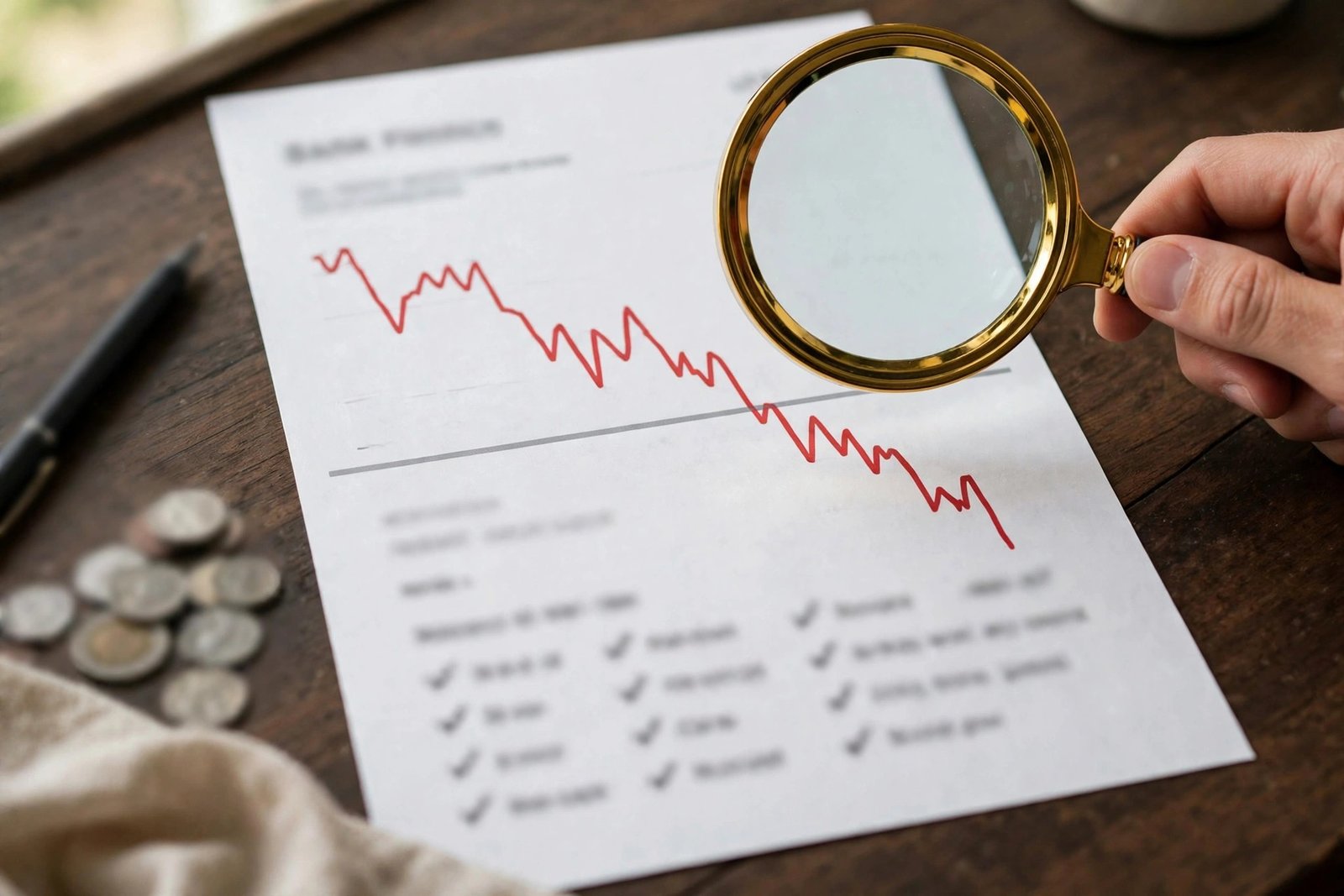
Overdrafts are the financial product almost everyone has and almost nobody understands: a facility that lets your bank balance go negative, quietly charging you for the privilege at rates that would make a loan shark nod approvingly. Since UK rules changed, overdrafts look simpler — a single interest rate, no daily fees — but they remain one of the most expensive ways to borrow. This guide explains how overdrafts actually work now, what they really cost, when they make sense (rarely), and how to escape the overdraft trap for good.
You will learn the current UK overdraft rules, worked cost examples, arranged versus unarranged overdrafts, the credit-file impact, cheaper alternatives for every situation, and a step-by-step escape plan.
How UK overdrafts work now
Since the FCA’s 2020 reforms, UK overdrafts charge a single annual interest rate (APR) with no daily or monthly fees — typically around 35–40% APR, roughly double a typical credit card rate. Your bank sets an arranged overdraft limit (say £1,000); borrowing within it accrues interest daily on the negative balance. Go beyond the limit without agreement and most banks now simply decline the payment rather than charging unarranged fees — an improvement, but the declined payment can still cause missed-bill consequences.
Interest is calculated daily and usually charged monthly, which means a £500 overdraft for 10 days at 39.9% APR costs about £5.50 — trivial-sounding until it becomes permanent. The key structural fact: overdrafts are repayable on demand, meaning the bank can technically require full repayment at any time, and they are designed as short-term buffers, not ongoing borrowing. Using an overdraft as a permanent extension of your money is like using a fire extinguisher as a water supply — wrong tool, expensive consequences. Understanding your account’s terms starts with knowing what your bank account actually offers — personal or business, the overdraft terms deserve a proper read.
What overdrafts really cost: worked examples
The numbers are sobering. £1,000 overdrawn for a full month at 39.9% APR costs about £33 in interest — annualised, that is nearly £400 for the privilege of being £1,000 short. Compare: the same £1,000 on a 0% balance-transfer credit card costs nothing for the promotional period; a personal loan might cost 8–12% APR. The overdraft is consistently the priciest mainstream option, which is precisely why banks love them and the FCA intervened.
The real cost, though, is behavioural. Overdrafts normalise living beyond your balance: the negative number stops feeling alarming, the limit creeps up at the bank’s invitation, and “just £200 overdrawn” becomes a permanent state costing £80 a year in interest for nothing. Chronic overdraft use also signals to lenders that your finances are stretched — mortgage underwriters specifically dislike persistent overdraft reliance, and it can affect applications well beyond the interest paid. The £33-a-month example is the advertised cost; the lifestyle cost is far higher.
Arranged vs unarranged, and the credit-file picture
An arranged overdraft is a formal credit agreement: the limit, rate, and terms are agreed, and used responsibly (occasional, brief, repaid quickly) it does modest credit-file good — it demonstrates a managed credit facility. An unarranged overdraft — exceeding your limit or having none — is where the damage lives: declined payments, potential markers, and in the worst cases, the bank withdrawing the facility and demanding repayment.
On your credit file, lenders see the overdraft limit and balance. Permanently sitting near your limit reads as financial stress; rarely touching it reads as prudence. Importantly, banks can reduce or remove arranged overdrafts with notice — the facility you rely on can shrink precisely when you need it most, which is why building an emergency fund to replace the overdraft is the strategic move. If you run a business account too, comparing business banking options should include their overdraft terms — business overdrafts follow similar expensive logic.
The psychology of the negative balance
Banks understand something about human psychology: a -£300 balance on a screen does not trigger the same alarm as a £300 bill on the doormat, even though they are identical debts. Overdrafts exploit this by making borrowing ambient — there is no application, no decision point, no moment of commitment. The money simply is not there, and life continues. Breaking the habit therefore requires making the invisible visible: a weekly balance check with a hard floor, alerts set well above zero, and the mental reframe that every overdrawn pound is a 40%-APR loan you chose. People who escape overdrafts consistently report the same turning point — the day they started treating the negative balance as debt rather than weather.
Cheaper alternatives for every overdraft situation
For the occasional shortfall: a 0% money-transfer credit card (small fee, months interest-free) beats any overdraft mathematically. For persistent shortfalls: the problem is budgeting, not borrowing — an overdraft papers over a gap that needs a proper budget to close. For emergencies: a dedicated emergency fund, even £500, breaks the overdraft cycle permanently and is the highest-return “investment” available to chronic overdraft users.
For larger needs: a personal loan at single-digit APRs demolishes overdraft costs, with fixed repayments that actually end. And for the truly stuck: free debt advice from Citizens Advice, StepChange, or National Debtline — not fee-charging “debt management” firms. The FCA’s consumer pages explain your rights, and MoneyHelper offers free guidance on managing borrowing. There is no shame in seeking help; the shame would be paying 40% APR indefinitely for want of a phone call.
The escape plan: killing your overdraft habit
Step one: find out exactly where you stand — limit, rate, average balance, monthly interest cost. Most people underestimate the cost by half. Step two: stop the limit increases; call the bank and decline them. Step three: build a mini emergency buffer of £500–£1,000 in a separate account, even while overdrawn — this sounds paradoxical, but the buffer is what prevents the next dip, breaking the cycle. Step four: redirect the monthly interest saving into systematically reducing the overdrawn balance — treat the overdraft as a debt with a payoff date, not a feature.
Step five: once clear, keep a small arranged overdraft as a safety net but aim never to use it — or reduce the limit to a token amount. Step six: automate a monthly transfer to savings equal to your old interest cost; you have already proven you can live without that money. Within six to twelve months, most disciplined users go from chronic overdraft to positive balance plus emergency fund — a swing worth thousands in saved interest and immeasurable in reduced stress.
Conclusion
Overdrafts are simple, expensive, and designed for days — not lifestyles. At ~40% APR with on-demand repayment, they are the costliest mainstream borrowing available, and chronic use damages both wealth and creditworthiness. Understand the terms, use cheaper alternatives for real needs, and execute the escape plan: buffer, reduce, automate. Your bank will miss the interest. You will not miss the overdraft.
Frequently Asked Questions
Is an overdraft bad for my credit score?
Occasional, well-managed use is neutral to mildly positive. Chronic maxing-out signals financial stress to lenders and can hurt applications, especially mortgages.
Can the bank remove my overdraft?
Yes — overdrafts are repayable on demand and banks can reduce or withdraw limits with notice. Never treat the facility as guaranteed money.
What is the cheapest alternative to an overdraft?
For shortfalls, a 0% money-transfer credit card; for ongoing gaps, budgeting plus an emergency fund. Both beat 40% APR by orders of magnitude.
Should I keep an arranged overdraft I never use?
A small unused facility is harmless and provides a safety net. Just ensure the limit is modest and the habit is never using it.