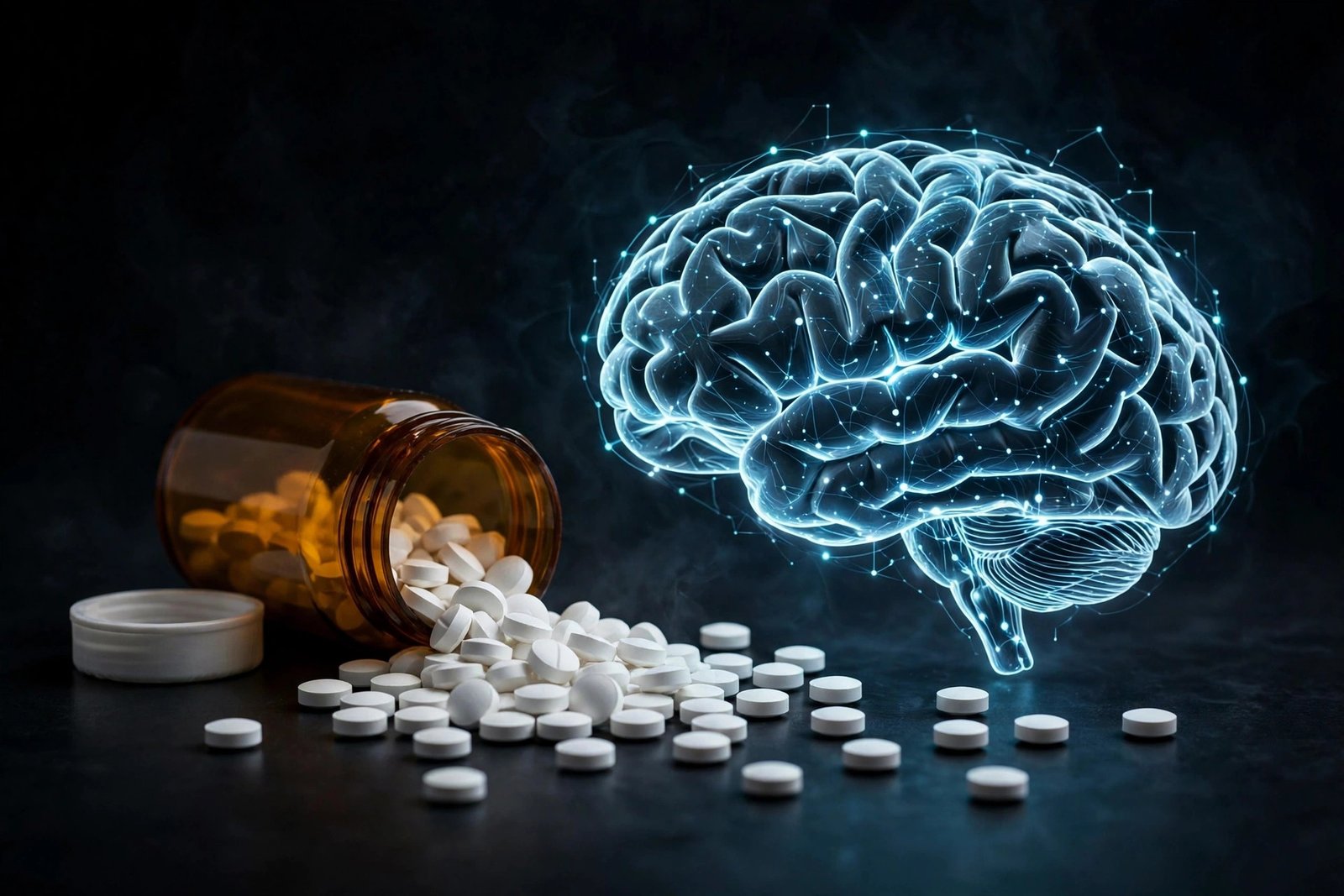
The placebo effect is routinely misunderstood as “fake medicine that works because people are gullible”. The reality is far stranger and more interesting: placebos trigger measurable, biological changes in the brain and body — real pain relief, real dopamine release, real immune responses — through expectation, conditioning and the therapeutic ritual itself. Understanding how it works does not just satisfy curiosity; it changes how you think about every treatment you will ever take. Here is the science, stripped of mysticism.
What the Placebo Effect Actually Is
A placebo is an inactive substance or sham procedure — a sugar pill, a saline injection, a fake surgery. The placebo effect is the measurable improvement that follows, beyond natural recovery and statistical noise. Crucially, this is not “all in the mind” in the dismissive sense: brain imaging shows placebo pain relief accompanied by reduced activity in pain-processing regions and release of the brain’s own opioids (endorphins). Placebo Parkinson’s treatments trigger dopamine release in the striatum. The effect is neurochemical, not imaginary.
But the boundaries matter. Placebos influence symptoms — pain, nausea, fatigue, anxiety, depression — far more than underlying disease processes. A placebo will not shrink a tumour or clear an infection, though it may ease the suffering around them. And the effect has a dark twin: the nocebo effect, where negative expectations cause real harm — patients warned extensively about side effects experience them more often, a genuine dilemma for informed consent. If you are evaluating health claims generally, how to assess AI health claims applies the same sceptical toolkit.
The Three Mechanisms
1. Expectation
The brain is a prediction machine, and expecting relief partially creates it. This is why branding matters: the same painkiller in branded packaging outperforms the identical generic for some patients — the expectation of quality changes the neurochemical response. It is also why a doctor’s confident “this will help” is itself therapeutic, and why the colour, size and price of pills all modulate effects (larger pills, more expensive treatments and injections all produce stronger placebo responses — the brain equates impressive with effective).
2. Conditioning
Like Pavlov’s dogs, bodies learn. If a real drug has repeatedly relieved your headache, the ritual of taking a pill can trigger relief before any chemistry acts. Conditioning even reaches the immune system: in famous experiments, immune-suppressing drugs paired with a distinctive drink later produced immune suppression from the drink alone. Your body learns associations your conscious mind never notices.
3. The therapeutic ritual
Being listened to, examined, diagnosed and treated by a caring professional is itself an intervention. Studies show that longer consultations, empathetic communication and elaborate treatment rituals all amplify outcomes — for real treatments and placebos alike. This is not an argument against efficiency in healthcare; it is an explanation of why bedside manner is medicine, and why knowing when a symptom needs a doctor still matters — ritual helps, but diagnosis directs.
What This Means for Real Medicine
Every effective treatment rides on top of the placebo effect — the total benefit you feel is drug effect plus placebo effect plus natural recovery. This has profound implications. First, it explains why “it worked for me” proves nothing about a remedy: without a control group, you cannot separate the treatment from expectation, conditioning and time. This is the entire reason randomised controlled trials exist, and why anecdote is the weakest form of medical evidence.
Second, it means the context of treatment is part of the treatment. The NHS increasingly recognises this: social prescribing, empathetic consultations and patient belief in the treatment plan all improve outcomes without a single extra molecule. Third, it sets the bar for alternative medicine honestly: many alternative therapies “work” to exactly the extent placebos work — which is genuinely, for symptoms, while their specific claims (energy fields, toxins, quantum effects) remain unevidenced. The ethical question is whether charging for placebo is acceptable when the same effect comes free with honest care.
Researchers are now exploring “open-label placebos” — placebos given honestly, with patients told “this is inactive, but placebos can still help” — and they still work for some conditions. Expectation, it turns out, does not require deception. The NHS’s evidence-based approach to new treatments exists precisely to separate these effects from specific efficacy.
Using the Knowledge Yourself
Understanding placebos makes you a better patient, not a more cynical one. Choose practitioners you trust — the therapeutic alliance is a real ingredient. Engage fully with treatments your doctor prescribes; belief and adherence amplify real effects. Be sceptical of expensive remedies whose evidence is “thousands of satisfied customers” — that is a placebo collection, not a trial. And recognise nocebo in yourself: doom-scrolling side-effect lists before starting a medication measurably increases your chance of experiencing them. Informed is good; catastrophised is counterproductive.
The deepest lesson is philosophical: the placebo effect proves the brain is not a passive observer of the body but an active participant in healing. Expectation, ritual and care change biology. That does not make medicine fake — it makes humans more interesting than the mechanical model assumed. As burnout research similarly shows, the mind-body boundary is far more porous than we were taught.
How Trials Separate Real Effects From Placebo
Understanding placebos explains why medical trials are designed the way they are. Randomised controlled trials compare a treatment against a placebo (or standard care) precisely to subtract the expectation, conditioning and natural-recovery effects described above — what remains is the treatment’s specific efficacy. Blinding (neither patient nor doctor knowing who got what) prevents expectation from leaking into measurement. This machinery is expensive and slow, which is why the NHS information on clinical trials exists — to help patients understand what participation involves and why the design matters.
The practical upshot for evaluating any health claim: ask “compared to what?” A treatment that beats nothing is not proven; only beating placebo (or standard care) in a well-designed trial counts. This single question dismantles most miracle-cure marketing, most supplement hype and most viral health anecdotes — making it the highest-value critical-thinking tool in medicine.
Conclusion
The placebo effect is real neurochemistry — endorphins, dopamine, conditioned immune responses — driven by expectation, learned associations and the therapeutic ritual, powerful for symptoms but not a substitute for treatments that change disease. It explains why trials need controls, why bedside manner matters, and why “it worked for me” is never enough. Understand it, and you will never evaluate a health claim the same way again — which, fittingly, is a genuine and lasting effect.
Frequently Asked Questions
Is the placebo effect just imagination?
No. Brain imaging shows placebo responses involve real neurochemical changes — endorphin and dopamine release, altered pain processing. It is a genuine biological effect triggered by expectation and conditioning, not fantasy.
Can placebos cure diseases?
No. Placebos affect symptoms (pain, nausea, fatigue, mood) but do not change underlying disease processes like tumours or infections. They ease suffering; they do not cure pathology.
What is the nocebo effect?
The placebo’s dark twin: negative expectations causing real adverse effects. Patients expecting side effects experience them more often — a genuine challenge for how doctors communicate risks.
Why do expensive placebos work better?
Because expectation scales with perceived impressiveness — pricier treatments, larger pills and injections all generate stronger placebo responses. The brain equates costly and dramatic with effective.
Do open-label placebos work?
Surprisingly, yes, for some conditions — placebos given with full honesty (“this is inactive”) still produce benefits. Expectation appears not to require deception, which opens intriguing ethical possibilities.