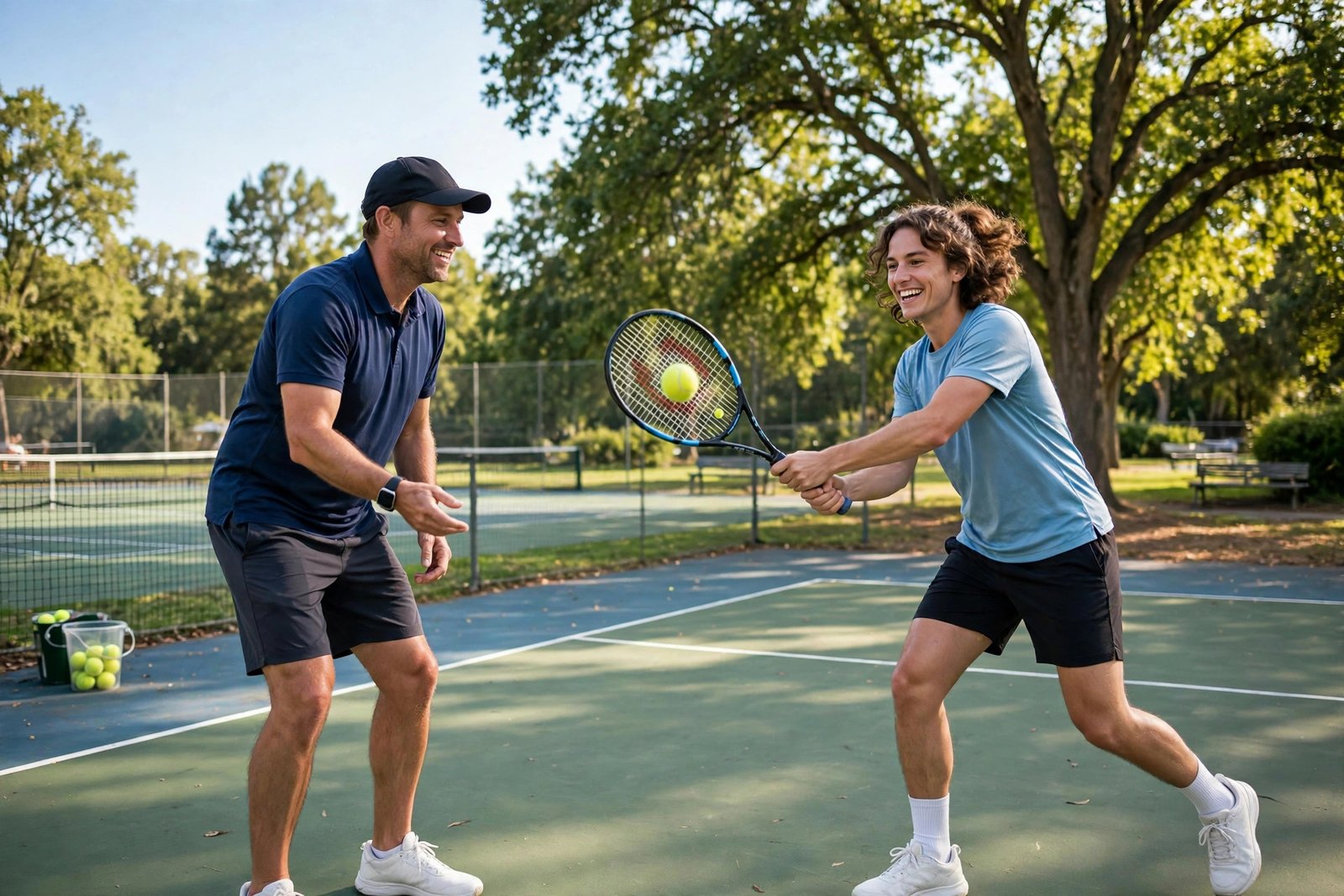
Tennis is having a moment in Britain — park courts are busy, Wimbledon captures the nation’s imagination every summer, and more adults than ever are picking up a racket for the first time. If you are wondering whether now is a good time to start learning tennis as a beginner, or whether you should wait for some better moment, here is the liberating truth: tennis is one of the rare sports where starting as an adult is completely normal, the learning curve is genuinely fun from day one, and “later” only means fewer years of enjoying it. This guide covers everything a beginner needs: the real costs, how to start, what to expect, and how to improve fast.
You will learn why tennis suits adult beginners, the true cost breakdown, where and how to start playing, the fundamentals to prioritise, common beginner mistakes, and how to find your tennis community.
Why tennis is ideal for adult beginners
Most sports punish late starters; tennis welcomes them. It is infinitely scalable — you can have a glorious rally at walking pace or a ferocious baseline battle, and both are recognisably tennis. It is social by design: doubles means conversation, clubs mean community, and the sport’s etiquette (handshakes, scoring calls, shared balls) builds friendships fast. It is superb exercise disguised as play: an hour of singles burns 400–600 calories while improving agility, balance, coordination, and bone density — the lateral movements and impact loading are exactly what ageing bodies need.
And the barrier to entry is lower than it looks. You do not need lessons before your first hit — park courts, a borrowed racket, and a willing friend are enough to discover whether you love it. The scoring system seems arcane for exactly one session, then becomes second nature. Unlike team sports, you never let anyone down by being new; unlike solo exercise, it never gets boring in the same way. For adults seeking a new challenge, it belongs on the shortlist alongside any hobby worth taking up in your thirties — physical, social, and skill-based in equal measure. Learning any complex skill as an adult follows similar principles, as guides to adult learning confirm: consistent short practice beats occasional marathons.
The true costs: cheaper than you think
Tennis’s expensive reputation comes from private clubs; the reality for beginners is modest. Park courts: many are free, others charge £5–£10 an hour — split between players, that is pocket money. A beginner racket: £25–£50 buys a perfectly good adult racket; do not spend more until you know your game. Balls: £5–£8 for a tube of four, lasting weeks of casual play. Shoes: court shoes with non-marking soles matter (£30–£60), but any supportive trainer works initially.
Lessons accelerate everything: group beginner courses at clubs or parks typically run £8–£15 per session, and a 6-week beginner course (£50–£90 total) takes most people from “never held a racket” to “can rally and serve.” Club membership — the eventual home for most enthusiasts — ranges from £100–£300 a year for many local clubs (the thousand-pound clubs are the exception, not the rule). Total first-year honest budget: £150–£300 for a committed beginner, under £100 for a casual park player. The LTA’s club finder lists local options with real prices.
How to start: the first month
Week 1: just hit. Book a park court with a friend, or join a beginner group session. The only goal is contact — getting the ball over the net, feeling the racket, laughing at the misses. Do not worry about technique; worry about fun. Week 2–3: add structure — a beginner course or a couple of group lessons to learn the grip, the basic forehand, and the serve motion before bad habits fossilise. Early coaching is disproportionately valuable: one hour fixing your grip now saves a hundred hours unlearning a bad one later.
Week 4: play points. Scoring, serving, the delicious pressure of a rally that matters — this is when tennis becomes addictive. Find a hitting partner at your level (club noticeboards, beginner courses, and apps all work) and commit to one regular weekly hit. The single biggest predictor of improvement is simply hours on court: two sessions a week beats one long monthly session by miles. And watch tennis with educated eyes — Wimbledon fortnight is a free masterclass if you watch footwork and positioning rather than just the ball.
Fundamentals to prioritise (and what to ignore)
Prioritise: the continental grip for serves and volleys (learn it early — it feels wrong for a week, then right forever); footwork over stroke mechanics (beginners obsess over the racket; coaches obsess over feet — get to the ball balanced and the stroke largely takes care of itself); consistent depth over power (a deep, safe ball wins beginner matches; winners come later); and the serve as a starting point, not a weapon (get it in, build from there).
Ignore for now: fancy spin variations, the perfect backhand (a reliable slice or two-handed defensive shot suffices initially), equipment obsession (strings and tensions matter at levels far above beginner), and advanced tactics. The beginner’s winning formula is boring and effective: get serves in, keep balls deep, move your feet, and let opponents make the errors. Most beginner matches are lost, not won — the player who misses less wins. Patience with the process matters more than any tip: the first 20 hours feel clumsy, hours 20–50 feel like breakthrough, and then you are a tennis player.
Finding your tennis community
Tennis is better with people, and the community is easier to join than it looks. Club open days and beginner courses are designed as social on-ramps — everyone is new together. Doubles is the social express lane: less running, more laughing, instant playing partners. Box leagues and ladders (many clubs run them) give competitive structure at your level without the intimidation of tournaments.
Do not be intimidated by club culture — the stuffy stereotype is decades out of date at most local clubs, which actively recruit beginners to survive. Visit, watch a club night, ask about beginner programmes; you will likely be welcomed warmly. And the park courts remain gloriously democratic: some of the best tennis communities in Britain are informal groups who simply claimed a public court every Sunday. Whatever route you take, the pattern is the same — show up regularly, be friendly, and the sport gives back far more than rallies.
Conclusion
Now is the perfect time to start learning tennis: it welcomes adult beginners, costs less than its reputation suggests, and rewards consistency from the very first hit. Get a basic racket, book a park court, take a beginner course, find a regular hitting partner, and prioritise footwork and consistency over power. Wait for nothing — every season you delay is a season of rallies you will never get back.
Frequently Asked Questions
Am I too old to start tennis?
No. Adults start tennis successfully at every age — clubs are full of players who began in their 30s, 40s, 50s and beyond. The sport scales to every body and fitness level.
How long until I can rally properly?
Most beginners rally comfortably within 4–8 weeks of weekly play plus a beginner course. Serving reliably takes a little longer — expect 2–3 months.
Do I need private lessons?
Not initially — group beginner courses offer better value and social contact. Consider occasional private lessons later to fix specific issues.
What should I look for in a tennis club?
Active beginner programmes, floodlit courts for winter, a welcoming club night, and transparent pricing. Visit before joining — the atmosphere matters more than the facilities. The BBC’s tennis pages are great for following the sport as you learn.