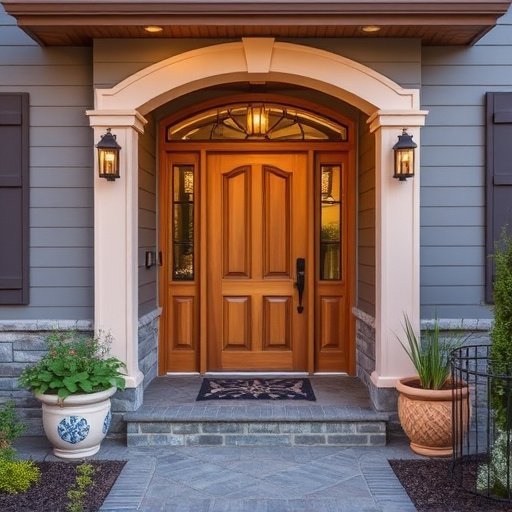
The draught under the front door is the one you feel every time you walk past the hallway — a cold river of air that makes the whole ground floor feel chilly. When people ask how do I stop draughts coming under my front door, they’ve usually tried a rolled-up towel and want something that actually works and doesn’t look terrible.
I’ve draught-proofed four front doors, from a Victorian panelled door with a 15mm gap to a modern composite that just needed a tweak. Here’s every fix ranked by effectiveness, what they cost, and how to fit them in an afternoon.
How do I stop draughts coming under my front door? The fixes ranked
The best all-round fix is a brush strip on the bottom of the door: aluminium carrier with dense nylon bristles (£8–£15) screwed to the door’s bottom edge, the bristles sweeping the floor or threshold. It seals gaps up to about 15mm, flexes over uneven floors, doesn’t scrape or wear like rubber seals, and lasts years. Fitting takes 20 minutes: close the door, mark the bottom, cut the strip to width with a hacksaw, screw it on. For gaps over 15mm, or very uneven stone thresholds, a two-part solution works better — brush strip plus a threshold plate.
Automatic drop-down seals (£15–£25) are the premium option: a spring-loaded seal recessed into the door bottom that drops down when the door closes and lifts when it opens. No dragging, no wear, seals perfectly every time — they’re what you’d spec on a new high-end door. Fitting needs a router or careful chiselling to mortise the seal into the door bottom, so it’s a step up in DIY difficulty, but the result is invisible and superb. For renters or the drill-shy, adhesive brush strips and self-adhesive rubber thresholds (£10–£15) stick on without screws and remove cleanly.
- Brush strip on the door bottom — best all-rounder, £8–£15
- Automatic drop-down seal — premium, invisible, £15–£25
- Threshold plate + brush strip — for big or uneven gaps
- Adhesive rubber threshold — renter-friendly, no screws
- Rolled towel — free, ugly, better than nothing tonight
Don’t forget the rest of the door
The bottom gap gets the attention, but front doors leak from everywhere: the letterbox (a huge hole — fit an internal brush-sealed letterbox cover, £15–£25, or an external draught-proof letterbox), the keyhole (a tiny escutcheon cover, £5, stops a surprising whistle), and the frame seals (self-adhesive foam or brush strips around the frame, £10 for the whole door). A door with all four sealed is a different door — I’ve measured hallway temperature rises of 2–3°C from a full draught-proofing session costing under £40.
Check the door’s fit too: close it and look at the gaps — they should be even, 2–4mm all round. If the door has dropped on its hinges (common with heavy timber doors), longer hinge screws into the frame (£2 fix, see the door repair guide) realign it and close up uneven gaps. If daylight is visible around the edges with the door closed, the frame seals are shot. And if the door is badly warped or rotten at the bottom, no seal fixes it — that’s a new door conversation (£800–2,000 for composite fitted).
Curtains, porches and the hallway
For the ultimate draught defence, add a thermal curtain inside the front door — a heavy, preferably thermal-lined curtain on a portiere rod (£60–£120 total) that you draw at night. In Victorian houses with original doors and high ceilings, this was standard for a reason: it creates an airlock that transforms hallway comfort. It also looks wonderfully traditional. The only rule: the curtain must clear the door’s swing, and tie it back properly during the day or it’ll annoy everyone.
If you’re planning bigger work, a porch is the definitive solution — even a small enclosed porch creates the airlock that eliminates draughts entirely, adds storage for shoes and coats, and counts as permitted development in most cases. Short of that, keep the hallway itself warm: a radiator in the hall (many Victorian halls have none — adding one is £300–£500), rugs on cold floors, and internal doors kept closed. The front door draught is the headline, but hallway comfort is the whole system.
When the door itself is the problem
Sometimes no seal fixes the door — the door itself is done. The signs: visible warping (daylight around the edges that moves with the weather), rot at the bottom (poke it with a screwdriver — if it sinks in, the timber’s gone), a door that’s been planed so many times it’s thin and weak, or a hollow-core door on an external opening (a security and insulation disgrace). Repair has limits; recognise them.
The replacement: a composite door (£800–2,000 fitted) is the modern standard — secure (multi-point locking as standard), thermally efficient (foam core, U-values around 1.0), weather-sealed from the factory, and zero maintenance. Timber doors (£1,500–3,000 for hardwood, fitted) suit period properties and conservation areas — beautiful, but they need painting every 3–5 years. Whichever you choose, the installation matters as much as the door: properly fitted into a true frame, with the threshold detailed correctly and the seals compressing evenly. A great door badly fitted draughts like a bad door — supervise the fitting, check the seal compression all round, and don’t pay the balance until it closes with a satisfying ‘thunk’.
- Replace when: warped, rotted, over-planed, or hollow-core external
- Composite (£800–2k): secure, efficient, zero maintenance
- Hardwood timber (£1.5k–3k): period properties, needs repainting
- Installation quality = the door quality — supervise it
- Don’t pay the balance until it seals perfectly all round
A draught-free front door
Brush strip on the bottom (£12, 20 minutes), seal the letterbox and keyhole, check the frame seals, and add a thermal curtain for the full airlock. Under £100 total for a hallway that’s degrees warmer — the best comfort-per-pound in the house.
For the whole-house draught war, best way to insulate a draughty victorian terrace is the Victorian terrace guide and best energy saving upgrades for an old house ranks energy upgrades. For product tests, Which? home improvement guides is the independent source.
The door decision tree: seal it if it’s sound, replace it if it’s not, and never spend £100 draught-proofing a door that’s structurally finished. The front door is the hardest-working moving part in the house — treat it accordingly, and the hallway thanks you every winter morning.