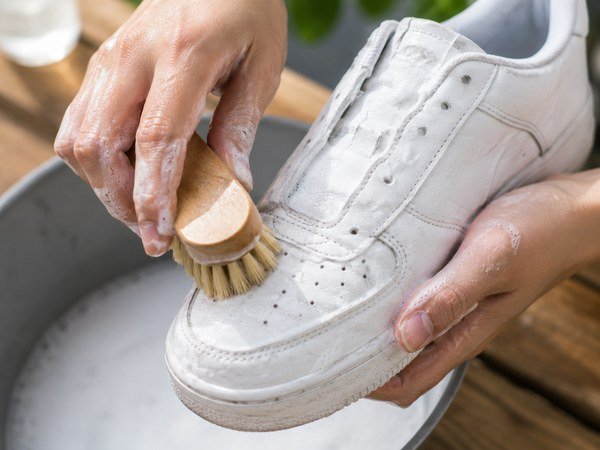
White trainers in Britain are a beautiful, doomed proposition: pristine in the shop, city-grey within a fortnight, mud-splattered by the first unexpected downpour. But keeping white trainers clean in rainy weather isn’t impossible — it just needs a system of prevention, quick cleaning and the right products. Here’s how to keep them box-fresh through the worst of the British climate.
The philosophy: prevention beats cure. Ten minutes of protection before you wear them saves an hour of scrubbing later. And when they do get dirty, fast action beats aggressive chemicals every time.
How to keep white trainers clean in rainy weather: the prevention system
1. Protect before first wear
- Waterproofing spray (£8–£12). Crep Protect, Jason Markk Repel or Liquiproof — spray new trainers before wearing them, reapply monthly. This single step prevents 70% of staining by making water and mud bead off instead of soaking in.
- Choose wisely. Leather white trainers survive rain far better than canvas or knit — they wipe clean where fabric absorbs. If you live in a rainy city, leather is the pragmatic choice (see our trainers-at-work guide for the best leather options).
2. The rainy-day rules
- Check the forecast. Genuinely torrential day? Wear your beaters, not your best whites. Rotation is protection.
- Wipe on return. A damp microfibre cloth on arrival takes 60 seconds and prevents mud drying into the material. Dried mud is ten times harder to remove.
- Stuff and dry properly. Newspaper or shoe trees inside, room temperature, away from radiators — heat yellows white soles and cracks leather.
Cleaning methods that actually work
The regular clean (weekly in wet weather)
- Remove laces and insoles (wash laces separately — soak in oxy-cleaner, they come up like new).
- Brush off dry dirt with a soft brush or old toothbrush.
- Mix warm water with a drop of washing-up liquid or dedicated trainer cleaner (£8–£12 for Jason Markk / Crep Cure).
- Scrub gently with the brush — circular motions, paying attention to the sole edges where grime collects.
- Wipe with a clean damp cloth, stuff with newspaper, air dry.
The deep clean (monthly or post-disaster)
- Bicarbonate of soda + white vinegar paste. Apply, scrub with a toothbrush, leave 30 minutes, wipe off. The classic DIY that genuinely works.
- Magic erasers (£3–£5). Astonishing on white midsoles and rubber — the scuffed sole edge comes up like new.
- Oxy-cleaner soak for laces and canvas. Sodium percarbonate in warm water for an hour transforms dingy fabric.
- Whitening toothpaste. The old sneakerhead trick — non-gel white toothpaste on scuffs, scrub, wipe. Surprisingly effective.
What NOT to do
- Don’t machine wash (unless the manufacturer says so) — it warps shape, yellows glue and kills cushioning.
- Don’t use bleach — it yellows whites and weakens materials. Oxy-cleaners instead.
- Don’t tumble dry or radiator-dry — heat damage is irreversible.
- Don’t ignore the insides. Bicarbonate of soda sprinkled inside overnight deodorises; replace insoles yearly.
For keeping the rest of your footwear investment safe, our leather boot care guide covers the winter side, and WRAP’s clothing sustainability advice has broader care advice for making everything last longer. If your trainers are due for replacement, our ethical trainers guide covers the sustainable options.
The products that actually work (and the ones that don’t)
The trainer-cleaning market is full of overpriced hope. Here’s what’s worth buying and what’s marketing.
- Worth it: a proper cleaning kit (£12–£18). Jason Markk, Crep Protect or Reshoevn8r kits — the brush (soft bristles that won’t damage knit or leather), the solution (concentrated, lasts months), and the microfibre cloth. One kit handles dozens of cleans; the cost per clean is pennies. The brush alone justifies it — old toothbrushes are too harsh for knit, too soft for soles.
- Worth it: waterproofing spray (£8–£12). Covered in the main guide, but worth repeating — this is the highest-ROI product in the category. Crep Protect or Liquiproof, applied to new trainers and monthly after. Prevention beats every cleaning product combined.
- Worth it: white midsole paint/marker (£8–£12). For trainers where the sole is permanently stained or yellowed — specialist paint literally repaints the white. Not a clean, a restoration — but it adds a year to beloved pairs.
- Not worth it: “sneaker laundry” services (£15–£25 per pair). They do exactly what the kit does, with the same products. Unless you physically can’t do it yourself, it’s paying someone £20 for 15 minutes of brushing.
- Not worth it: bleach pens and harsh chemicals. They whiten by damaging — yellowing follows, and materials weaken. The oxy-cleaner soak does the same job safely.
- Not worth it: machine-washing bags and “sneaker wash” detergents. The bag doesn’t prevent the warping; the detergent is just expensive soap. Hand cleaning is gentler and more effective.
The rotation strategy for rainy climates
In Britain, white trainers need a system, not just cleaning products. The two-pair minimum: one pair in active rotation, one pair resting — trainers need 24–48 hours to dry fully between wears, and wearing them daily in wet weather destroys them in months. The beater pair: an older or darker pair designated for genuinely foul days — the £30 beater saves the £120 favourite. Seasonal thinking: white trainers are a March-to-October proposition in the UK; November to February is boot season, and accepting this extends trainer life enormously. The commute hack: wear the beaters (or proper waterproof shoes) for the commute, change into the good pair at work — the trainers never see rain, mud or station floors. It sounds fussy; people who do it have pristine trainers for years while everyone else’s are grey by Christmas.
White trainers: quick answers
Can white trainers survive a British winter? Honestly? Not as daily drivers — November to February is boot season. White trainers are a March-to-October proposition. Accepting the seasonality extends their life enormously.
How often should I clean them? Wipe down weekly in wet weather, deep clean monthly, protect with spray from day one. Ten minutes of maintenance beats an hour of restoration — the people with pristine trainers aren’t lucky, they’re consistent.
Are expensive trainers easier to keep clean? Leather ones, yes — quality leather wipes clean where cheap canvas absorbs. But price alone doesn’t determine cleanability; material does. A £60 leather pair outlasts a £150 knit pair in rain.
When are they beyond saving? When the material is worn through, the sole is structurally dead, or yellowing resists all treatment. Midsole paint buys a final season; after that, retire them to beater duty or recycle.
Your takeaway: spray, wipe, rotate
To keep white trainers clean in rainy weather: protect with waterproofing spray before first wear, wipe them down on return, clean weekly with the brush-and-soapy-water method, deep clean monthly, and rotate pairs on the worst days. Prevention is 70% of the battle — the rest is just prompt maintenance.