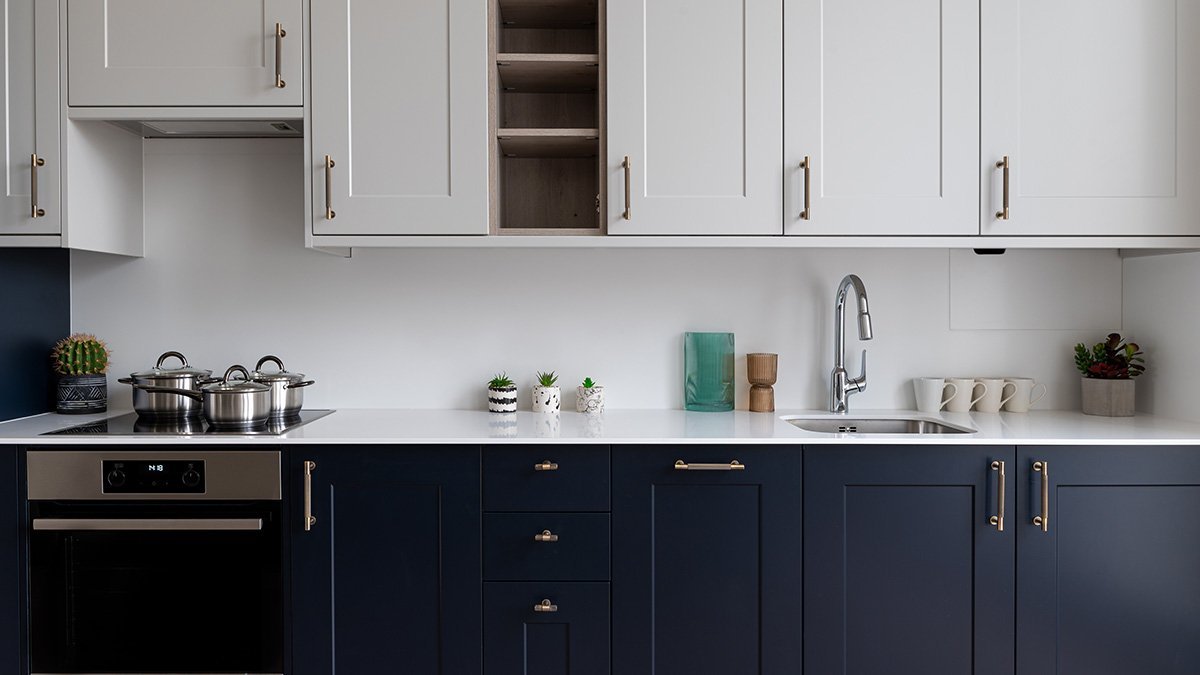
Rental kitchens are where design goes to die: magnolia walls, tired oak-effect units, fluorescent lighting, and a landlord who considers a new tap ‘renovation’. When people ask how can I make a rented kitchen look better without renovating, they want transformations that don’t touch the structure, don’t breach the tenancy, and ideally come with them when they leave.
I’ve rented five kitchens and made every one of them genuinely pleasant — one landlord asked what I’d done because it photographed so well. Here’s the complete renter’s playbook: the removable upgrades, the styling tricks, and what to clear with the landlord first.
How can I make a rented kitchen look better without renovating? The removable upgrades
Self-adhesive vinyl is the renter’s superpower. DC-Fix style sticky-back plastic (£10–£15 a roll) on worktops transforms dated laminate into convincing marble, concrete or wood — it’s heat-resistant enough for worktops (use trivets for hot pans), wipes clean, and peels off when you leave. The same vinyl on flat cabinet doors (or the paintable, removable kind) updates the units. Take your time applying it — soapy water spray, squeegee out bubbles — and the result genuinely fools people.
Handles are the next win: swapping the landlord’s sad knobs for your own bar handles (£40–£80 for a kitchen) takes an afternoon, and you simply refit the originals when you leave — keep them in a labelled bag. Peel-and-stick tiles (£15–£25/m²) give you a splashback over the existing tiles; they handle heat and steam fine and remove cleanly. And lighting: a couple of battery-powered LED puck lights or strip lights under the wall units (£20–£40) transform the evening kitchen from interrogation room to cosy — no wiring, no permission needed.
- Sticky-back vinyl on worktops — marble/concrete effects, peels off clean
- Swap handles (keep originals in a labelled bag)
- Peel-and-stick tiles for a removable splashback
- Battery LED strips under wall units — no wiring needed
- New tap? Ask the landlord — many say yes, it’s their asset improved
Deep clean, declutter and style
Before spending anything, deep-clean like you’re moving out: degrease the walls and unit fronts (sugar soap, twice), clean inside the oven (the thing landlords judge), descale the kettle and taps, bleach the grout, and defrost and clean the fridge. A spotless tired kitchen looks 50% better than a grimy one — this free step outperforms most purchases. Then declutter the worktops ruthlessly: the toaster, the kettle, one nice chopping board, and nothing else. Clear worktops are the cheapest luxury in kitchens.
Styling is where rentals become homes: a runner rug in front of the sink (washable, £25–£45), a couple of prints in frames on the wall (Command strips, no holes), a plant that tolerates kitchen life (pothos, spider plant), matching storage jars decanted from ugly packaging, and a proper knife block or magnetic strip (freestanding, no drilling). Open shelving isn’t an option in most rentals, but a freestanding shelf unit or bar cart (£40–£80) gives you display space for the pretty things and gets the clutter off the worktops.
What to ask the landlord about
Some upgrades are worth requesting because they improve the landlord’s asset: a new tap to replace a dripping one, resealing the bath or sink, replacing a broken oven shelf, or repainting in a neutral colour. Frame it as maintenance, put it in writing, and many landlords agree — especially if you offer to arrange it. Never do structural, plumbing or electrical work yourself in a rental; besides the tenancy breach, the liability if something goes wrong is entirely yours.
Know your rights too: the landlord must keep the structure, heating, hot water and sanitary installations in repair — a kitchen that’s merely ugly is your problem, but one that’s broken (leaking tap, faulty oven, mould from failed seals) is theirs. Report disrepair in writing, keep copies, and escalate to the council’s environmental health team if ignored. And photograph everything when you move in and out — the inventory photos are what stand between you and deposit deductions for the vinyl you carefully removed.
The move-out: reversing everything and getting the deposit back
The beauty of the removable-upgrade approach is the move-out: it reverses in a weekend. The process: peel off the vinyl (warm it with a hairdryer — it comes away cleanly; any residue removes with warm soapy water or a dab of white spirit), refit the original handles (the labelled bag from move-in day), remove the peel-and-stick tiles (dental floss behind them, adhesive remover for residue), take down the LED strips and Command-strip frames, and deep-clean everything to inventory standard. Photograph every stage — the photo record is your deposit defence.
The deposit-protection reality: disputes go to the adjudicator, who decides on evidence. Your weapons: the move-in inventory with photos (take your own comprehensive set on day one — don’t rely on the agent’s), the move-out photos showing the same condition, receipts for the professional clean (a £150–200 professional clean is the best deposit insurance there is — adjudicators expect it), and records of all maintenance requests. Fair wear and tear is allowed; damage isn’t — and a kitchen you’ve improved with removable upgrades, then restored, is the definition of fair. Most deposit disputes are won on documentation, not argument.
- Reverse in order: vinyl (hairdryer), handles (labelled bag), tiles, lights
- Photograph every stage of removal
- Professional clean £150–200 — the best deposit insurance
- Move-in photos vs move-out photos: the adjudicator’s evidence
- Fair wear and tear is allowed — document everything
The renter’s kitchen glow-up
Deep clean, declutter, vinyl the worktops, swap the handles, stick up a splashback, light it warmly, style it simply. Under £200, one weekend, fully reversible — and a kitchen you actually enjoy cooking in instead of enduring.
For more no-damage improvements, childproof my home without drilling holes is the no-drill childproofing guide and cheapest way to update kitchen cabinets covers cheap cabinet updates. For renter-friendly product ideas, MoneySavingExpert’s household money-saving tips is full of clever finds.
The renter’s kitchen arc: arrive to magnolia, transform with vinyl and styling, enjoy it for years, reverse it in a weekend, leave with the deposit intact and the landlord slightly sorry to see you go. The upgrades were never about the landlord’s kitchen — they were about your quality of life while you lived there. That’s always worth £200 and a weekend.