Standard childproofing advice assumes you own the walls. When people ask how can I childproof my home without drilling holes — renters, mostly, plus anyone in a listed building or with pristine plasterwork — they need the same safety without a single screw.
I’ve childproofed two rented homes for a toddler who treated every room as an assault course, and got both deposits back in full. Here’s the complete no-drill system: what’s genuinely dangerous, what the adhesive alternatives can handle, and where you shouldn’t compromise.
How can I childproof my home without drilling holes? Start with the real risks
Prioritise like a safety inspector, not a worrier. The genuinely dangerous things: toppling furniture (bookcases and TVs kill — this is the number one risk), stairs, accessible medicines and cleaning products, choking hazards, and water (bath time, garden ponds). The things parents stress about but matter less: every single cupboard, table corners (bumps happen; they’re how toddlers learn), and the oven door (hot, but toddlers learn ‘hot’ fast with supervision). Focus your effort and budget on the big risks.
Do a crawl-through: literally get on your hands and knees in each room and see what a toddler sees — the dangling blind cords (a strangulation risk — tie them up with a cleat, no drilling needed), the low cupboard with the bleach, the wobbly bookcase, the coins and batteries at sofa level. Button batteries deserve special terror: they’re everywhere (remote controls, scales, toys) and can kill if swallowed — tape battery compartments shut and bin loose ones immediately.
- Anchor toppling furniture — the #1 serious risk
- Pressure-fit stair gates top and bottom of stairs
- Lock away medicines, cleaning products, knives, button batteries
- Secure blind cords out of reach
- Cover unused plug sockets (UK sockets are shuttered, but covers reassure)
The no-drill toolkit
Adhesive cabinet locks have grown up: the modern 3M-adhesive magnetic locks (£15–£25 for a multi-pack) are strong enough to defeat toddlers and remove cleanly with dental floss and heat when you leave — no marks. Use them on the under-sink cupboard (cleaning products), the medicine cabinet, and anywhere knives live. For drawers, adhesive latches work the same way. Corner guards: the clear silicone type (£8 for 12) stick on firmly and come off cleanly — use on the coffee table and hearth, skip the rest.
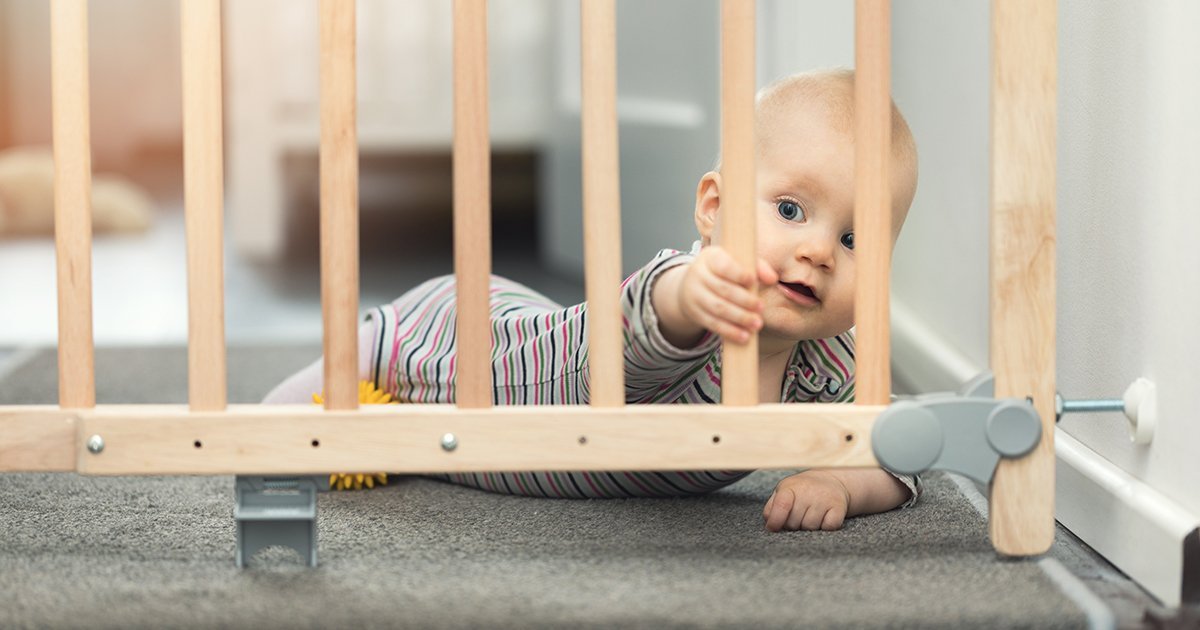
Stair gates are the big one, and pressure-fit gates (£30–£60) need zero screws — but choose carefully. For the top of stairs, only use a gate certified for top-of-stairs use (pressure-fit is fine if it’s the right standard — look for BS EN 1930), fitted tightly and correctly. Furniture anti-tip straps with adhesive pads (£10–£15) secure bookcases and dressers to the wall without drilling — they’re not as strong as screwed straps, so use two per tall item and keep the heaviest items on the lowest shelves regardless. For TVs, a no-drill TV strap to the stand plus keeping the stand itself stable is the minimum.
Room by room, deposit-safe
Kitchen: adhesive locks on the cleaning cupboard and knife drawer, cooker guard (£15, heat-resistant adhesive or clamp-on), kettle pushed to the back, and a strict rule that the toddler doesn’t enter during cooking — a playpen or high chair in sightline works. Bathroom: non-slip bath mat, toilet lock (adhesive, £8), medicines in a high locked box, and never leave water in the bath — drowning is silent and takes seconds. Supervision beats products here, always.
Living areas and bedrooms: secure the bookcases, gate the stairs, tidy the choking hazards (the 35mm film-canister test: if it fits inside, it’s a choking risk), and move the fragile and the precious out of reach rather than trying to protect them in place. Windows: restrictor latches (adhesive or clamp types, £10) on any window a child can reach, especially upstairs. And talk to your landlord — many will actually allow (or even pay for) screwed stair gates and furniture anchors if you ask, since it protects their property too. Get any permission in writing.
Childproofing outdoors and on the move
The garden needs the same risk assessment as the house. Ponds are the biggest danger — toddlers drown silently in centimetres of water; fence it, cover it with a rigid grille, or fill it in until they’re older. Garden chemicals, slug pellets and fertilisers go in a locked box (the shed is not secure storage for a toddler — add a lockable cabinet, £40). Check fences for gaps a toddler can squeeze through, padlock gates, and beware the trampoline (the A&E statistics are sobering — one child at a time, no under-6s, safety net always).
For travel and grandparents’ houses, a portable kit covers the essentials: a pressure-fit travel stair gate (£35, fits most doorways), adhesive corner guards, a few cabinet locks, and a pop-up travel cot with a proper mattress. It lives in a bag by the door, ready to deploy. And the car: the car seat correctly fitted (get it checked — most are fitted wrong; many retailers and councils offer free checks), sun shades on the windows, and never — ever — leave a child alone in a car, even for ‘just a minute’. The no-drill philosophy extends everywhere: safety without damage, wherever the toddler goes.
- Ponds: fence, rigid grille, or fill in — drowning is silent
- Garden chemicals in a locked cabinet, not loose in the shed
- Gates padlocked; fences checked for toddler-sized gaps
- Travel kit: pressure gate, corner guards, cabinet locks, travel cot
- Car seat checked by a professional — most are fitted wrong
Safe home, intact walls
Adhesive locks for the dangerous cupboards, pressure-fit gates for stairs, adhesive anti-tip straps doubled up on tall furniture, blind cords tied up, button batteries eliminated. The deposit stays safe and — far more importantly — so does the toddler.
For more no-damage home improvements, make a rented kitchen look better without renovating freshens a rented kitchen without renovating, and maximise storage in a small uk bedroom tames bedroom storage. For product safety ratings, Which? home improvement guides tests childproofing gear independently.
The childproofing mindset, indoors and out: think like a tiny, fearless explorer with no sense of consequences — because that’s exactly what a toddler is. Fix the fatal risks (water, falls, toppling, traffic), manage the painful ones (corners, stairs), and accept the rest as the tuition fees of childhood. Safe, not sterile — that’s the goal.