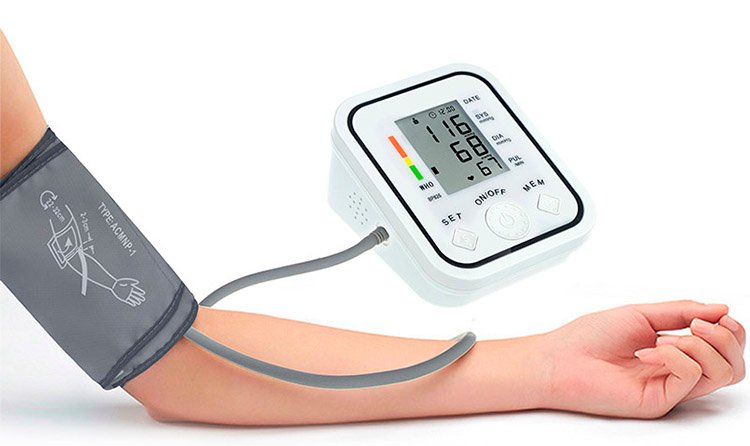
You stand up, the room tilts, your vision goes spotty, and you have to grab the doorframe like a drunk pirate. Then it passes in ten seconds and you carry on as if nothing happened. If you want to check your blood pressure at home accurately — and episodes like that are one good reason to — it’s one of the most useful things you can do for your long-term health. High blood pressure has no symptoms but drives heart attacks and strokes; home monitoring catches what occasional GP readings miss.
Home blood pressure monitors are cheap (£20–£40 for a validated upper-arm model), easy to use, and recommended by the NHS for diagnosing and managing hypertension. But a surprising number of people use them wrong and either scare themselves or miss real problems. Here’s how to get readings you can trust.
Choose the right monitor
- Upper-arm cuff, not wrist. Upper-arm monitors are significantly more accurate. Wrist models are convenient and consistently less reliable — fine for trends, not for decisions.
- Validated and correctly sized. Look for validation by the British and Irish Hypertension Society (check bihs.org.uk for the validated list). The cuff must fit your arm: too small reads high, too large reads low. Most monitors include a medium cuff; larger arms need an XL cuff — measure around your bicep.
- What to pay. Omron is the benchmark brand (£30–£60); Boots and LloydsPharmacy own-brands (£20–£35) are validated and perfectly good. Avoid no-name £12 models — accuracy is the entire point.
How to check your blood pressure at home accurately: the technique
This is where readings go wrong. Follow this protocol — it’s what clinicians use:
- Prepare: no caffeine, exercise or smoking for 30 minutes before. Empty your bladder. Sit quietly for 5 minutes.
- Position: sit with your back supported, feet flat on the floor (not crossed), arm supported at heart height on a table. The cuff goes on bare skin, lower edge about 2–3cm above the elbow crease.
- Stay still and silent. Don’t talk, don’t look at your phone, don’t cross your legs. All of these raise the reading.
- Take two readings, 1–2 minutes apart. Discard the first if it’s much higher (the “first reading effect” is real — people tense up). Record the second, or the average.
- Same conditions each time. Same time of day (morning before medication/caffeine and evening are standard), same arm, same chair. Consistency makes trends meaningful.
- Measure over a week. A single reading means little — blood pressure fluctuates constantly. The NHS-recommended approach: twice daily (morning and evening) for 7 days, then average the readings excluding day one.
What the numbers mean
- Normal: below 120/80
- Raised / pre-hypertension: 120–139 over 80–89 — lifestyle action zone
- High (hypertension): consistently 140/90 or above at the clinic, or 135/85+ on home readings — see your GP
- Severely high: 180/120 or above — seek urgent medical advice, especially with chest pain, breathlessness or neurological symptoms
Home readings run slightly lower than clinic readings (no white-coat effect), which is why the home threshold is 135/85 rather than 140/90. Keep a log — most monitors store readings, or use the NHS-recommended charts. The NHS high blood pressure page explains diagnosis and next steps clearly.
Common mistakes that skew readings
Full bladder (+10 points), talking during measurement, cuff over clothing, arm hanging unsupported, feet dangling, measuring right after coffee or a stressful commute, and taking one reading and panicking. If a reading seems wild, rest five minutes and repeat — don’t catastrophise off a single number. And if dizziness when standing is your concern, our guide on dizziness on standing explains the blood-pressure connection.
Lowering it: what actually works
If your readings are in the raised zone, lifestyle changes are first-line treatment — and they work:
- Cut salt. The biggest dietary lever. UK adults average 8g daily against a 6g target — most of it hidden in bread, processed meat, sauces and ready meals. Cooking from scratch with our budget healthy staples slashes it automatically.
- Move more. 150 minutes of moderate activity weekly can drop systolic pressure 5–8 points. Daily walking is the simplest start.
- Lose excess weight. Even 5–10% weight loss meaningfully reduces pressure.
- Limit alcohol. Regular heavy drinking raises blood pressure; cutting back lowers it within weeks.
- Manage stress and sleep. Chronic stress and poor sleep both nudge readings upward.
The British Heart Foundation’s blood pressure hub has excellent trackers and lifestyle guides. And if you’re due a broader MOT, here’s how to prepare for your NHS health check — blood pressure screening is part of it from age 40.
Understanding your readings: what’s normal and what’s not
A single reading means little — blood pressure fluctuates through the day. Here’s how to interpret the numbers once you have a week’s worth.
- Under 120/80: ideal. Keep doing what you’re doing.
- 120–139 / 80–89: raised (“pre-hypertension” in older terminology). Not medication territory on its own, but the range where lifestyle changes matter most — this is where you can genuinely move the needle.
- 140/90 or above, consistently: high blood pressure. If your home average over a week sits here, book a GP appointment — bring the readings. Don’t panic about one high day; do act on a high week.
- 180/120 or above with symptoms (chest pain, severe headache, vision changes, breathlessness): seek urgent medical help. Without symptoms, recheck after resting — but still contact your GP promptly.
The patterns that matter: morning readings run higher (the “morning surge” is normal); evenings are usually lowest. A difference of up to 10 mmHg between arms is normal — consistently more than that is worth mentioning to your GP. And “white coat” readings at the surgery that are 10–20 points above home readings are extremely common, which is exactly why home monitoring is valuable.
What actually moves the numbers: the lifestyle factors with real evidence are boring but powerful — losing 5–10% of body weight if overweight, cutting salt below 6g a day, 150 minutes of weekly moderate exercise, limiting alcohol, and quitting smoking. Each one typically shaves 2–8 mmHg off; combined, they can match a medication’s effect for mild hypertension. The DASH eating pattern (fruit, veg, whole grains, low-fat dairy, less salt) has the strongest dietary evidence.
Keep your log going even after diagnosis — it’s how your GP judges whether treatment is working, and “my home average dropped from 148/92 to 132/84” is far more useful than a single surgery reading.
Your takeaway: technique first, trends over single readings
To check your blood pressure at home accurately, use a validated upper-arm monitor with the right cuff size, follow the rest-and-position protocol, take readings twice daily for a week, and judge by trends, not single numbers. Share the log with your GP — it’s exactly what they need to help you.