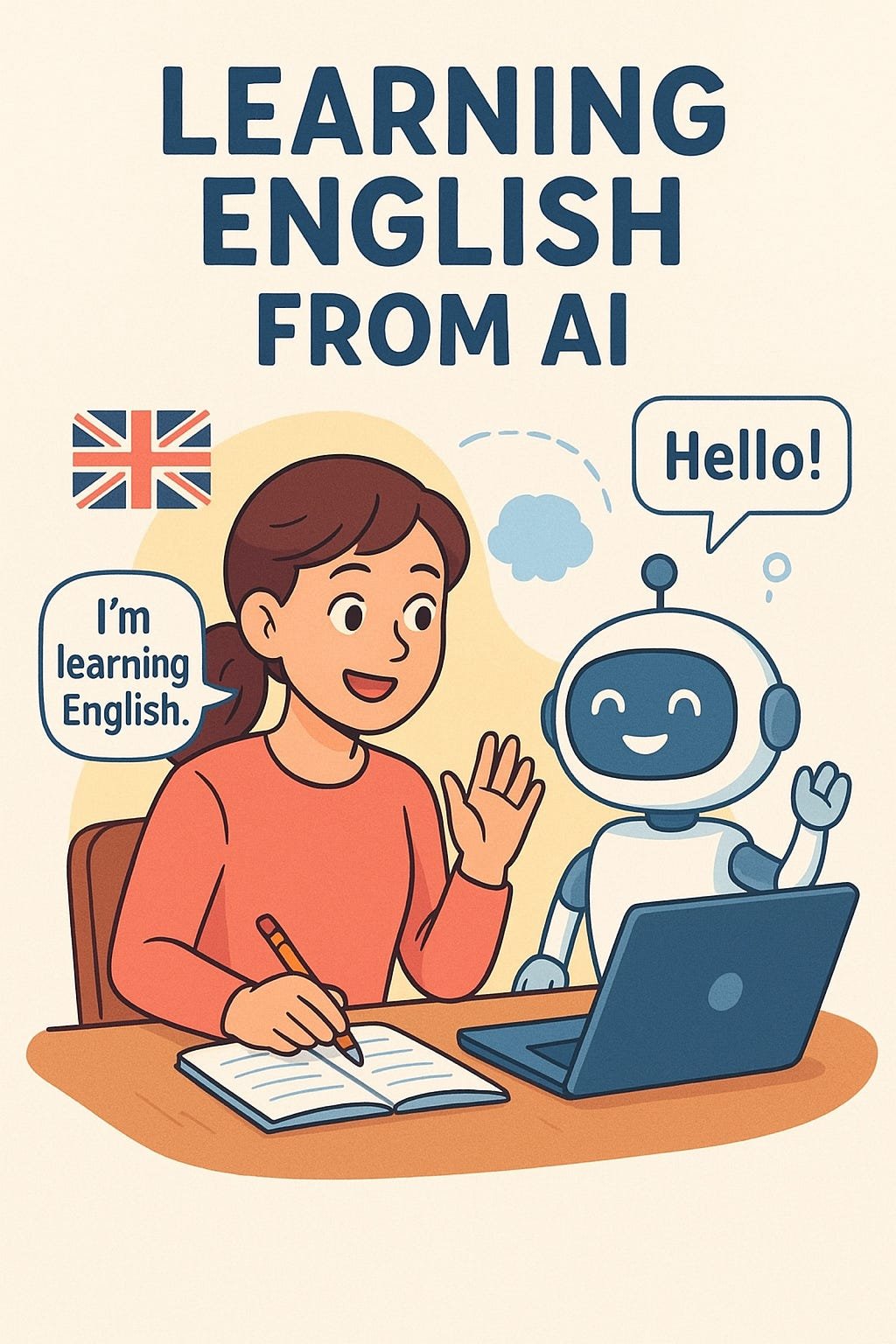
Exploring how can ai help with learning a new language is timely, because AI has quietly become the best language-learning companion most people have ever had — patient, available at 2am, and infinitely willing to repeat the subjunctive without sighing. I used AI to get my French from “schoolboy embarrassment” to “can handle a dinner party in Lyon” in about eight months, and the difference from app-only learning was stark. Apps drill you; AI converses with you.
That’s the fundamental shift: traditional tools (Duolingo, flashcards, textbooks) are excellent for building blocks but terrible at the thing that actually makes you fluent — real conversation with feedback. AI fills that gap.
How can AI help with learning a new language?
1. Conversation practice on demand
This is the killer feature. Tell an AI assistant: “You’re my Spanish tutor. Have a conversation with me at A2 level about weekend plans. Correct my mistakes gently after each message, explain the correction briefly, then continue the conversation.” You now have a conversation partner with infinite patience who never gets bored, never judges, and is available whenever you have ten spare minutes. Vary the scenarios: ordering in a restaurant, a job interview, small talk at a party, complaining to a landlord — the situations textbooks never cover properly.
2. Personalised explanations
Stuck on German cases or French subjunctives? Ask for an explanation pitched at your level with examples from your interests: “Explain the Spanish subjunctive to me like I’m a football fan, using football examples.” AI generates analogies and examples no textbook would think of, and you can ask follow-up questions until it clicks — the luxury of a private tutor, free.
3. Writing correction and feedback
Write a paragraph in your target language and ask for corrections with explanations. Better: ask it to rewrite your text at a slightly higher level so you can see what “good” looks like, then compare. Keep a document of your corrected mistakes — reviewing it monthly shows progress that’s otherwise invisible and motivating.
4. Vocabulary in context
Forget word lists. Ask for the 50 most useful phrases for a specific situation (a wedding in Italy, a business trip to Berlin), with example sentences and pronunciation notes. Or photograph signs, menus, and labels and ask for translations with cultural context — brilliant when travelling.
5. Listening and pronunciation
Most AI assistants now have voice modes — have spoken conversations for listening and speaking practice. For pronunciation specifically, ask for minimal-pair drills (“ship” vs “sheep” for English learners) and tongue-twisters at your level. It’s not a perfect substitute for a human ear, but it’s dramatically better than silent study.
The honest limitations
- It can teach you slightly wrong things. AI occasionally produces unnatural phrasing or subtle errors, especially in less-common languages. Cross-check with native materials (films, podcasts, tutors) regularly.
- It can’t replicate human unpredictability. Real conversations go sideways; AI conversations stay politely on track. You still need real humans eventually — language exchanges (free, via apps like Tandem) are the perfect complement.
- Accent and culture: AI won’t teach you the slang, humour, and cultural references that make you actually fluent. Consume native media alongside.
The winning formula: AI for daily practice and explanations + apps for vocabulary drilling + real humans for the messy reality. If you’re learning for travel, our guide to real-time AI translation covers the backup plan for when your skills run out mid-conversation.
Staying motivated: the system that keeps you going
Everyone starts language learning motivated; most people quit by month three. The difference between quitters and speakers isn’t talent — it’s systems. The research on habit formation is clear: small daily doses beat weekly marathons (15 minutes daily outperforms 2 hours on Sunday), streaks work (don’t break the chain — even a 5-minute minimum-viable session counts), and identity beats goals (“I’m someone who practises Spanish daily” sustains better than “I want to be fluent”).
Build variety into the routine so it doesn’t go stale: rotate between AI conversation, app drills, native media (a Netflix series with subtitles, then without), and human exchange. Getting better at briefing your AI tutor multiplies the value of every session — our guide to writing good prompts shows how. Track visibly — a calendar with X’s, a journal of new words, monthly recordings of yourself speaking (cringeworthy but incredibly motivating when you compare month one to month six). And manufacture deadlines with teeth: book the trip, schedule the video call with a native speaker, tell friends you’ll give a toast in Italian at the wedding. Real stakes focus the mind wonderfully.
The plateau is coming — usually around month 4–6, when the easy gains stop and progress feels invisible. This is where most people quit, and it’s precisely where persistence pays most. Push through with harder material (native podcasts, real conversations), trust the process, and remember that the plateau is your brain consolidating — the breakthrough follows. Learners who survive one plateau usually survive them all, because they’ve learned the meta-lesson: feeling stuck and being stuck are different things.
For structured learning paths, the BBC Languages archive still offers excellent free resources, and combining them with daily AI conversation practice covers all bases: structured input from quality materials, infinite output practice from your AI tutor, and real human conversation when you’re ready. That’s the complete system — and it’s mostly free.
One more powerful combination: AI plus immersion trips. If you’re learning for travel, time a trip for the 3–6 month mark — early enough that the language is fresh, late enough that you have foundations. Before you go, use AI to prepare intensively: role-play the specific situations you’ll face (hotels, restaurants, directions, emergencies), learn the 200 most useful travel phrases, and build confidence through simulated conversations. Then go and use it — the trip will accelerate your learning more than months of study, because necessity is the ultimate tutor. You’ll return exhausted, exhilarated, and dramatically more fluent.
Your practical takeaway
Today: set up a 10-minute daily AI conversation at your level in a scenario you actually need. This week: add AI writing correction twice a week and start a mistakes document. This month: find one human conversation partner to complement the AI practice. An hour a day of this combined approach will take most people from beginner to conversational in 6–12 months — the AI doesn’t replace the work, but it makes the work dramatically more effective and, honestly, more fun.