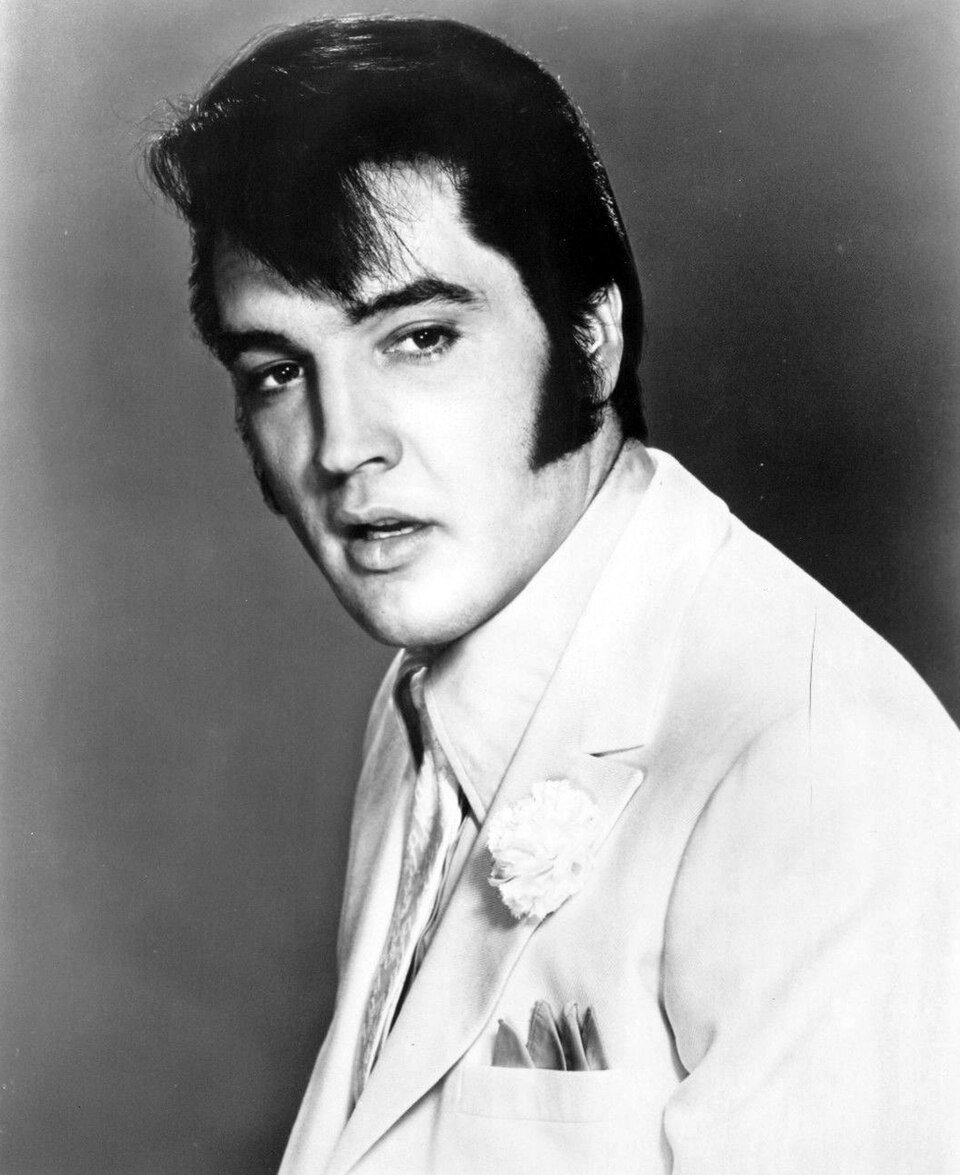
Elvis Presley Net Worth, Biography, Age, Family and Career
Elvis Presley was a singer and actor whose recordings in the 1950s reshaped popular music and whose commercial success continued, through his estate, long after his death. Celebrity Net Worth puts his net worth at the time of his death in 1977 at $5 million, a figure it equates to roughly $27.5 million in present-day terms. That at-death figure is a historical one, and it should not be confused with the far larger sums his estate has generated in the decades since.
Vernon, Gladys and Daughter Lisa Marie
His parents were Vernon Presley and Gladys Presley. His mother died in August 1958, while he was in the army, a loss that affected him deeply and that he spoke about for the rest of his life. His father outlived him, serving as an executor of his estate after his death and dying in 1979. The closeness of the family, and its poverty during his childhood in Tupelo and Memphis, are consistent themes of every serious account of his life.
He married Priscilla Beaulieu in Las Vegas on 1 May 1967. They had met in Germany in 1959, during his military service, when she was fourteen and living with her family at a base there. Their daughter, Lisa Marie, was born on 1 February 1968. The marriage came under strain as his touring and Las Vegas schedule intensified, and the couple separated in 1972 and divorced in October 1973. Priscilla Presley was therefore his former wife at the time of his death, not his wife, a distinction that accounts of his life sometimes blur. Lisa Marie Presley, his only child, inherited the estate on reaching adulthood and pursued her own recording career before her death in January 2023. He died at Graceland on 16 August 1977, aged 42, and was buried in the Meditation Garden at Graceland, where his parents also lie.
The $5 Million He Died With
Celebrity Net Worth puts his net worth at the time of his death at $5 million, equivalent, on its calculation, to roughly $27.5 million in present-day terms. Contemporary reporting of the estate’s probate valuation put it at about $4.9 million, a strikingly small sum for the most commercially successful recording artist of his era. The reasons are well documented: Parker’s management commission, which rose to an exceptional share of his earnings; the 1973 sale to RCA of his rights in his earlier recordings for a lump sum of $5.4 million, which surrendered future royalties on the catalogue that later proved most valuable; and heavy personal spending and generosity throughout his career. At his death the estate held only about $500,000 in liquid assets, against substantial running costs.
The estate’s position after his death is a separate matter and must be kept separate from the at-death figure. Graceland was opened to the public in 1982, and the estate built around his name, image and remaining rights grew steadily; by the time Lisa Marie Presley inherited in full in 1993 it was reported to be worth more than $100 million. Posthumous earnings have remained large: Forbes estimated that the estate generated $50 million in 2024 alone. Those are earnings of the estate, not a revision of what Presley himself was worth in 1977.
His best-known house is Graceland, the mansion in Memphis he bought in March 1957 for a reported $102,500, when he was twenty-two. The property, of about 13.8 acres on what is now Elvis Presley Boulevard, was his home for the remaining twenty years of his life and the place where he died. Its upkeep cost more than half a million dollars a year by the time of his death. Since 1982 it has operated as a museum and remains the centre of the estate’s public business. A house of that age and fame depends for its setting on the upkeep of its frontage and grounds, and owners of more ordinary period houses face the same task at a different scale, as this guide to how to add kerb appeal to a house cheaply explains. He also owned houses in California during his film years, including a house in Beverly Hills and one in Palm Springs where he and Priscilla spent their honeymoon.
His vehicles were a conspicuous part of his spending during his lifetime. The best known is the 1955 Cadillac Fleetwood Sixty Special, repainted pink and given to his mother, which is preserved at Graceland. He bought and gave away vehicles on a large scale, and models documented in his ownership include a 1956 Lincoln Continental Mark II, a BMW 507, a Rolls-Royce Silver Cloud, a Mercedes-Benz 600, several Stutz Blackhawks, the last of which he drove through the gates of Graceland on the day he died, and a Ferrari Dino 308 GT4 bought in 1976. A collection of his vehicles is displayed at Graceland, although no complete verified inventory of every vehicle he owned across his lifetime exists.
Presley’s historical position rests on a concentrated burst of recording between 1954 and 1958 that changed the direction of popular music, followed by two decades in which films, residencies and touring kept him among the most famous performers in the world. The contrast between the scale of that fame and the modest size of his estate at his death remains one of the most instructive features of his story.
Elvis Presley, Summed Up
| Elvis Presley, Summed Up | Details |
|---|---|
| Born | 8 January 1935, Tupelo, Mississippi, United States; died 16 August 1977, Memphis, Tennessee |
| Age | Died aged 42 |
| Height | 6 ft 0 in (1.83 m) |
| Weight | No reliable published figure exists |
| Former Wife | Priscilla Presley (married 1967; divorced 1973) |
| Children | One daughter, Lisa Marie Presley (born 1968; died 2023) |
| Net Worth | $5 million at the time of his death in 1977 (Celebrity Net Worth) |
Tupelo, Mississippi, a Two-Room House
Elvis Aaron Presley was born on 8 January 1935 in Tupelo, Mississippi, in a two-room house built by his father. His father, Vernon Presley, worked in a series of jobs, including driving a delivery truck, and spent a period in prison for a cheque offence when Elvis was a small child. His mother, Gladys Presley, worked as a sewing machinist. The family was poor, and music, heard at home, on the radio and at local performances, was a central part of his childhood. He received his first guitar for his eleventh birthday, in 1946, reportedly having wanted a bicycle or a rifle instead.
The family moved to Memphis, Tennessee, in 1948, when he was thirteen, and lived in public housing and then in rented rooms and houses in the city. He attended L. C. Humes High School, graduating in 1953, and worked in a machine shop and as a truck driver for an electric company. Memphis placed him close to the recording studios, record shops and radio stations of a city with an unusually rich musical life, and he spent much of his spare time listening, watching other performers and learning songs.
In the summer of 1953 he paid to record two songs at the Memphis Recording Service, run by Sam Phillips of Sun Records, as a gift for his mother and, by his own account, to hear how he sounded. The following year Phillips, who was looking for a singer who could bring the music he admired to a wider audience, invited him to a recording session. A version of “That’s All Right”, recorded in July 1954 with the guitarist Scotty Moore and the bassist Bill Black, became his first single and the starting point of his professional career.
Sun Records, the Films and the Comeback
1954–1955: The Sun Records Sessions
His five singles for Sun Records, beginning with “That’s All Right” and “Blue Moon of Kentucky” in 1954 and continuing with “Good Rockin’ Tonight”, “Mystery Train” and “Baby Let’s Play House”, combined country, blues and popular songs in a style that had no settled name at the time. He toured the South with Moore and Black, building a regional reputation as a live performer whose stage movement drew strong reactions from young audiences. In 1955 the drummer D. J. Fontana joined the group, and the manager Colonel Tom Parker, who had been watching his progress, took an increasing role in his affairs. In November 1955 his contract was sold to RCA Victor for a reported $35,000, then an exceptional sum for a recording artist.
1956–1958: National Fame and the First Albums
The year 1956 made him a national figure. “Heartbreak Hotel”, his first single for RCA, reached number one, as did “I Want You, I Need You, I Love You” and the double-sided “Hound Dog” and “Don’t Be Cruel”. His first two albums, Elvis Presley and Elvis, both topped the album chart, and television appearances, including three on The Ed Sullivan Show, brought him to an audience of tens of millions. He began a film career with Love Me Tender (1956), followed by Loving You and Jailhouse Rock in 1957, the latter built around one of the most celebrated staged musical sequences of the period. Songs from these years, including “Blue Suede Shoes”, “All Shook Up”, “Too Much” and “(Let Me Be Your) Teddy Bear”, established a catalogue that has never gone out of print. In March 1958 he was drafted into the army and served in Germany, a two-year absence from performing that Parker managed carefully with a stockpile of recorded material.
1960–1968: The Film Years
He returned from military service in 1960 and recorded Elvis Is Back!, an album that showed a broader vocal range than his 1950s work, along with the number-one singles “Stuck on You”, “It’s Now or Never”, “Are You Lonesome Tonight?” and “Surrender”. From 1961, however, his career was directed overwhelmingly towards films. He made more than two dozen features during the decade, among them Blue Hawaii (1961), which produced “Can’t Help Falling in Love”, Kid Galahad (1962), Viva Las Vegas (1964) and Frankie and Johnny (1966). The films were commercially dependable and their soundtrack albums sold steadily, but the material was uneven, and his chart positions declined as popular music changed around him. Studio albums from the period, including Something for Everybody (1961) and Pot Luck (1962), sat alongside a growing number of soundtrack releases in his discography.
1968–1977: The Comeback, Las Vegas and the Final Years
A television special broadcast in December 1968, in which he performed in a small studio setting before a live audience, restored his standing as a performer and is generally treated as the turning point of his later career. He followed it with From Elvis in Memphis (1969), recorded in Memphis and containing “In the Ghetto”, and with “Suspicious Minds”, which reached number one in 1969. He returned to live performance with a residency in Las Vegas and extensive touring, and released the albums That’s the Way It Is (1970) and Elvis Country (1971) and the single “Burning Love” (1972). A concert broadcast by satellite in 1973, released as the album Aloha from Hawaii via Satellite, was seen by a very large international audience. Through the mid-1970s his health declined and his weight changed markedly, which is one reason no single reliable weight figure can be given for him. He continued to tour until shortly before his death, and his final studio album, Moody Blue, was released in 1977.