Diana Ross Net Worth, Biography, Age, Family and Career
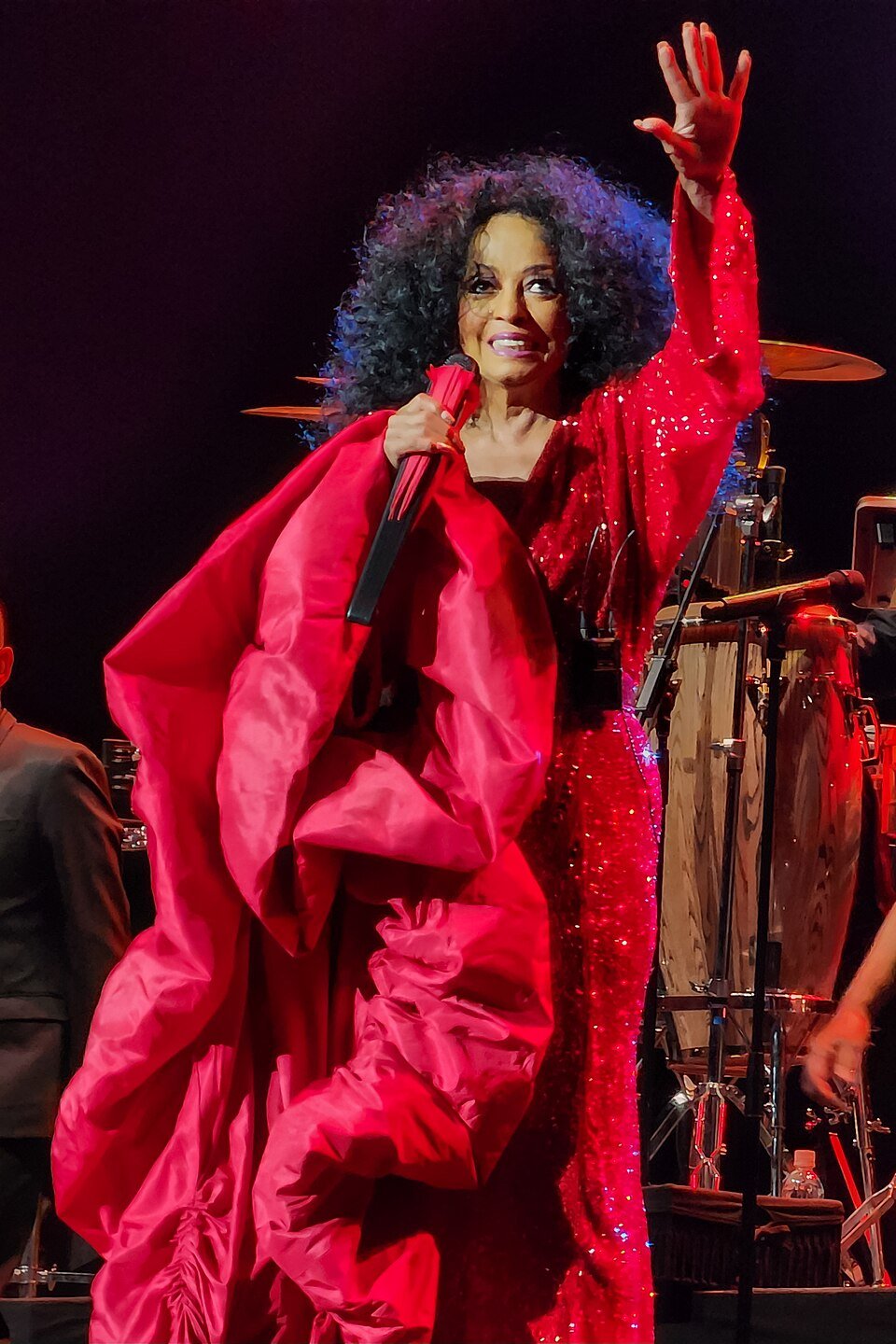
Diana Ross is the singer who fronted the Supremes through twelve number one singles in the 1960s and then built a solo career that has now lasted more than five decades, from “Ain’t No Mountain High Enough” to a new studio album in her late seventies. Celebrity Net Worth puts her net worth at $350 million. At 82 she remains an active performer, touring through 2026 under the title Diana in Motion.
How Detroit Shaped Diana
Diane Ernestine Earle Ross was born on 26 March 1944 in Detroit, Michigan. She was the second of the six born to Ernestine Ross, née Moten, who worked as a schoolteacher, and Fred Ross Sr., who had served in the army and worked in a factory. The family lived for a period in the Brewster-Douglass housing projects in Detroit, and she was raised largely in that neighbourhood, attending Cass Technical High School, where she studied design and fashion and was the first member of her family line in that school to graduate, in January 1962.
Music came through the church choir and through the street-corner singing culture of the projects. At fifteen she joined a singing group formed with neighbours Florence Ballard, Mary Wilson and Betty McGlown, who performed as the Primettes, the companion act to a male group called the Primes. The four auditioned for Berry Gordy, the founder of the young Motown label, in 1960 and were initially turned away as too young. They persisted, singing backing parts and doing handclaps on other artists’ sessions at the Hitsville studio, until Gordy signed them in January 1961 and renamed them the Supremes. It was an unpromising start to what became the most successful chart run of any vocal group of its era.
Diana Works Through Everything Is Everything and Beyond
1964–1969: The Supremes and Twelve Number Ones
The Supremes’ first records made little impression, and inside Motown the group was ruefully known as the “no-hit Supremes”. The turn came when Gordy assigned them to the writing and production team of Holland, Dozier and Holland. “Where Did Our Love Go” reached number one in the summer of 1964, and it began a run without parallel: “Baby Love”, “Come See About Me”, “Stop! In the Name of Love”, “Back in My Arms Again” and “I Hear a Symphony” all followed it to the top in little more than a year. Ross’s voice — light, precise and conversational where many soul singers of the day were forceful — sat at the centre of the group’s sound, and Gordy increasingly presented her as its focal point. By 1967 the act was billed as Diana Ross and the Supremes. In all, the group scored twelve number one singles on the main United States chart, among them “You Can’t Hurry Love”, “You Keep Me Hangin’ On”, “Love Child” and “Someday We’ll Be Together”, the last of them, in 1969, serving as Ross’s farewell record with the group she had joined as a teenager.
1970–1979: The Solo Breakthrough and “Ain’t No Mountain High Enough”
Ross left the Supremes in January 1970 and released her first solo album, Diana Ross, that year. Its closing track, a sweeping orchestral reworking of “Ain’t No Mountain High Enough”, a song she had not originally sung, became her first solo number one and established the template for her solo career: familiar material reframed at a grander scale, with her voice intimate against large arrangements. The albums Everything Is Everything (1970), Surrender (1971) and Touch Me in the Morning (1973) followed, the title track of the last giving her a second solo number one. Mahogany‘s theme, “Do You Know Where You’re Going To”, topped the chart in 1976, and Love Hangover did the same that year, its arrangement shifting midway from ballad to disco tempo. The Boss (1979), written and produced by Ashford and Simpson, closed the decade with her standing restored after a quieter spell, and it set up the largest commercial success of her career.
1980–1989: Diana, Chic and “Endless Love”
The album Diana (1980), written and produced by Bernard Edwards and Nile Rodgers of Chic, was the best-selling album of her career. It contained “Upside Down”, which spent four weeks at number one, and “I’m Coming Out”, which became one of her signature songs and an anthem well beyond its original audience. The following year she left Motown after two decades and signed with RCA Records in a deal reported at the time as worth $20 million, then among the largest recording contracts ever agreed. “Endless Love”, her duet with Lionel Richie from 1981, spent nine weeks at number one and remains one of the best-selling singles of its period. The 1980s albums — Why Do Fools Fall in Love (1981), Silk Electric (1982), Swept Away (1984) and Eaten Alive (1985), the last written largely by Barry Gibb and containing the number one in Britain “Chain Reaction” — kept her in the charts on both sides of the Atlantic, and in Britain her record held up particularly well. She returned to Motown at the end of the decade, this time with an ownership stake in the company she had helped to build.
1990–2026: Later Albums, Thank You and Diana in Motion
The later career has been one of consolidation rather than retreat. The Force Behind the Power (1991) produced the hit in Britain “When You Tell Me That You Love Me”, and her catalogue was repeatedly repackaged to new audiences. She received the Grammy Lifetime Achievement Award in 2012, and a second such honour as a member of the Supremes, making her one of very few artists recognised in that way twice over. In 2021, at 77, she released Thank You, her first studio album of new material in fifteen years, recorded largely at home during the pandemic period, and she toured it in Britain the following summer, including a widely noted appearance in the legends slot at Glastonbury in 2022, watched by one of the largest crowds of that festival. Touring has continued since under the Diana in Motion title, with dates across Europe and North America through 2026 — a performing career, from the Brewster projects choir to the present, of close to seventy years.
Born 1944 in Detroit: The Record
| Born 1944 in Detroit: The Record | Details |
|---|---|
| Born | 26 March 1944, Detroit, Michigan |
| Age | 82 years old |
| Height | 5 ft 4 in (1.63 m) |
| Weight | No reliable published figure exists |
| Partner | No current partner publicly confirmed |
| Children | Five: Rhonda, Tracee, Chudney, Ross and Evan |
| Net Worth | Estimated $350 million (Celebrity Net Worth) |
| @dianaross |
The Home Diana Built for Five children
Her parents’ Detroit home was the fixed point of her early life. Her mother, Ernestine, died in 1984; her father, Fred, died in 2007, aged 87. Her elder sister, Barbara Ross-Lee, became a physician of considerable standing, the first woman of her background to serve as dean of a medical school in the United States — a measure of the distance the family travelled in one generation from the Brewster projects.
Ross has been married twice, and the bank label of partner is carried here in its accurate form: no current partner is publicly confirmed, and none is claimed in this profile. Her relationship in the mid-1960s with Berry Gordy, Motown’s founder, produced her eldest daughter. In January 1971 she married Robert Ellis Silberstein, a music business manager, who raised that daughter as his own; the marriage produced two further daughters and ended in divorce in 1977. In 1986 she married Arne Næss Jr., a Norwegian shipping magnate and mountaineer whom she had met the previous year; they had two sons, she became stepmother to his three older children, and the marriage ended in divorce in 2000. Næss died in a mountaineering accident in South Africa in 2004. Since 2000 no marriage or publicly confirmed partnership has been reported by a reliable source, and at 82 her public life is organised around her family and her work.
She has five children. Rhonda Ross Kendrick, born in 1971, is a singer and songwriter. Tracee Ellis Ross, born in 1972, is an actor of considerable standing in her own right. Chudney Ross, born in 1975, works as an author and producer. Ross Naess, born in 1987, and Evan Ross, born in 1988, are the sons of her second marriage. She has seven grandchildren. The family appears together regularly at her concerts and at public honours, and her daughters in particular speak of the Detroit upbringing — the discipline of it, and the expectation that each generation would work — as the inheritance that mattered.
Her Instagram account, @dianaross, is her principal public channel and is used for tour announcements, archive photographs and family occasions. For an artist whose career began before the modern publicity industry existed, the directness of the channel suits the way she has always worked: the audience addressed plainly, the private life kept back. Anyone working through a comparable late-career transition, in any field, faces the same plain question of how to move on with a public identity intact, and the steadiness of her example — keep working, keep the family close, say little — is part of why the interest in her has never really faded. Practical guidance on how to move on after a major life change covers some of the same ground in a different register.
The Wealth Diana Holds Today
Celebrity Net Worth puts her net worth at $350 million, and no competing total from Forbes or the Sunday Times Rich List has been published for her. Readers will find lower figures, commonly around $250 million, in general coverage; those are not drawn from the trackers named here, and the figure used in this profile is the Celebrity Net Worth estimate, attributed as such. The basis of any estimate in this range is the length and shape of the career: twelve number one singles with the Supremes, six solo number ones, album sales reported in excess of 100 million across the two careers, and — unusually for an artist of her generation — a publishing and catalogue position strengthened by her return to Motown in 1989 as a part-owner rather than simply an artist on its roster. The RCA contract of 1981, reported at $20 million, was an earnings event of its time, not wealth in itself, and it is treated here as such: the estimate rests on accumulated royalties, touring income sustained into her eighties, and the catalogue, not on any single deal.
No complete inventory of her property or investments has been published, and none is reconstructed here. What can be said is that the income has never stopped: the Diana in Motion touring through 2026 is grossing at arena level in her eighty-second year, the catalogue is licensed continuously, and Thank You demonstrated that new work from her still finds a chart audience. A fortune built over sixty-five years of unbroken professional activity, by an artist who was present at the creation of the company that made her, is less a puzzle than a sum that explains itself.
At 82, Ross occupies a position with few parallels: a singer whose first hits predate most of her audience, still performing them, with the family she raised now prominent in their own fields. The estimate of $350 million is the tracker’s figure, not an audited account — but the career underneath it is a matter of public record, and it is difficult to argue with its scale.