Clint Eastwood Net Worth, Biography, Age, Family and Career
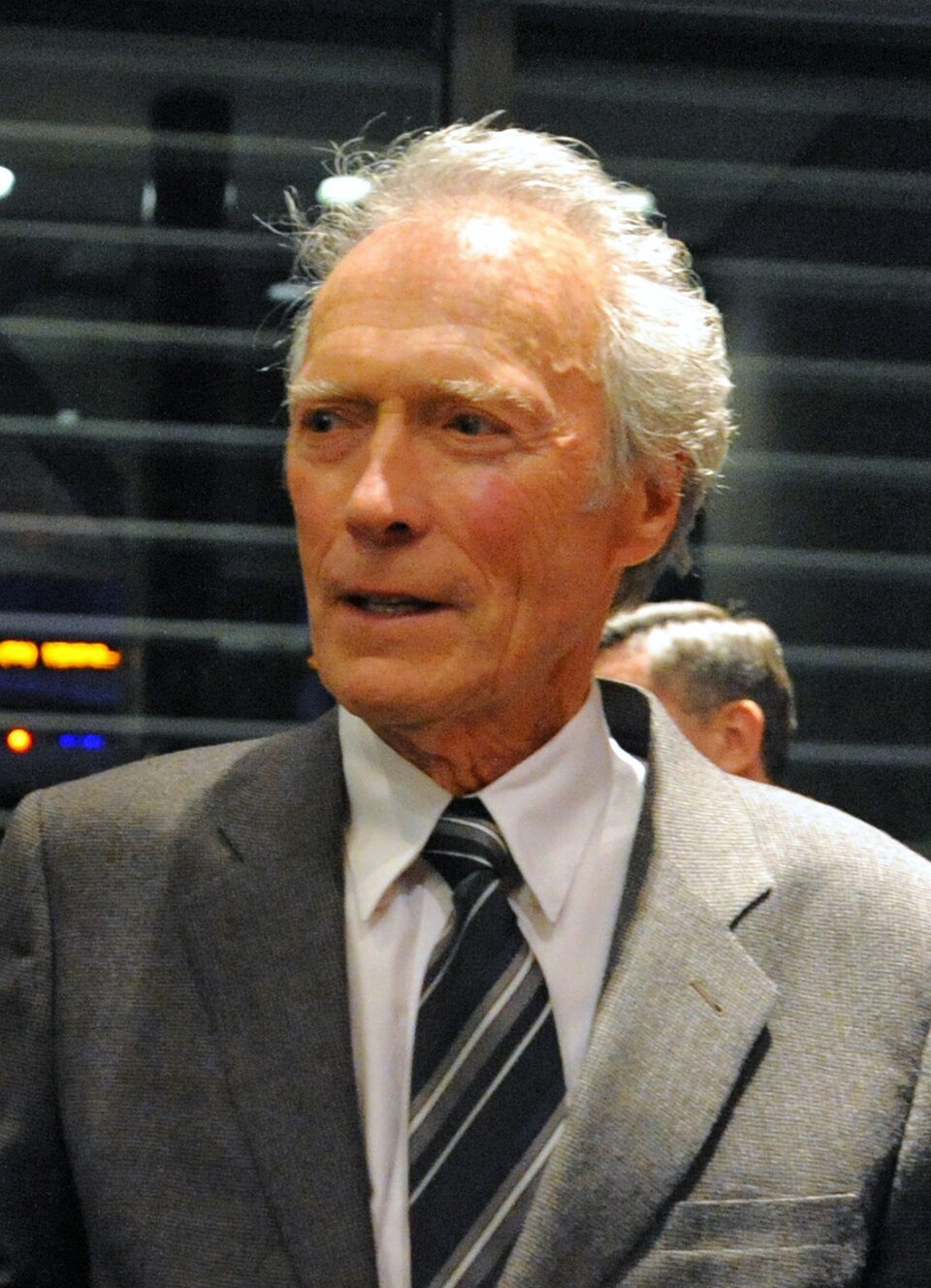
Clint Eastwood is an actor and director whose career has run for seven decades, from the television western Rawhide through the Dirty Harry productions to the Academy Award-winning Unforgiven and Million Dollar Baby and a final production as director, Juror #2, in 2024. Celebrity Net Worth puts his net worth at $400 million. He is living in 2026, aged 96, in California; his son Kyle said in an interview reported in June 2026 that he had retired, a characterisation his son Scott has since said he has not heard directly from his father.
Everything in Brief: Clint Eastwood
| Everything in Brief: Clint Eastwood | Details |
|---|---|
| Born | 31 May 1930, San Francisco, California |
| Age | 96 years old |
| Height | 6 ft 4 in (1.93 m) |
| Weight | No reliable published figure exists |
| Partner | No publicly confirmed current partner; his long-term partner Christina Sandera died in July 2024 |
| Children | Eight: Laurie, Kimber, Kyle, Alison, Scott, Kathryn, Francesca and Morgan |
| Parents | Clinton Eastwood Sr. and Margaret Ruth Eastwood, née Runner |
| House | Carmel-by-the-Sea, California, his long-term base; he also owns the Mission Ranch property in Carmel |
| Net Worth | Estimated $400 million (Celebrity Net Worth) |
| No verified personal account |
Rawhide, Dirty Harry and the Directing Oscars
1959–1969: Rawhide and the Dollars Productions
His break came on television. From 1959 to 1965 he played Rowdy Yates, the ramrod of a cattle-drive outfit, in Rawhide, a successful series that made him familiar without making him a star. The star came from Italy: Sergio Leone cast him, for a fee reported at $15,000, as the poncho-wearing gunman of A Fistful of Dollars (1964), and the two productions that followed it, For a Few Dollars More (1965) and The Good, the Bad and the Ugly (1966), created the Man with No Name and a new kind of western. Released in the United States from 1967, they made him a leading man of the first rank. He founded his own production company, Malpaso, in 1967, taking a degree of control over his work that he never relinquished, and closed the decade with Hang ‘Em High (1968), Coogan’s Bluff (1968), directed by Don Siegel, who became his most important early collaborator, and the war production Kelly’s Heroes (1970).
1971–1985: Dirty Harry and the Move into Directing
In 1971 he played Inspector Harry Callahan in Dirty Harry, directed by Siegel, and the character — laconic, contemptuous of procedure, defined by a .44 Magnum and a small stock of phrases — became his signature role across five productions ending in 1988. The same year he directed for the first time, with the thriller Play Misty for Me, and directing became the second career that would eventually outlast the first. The 1970s and early 1980s mixed the two: as actor, Thunderbolt and Lightfoot (1974), The Outlaw Josey Wales (1976), which he also directed and which is now regarded as one of the finest westerns of its period, the comedy Every Which Way but Loose (1978), among the largest commercial successes of his career, and Escape from Alcatraz (1979); as director, High Plains Drifter (1973), Breezy (1973), The Gauntlet (1977) and Bronco Billy (1980). Pale Rider (1985) returned him to the western as both actor and director and prepared the ground for what came seven years later.
1986–2003: Mayor of Carmel, Unforgiven and Mystic River
From 1986 to 1988 he stepped away from the industry part-time to serve as mayor of Carmel-by-the-Sea, the small coastal town where he lived, having stood for election over a local planning dispute; he served a single two-year term. Bird (1988), his biography of Charlie Parker, was a director’s production without himself in the cast and was taken seriously as such. Then came Unforgiven (1992), a western about an ageing killer hired for one last job, which he directed and starred in: it won the Academy Awards for best picture and best director and is generally placed at the head of his work. The 1990s continued with In the Line of Fire (1993), A Perfect World (1993), The Bridges of Madison County (1995), opposite Meryl Streep, and Absolute Power (1997), and the period closed with Space Cowboys (2000) and Blood Work (2002). Mystic River (2003), which he directed without appearing in, won Academy Awards for two of its performers and confirmed that, in his seventies, the directing career had become the principal one.
2004–2024: Million Dollar Baby, Gran Torino and Juror #2
Million Dollar Baby (2004) repeated the achievement of Unforgiven: best picture and best director at the Academy Awards, for a boxing drama in which he also played the trainer at its centre. In 2006 he released two productions about the battle of Iwo Jima, told from opposing sides, of which Letters from Iwo Jima was nominated for best picture. Gran Torino (2008), in which he played a retired autoworker in a changing Detroit suburb, was a large commercial success and was widely, wrongly, reported as his farewell to acting. Changeling (2008), Invictus (2009), Hereafter (2010) and J. Edgar (2011) followed as director. His 2014 production about the Navy SEAL Chris Kyle became the highest-grossing release of his career as a director. He returned to acting in The Mule (2018), directed Richard Jewell (2019), and acted for the last time, on current evidence, in Cry Macho (2021). His final production as director, the courtroom drama Juror #2, was released in November 2024, when he was 94. Across the career there are more than forty productions as director and more than sixty as actor.
Two Marriages and Eight Children
His father died in 1970, before the peak of his fame; his mother lived to 2006, dying at the age of 97, and lived long enough to see both of his best picture awards. He has been married twice. His first marriage, to Maggie Johnson, began in December 1953 and produced his son Kyle, born on 19 May 1968, a jazz bassist and composer who has scored several of his father’s productions, and his daughter Alison, born on 22 May 1972, an actress and director. The marriage ended in divorce, finalised in 1984. He lived for fourteen years with the actress Sondra Locke, his co-star in several productions; that relationship ended in 1989 in litigation that was later settled. In the early 1990s he was in a relationship with the actress Frances Fisher, with whom he had his daughter Francesca, born on 7 August 1993. His second marriage, to the news anchor Dina Ruiz, began in March 1996; their daughter Morgan was born on 12 December 1996, and the marriage ended in divorce, finalised in 2014.
His eight children in full are: Laurie Murray, born on 11 February 1954 and adopted at birth, whose parentage became public only in 2018; Kimber, born on 17 June 1964, whose mother was Roxanne Tunis; Kyle and Alison, with Johnson; Scott, born on 21 March 1986, an actor, and Kathryn, born on 2 February 1988, whose mother was Jacelyn Reeves; Francesca, with Fisher; and Morgan, with Ruiz. In June 2024, at the age of 94, he walked Morgan down the aisle at her wedding at Mission Ranch in Carmel — an occasion of the kind for which guests consult guidance on what a man should wear to a summer wedding — and Morgan’s daughter, his granddaughter Cleo, was born that September.
His long-term partner of his later years was Christina Sandera, a restaurant hostess at his Mission Ranch property whom he began seeing in 2014. Sandera died on 18 July 2024, aged 61; the cause recorded on her death certificate was cardiac arrhythmia, with coronary artery disease as a contributing condition. Eastwood issued a short statement saying that she was a lovely, caring woman and that he would miss her very much. The bank label of partner is therefore carried with a supersession: Sandera is not his current partner, because she is dead, and no new partner has been publicly confirmed in reliable reporting since her death. He has no verified personal Instagram account.
A San Francisco Birth, an Eleven-Pound Baby
Clinton Eastwood Jr. was born on 31 May 1930 in San Francisco, California, at Saint Francis Memorial Hospital, where, family accounts record, his birth weight of more than eleven pounds was remarked on by the nurses. His father, Clinton Eastwood Sr., worked as a bond salesman and later as a manufacturing executive, and his mother, Margaret Ruth Eastwood, née Runner, worked as an IBM operator after a period as a housewife. The Depression shaped his childhood: the family moved repeatedly around California in search of work, living for periods in Sacramento, Redding, Grass Valley and Pacific Palisades, among other places, and he attended a succession of schools. The family settled for a longer period in Piedmont, in the East Bay, and he graduated from Oakland Technical High School in 1949, by his own account with no distinction.
What followed was work rather than training: lumber work in Oregon, steel work, work as a swimming instructor, and then, in 1951, conscription into the army during the Korean War. He was posted to Fort Ord in California as a swimming instructor and survived, in October 1951, the ditching of a military aircraft into the sea off Point Reyes, swimming to shore with a fellow serviceman. After his discharge in 1953 he enrolled, briefly, at Los Angeles City College to study business administration, worked a series of jobs, and was brought to the attention of the film business through a friend at Universal, where a screen test led to a contract at a modest weekly wage. His first screen appearances, in 1955, were uncredited parts in productions including Revenge of the Creature and Tarantula. The contract did not last, and for several years he supported himself partly by digging swimming pools while the parts remained small.
$400 Million, Explained: the Camera
Celebrity Net Worth puts his net worth at $400 million, the figure Parade also reported in 2026 when citing the tracker. Some outlets continue to cite an earlier figure of $375 million; the disagreement is recorded here in full, with the tracker’s current published figure of $400 million used as the headline. No competing total from Forbes or the Sunday Times Rich List exists. The estimate rests on seven decades of earnings of a particular structure: escalating acting fees from the late 1960s onwards, a production company, Malpaso, through which he held an interest in his own productions rather than taking a fee alone, and a directing career that continued, profitably, into his nineties. Those earnings are the raw material of the estimate, not the estimate itself.
Property is the other visible component, and the house pattern in his profile is answered by a long association with one stretch of the California coast. His long-term base is Carmel-by-the-Sea, where he served as mayor and where he owns the Mission Ranch Hotel and Restaurant, a former dairy property that he bought in 1986 and restored, and at which his youngest daughter was married in 2024. A gated property at Pebble Beach, nearby, was sold in 2017 for a reported $9.7 million, and other California holdings have been bought and sold across the decades without a complete current inventory ever being published. At 96, Eastwood’s position is the product of an exceptionally long earning life and an exceptionally early decision to own a share of his own work: the fortune, on the tracker’s estimate, is $400 million, and the career that built it appears, on his son’s account, to be closed.