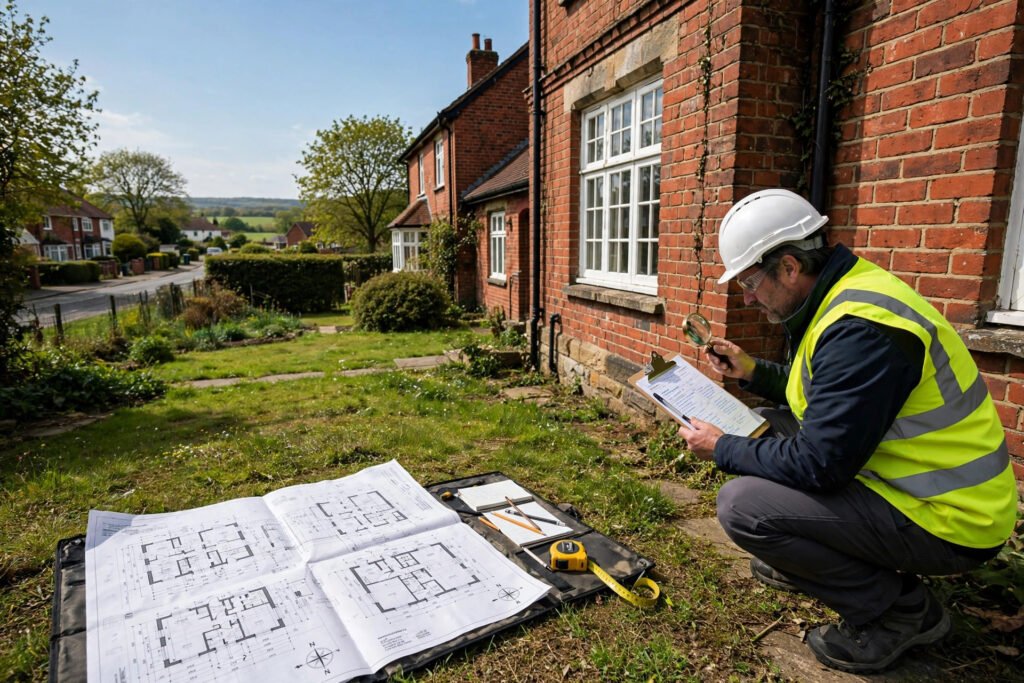
The loudest voices at family gatherings rarely mention repair bills, moving fees or the freedom to relocate.
Advantages Renting Offers Younger Households
Renting’s first advantage is how little it asks of you at the start. Upfront costs are modest compared with buying, the commitment is measured in a tenancy term rather than in decades, and the responsibilities stop at the door of somebody else’s property. For younger households whose work, relationships and plans are still moving, that lightness is not a failure to settle; it is a sensible match between housing and a life stage defined by change. Rent goes out monthly, predictably, and the roof, the boiler and the structural worries belong to the landlord.
The discipline of weighing a major commitment properly is the same one people apply when studying the pros and cons of buying an existing business: list what each option truly gives, what it truly costs, and over what period the answer changes. Housing rewards exactly that treatment, because the loudest voices tend to argue from slogans, renting is money wasted, buying is always security, while the real comparison lives in your own timeline and habits. Renting is not money thrown away; the renter is buying shelter, flexibility and freedom from repair risk, which are real goods with a real price.
Renting also protects beginners from concentrating every resource in a single asset at the most fragile moment of their financial lives. Savings not swallowed by a deposit and purchase costs remain available for emergencies, training, a vehicle that makes work possible, or simply for the breathing room that keeps a bad month from becoming a crisis. That optionality is easy to undervalue precisely because nothing dramatic happens with it. Its value is the dramas that never occur, and for a household still building its foundations, avoiding drama is a strategy in itself.
Advantages Ownership Offers Settled Households
Ownership answers with advantages that grow over time. Each repayment, beyond the interest portion, builds equity: a slowly growing slice of the property that belongs to you rather than to a lender or landlord. Payments on a typical repayment arrangement can stay steadier than rents, which tend to climb across the years, so the household that buys within its means often finds housing becoming relatively cheaper as income rises and the debt shrinks. Late in the arrangement, the prospect of living without a monthly housing payment of either kind changes retirement arithmetic entirely.
Security of a different kind comes with ownership too. Nobody can decline to renew your home. You can decorate, adapt, keep pets, plant slow-growing things and plan alterations without seeking permission, and that control matters more to daily happiness than most financial comparisons admit. A settled household that knows its area, its schools and its working patterns extracts full value from this stability, because they are not merely occupying a property; they are compounding a life in one place, year after year, on foundations nobody can serve notice on.
There is also a forced-saving effect that many owners quietly rely on. Repayments leave the account whether motivation is high or low, converting income into property wealth by default. Renters can save the difference between rent and ownership costs, and disciplined ones do, but the discipline must be self-generated every month, against every temptation, for years. Ownership automates the virtue. For households who know their own saving habits are unreliable, that automation is a genuine advantage, though it should never be used to justify buying beyond what the budget can safely carry.
Hidden Ownership Charges Beginners Forget
The comparison collapses if ownership costs are counted dishonestly, so list the ones beginners forget. Buying itself carries a deposit plus purchase taxes where they apply, legal and professional fees, survey costs, valuation and arrangement charges, and the moving expenses that somehow always exceed the estimate. None of these build equity; they are the price of admission, gone the moment you complete. A household comparing a monthly rent with a monthly repayment and ignoring admission costs is comparing a whole price with a fraction of one.
Ownership then continues charging. Buildings insurance becomes your problem, maintenance becomes your diary, and repairs arrive unscheduled and unimpressed by your other plans: boilers fail in cold snaps, roofs leak in storms, fences fall in the same storms, and appliances reach the end of their lives in clusters as though coordinating. Some properties add service charges and ground costs on top. A realistic owner budgets for upkeep as a permanent feature of the arrangement, not as bad luck, and keeps a repair reserve so that an ordinary failure does not become borrowing.
Risk changes shape as well. An owner carries the market directly: prices can fall, a property can prove slow to sell, and a household that must move during a downturn may find its equity thinner than the moving plan requires. Interest costs can change when fixed arrangements end, altering payments in ways renters only ever watch in headlines. None of this makes buying foolish; settled households absorb these risks across long periods and usually fare well. It makes buying a commitment whose hidden charges must be priced in advance, with eyes open, rather than discovered one invoice at a time.
Staying Length Decides the Winner
If one variable dominates the whole comparison, it is how long you will stay. Buying concentrates heavy costs at the beginning and rewards every year that follows, as the admission charges spread thinner and equity accumulates. A short stay never gives those later years time to arrive, so the buyer who moves again quickly can easily end up worse off than the renter who paid modest monthly sums and walked away clean. Renting’s costs, by contrast, are roughly even across time, which is precisely why it suits shorter and less certain chapters.
The practical question is therefore not whether buying beats renting in general, but what your honest staying length is. Read your own evidence: how settled is your work, how likely is relocation, how stable is the household, and how well does this particular property fit the life you expect several years from now rather than the life you have this spring? The formal side matters here too, since renting agreements and tenant arrangements describe a structure built on temporary use of another person’s property in return for payment, and its flexibility comes from that temporary nature. Tenancies end, deposits return, and the household moves on, which is a feature for anyone whose years are still being negotiated.
Beginners commonly err by forecasting the stay they hope for instead of the stay their history suggests. Somebody who has moved repeatedly for work, study or curiosity should weight that pattern heavily, however sincere the new intention to settle feels. Somebody rooted by family, work and community may be underestimating how long they will stay, and renting for years out of caution they do not actually feel. Your past mobility is data. Let it argue with your present enthusiasm, and believe whichever side has the longer record.
Flexibility Versus Security in Practice
The abstract trade becomes concrete when life changes. A renter offered work in another city, or facing a relationship change, or needing to move nearer to family, can usually act within a tenancy’s notice arrangements and be gone in a season. An owner facing the same change must sell or let the property first, with all the delay, cost and market dependence that involves, or attempt to carry two homes at once. Flexibility is the renter’s insurance against an unpredictable life, and younger households, whose lives change fastest, claim on that insurance most often.
Ownership’s security is equally concrete, and it rests on legal ground described in the account of home ownership rights and responsibilities: the owner holds legal title to the home and carries responsibility for its upkeep and repairs. Title is the deep difference. It converts housing from a service you consume into an asset you hold, with the control, the risk and the long-term reward that holding implies. The renter’s security, meanwhile, is real but shallower: a good tenancy, a decent landlord and the law’s protections within the agreement’s term, after which renewal is somebody else’s decision.
In practice, households feel this trade in their stomachs before they can articulate it. The renter who receives a landlord’s notice to sell discovers what flexibility costs the other side. The owner lying awake over a repair estimate discovers what responsibility feels like without a landlord’s number to call. Neither experience means the choice was wrong; each is the known price of its option arriving on schedule. Choosing well means deciding in advance which of those two difficult moments your household is better built to absorb.
Verdict Matched to Your Own Timeline
The verdict, then, is conditional, and anyone offering you an unconditional one is selling something. Renting wins for beginners whose stay is likely to be short, whose work or household may move, whose savings would be dangerously thinned by purchase costs, or whose honest priority is building a financial cushion before taking on an asset and its repairs. In those circumstances renting is not a consolation prize. It is the option that keeps a young household liquid, mobile and resilient while its life takes shape.
Buying wins where the timeline stretches long, the area and property genuinely fit the life being built, payments sit comfortably inside the budget rather than at its edge, and the household has priced the hidden charges, admission, upkeep, insurance and risk, and still finds the sum attractive. Bought on those terms, a home does what its advocates claim: it stabilises housing costs, builds equity by default and gives a settled family a place that is fully theirs. Bought on weaker terms, it does the opposite, converting flexibility into fragility at the exact age when flexibility was worth most.
One final correction to the family-gathering wisdom: the choice is not permanent, and treating it as a life sentence distorts it. Households rent, then buy when the timeline ripens; owners sell and rent again when life demands mobility. What matters is matching the arrangement to the chapter you are actually in, reviewing it when the chapter changes, and refusing to let slogans make a decision that your own arithmetic, honestly done, was perfectly capable of making for you.