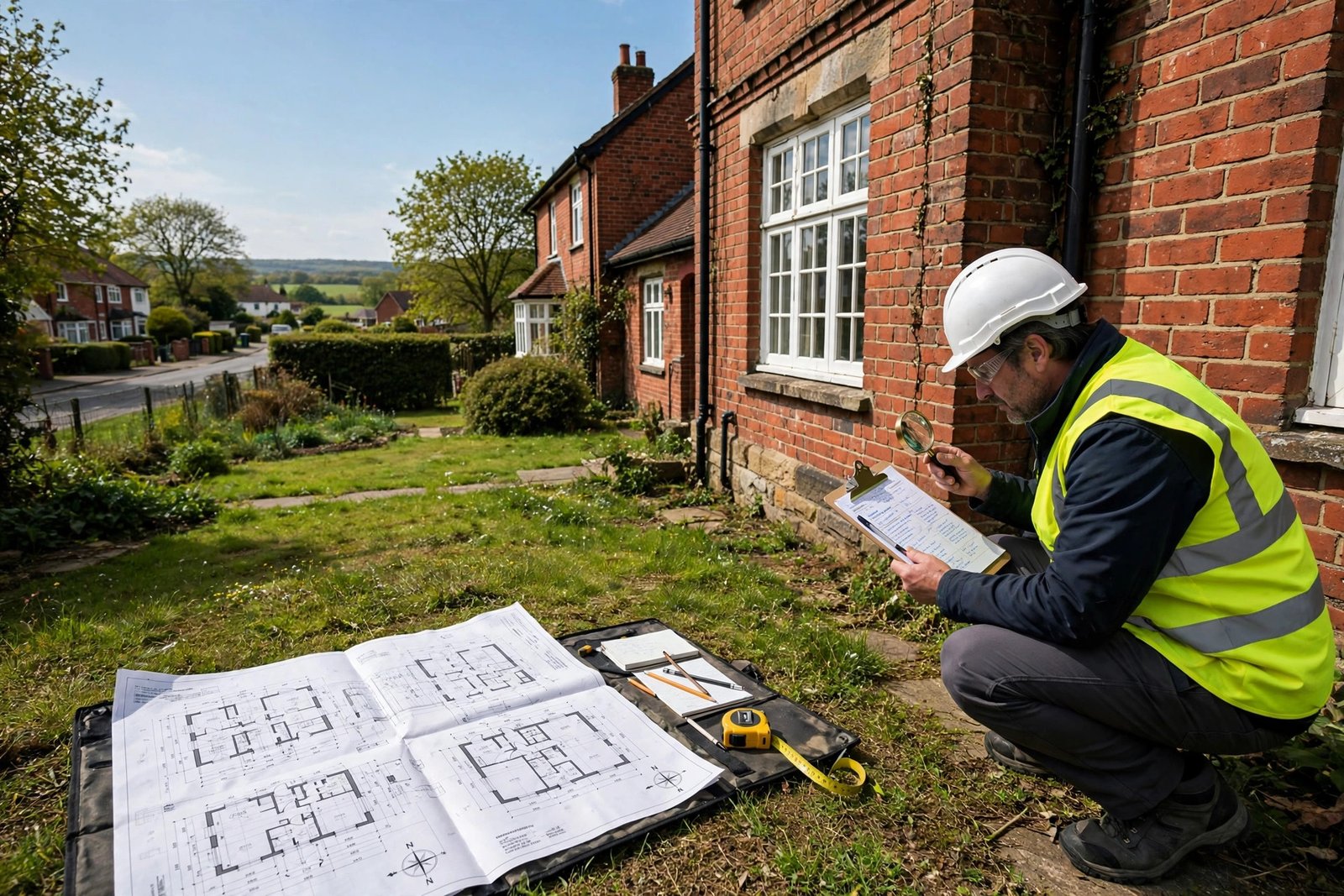
A survey is not a verdict; it is a map of where to dig.
Check Which Survey You Actually Bought
Check the title page before anything else, because buyers often believe they own a survey when what they hold is something thinner. A mortgage valuation is carried out for the lender, to confirm the property is worth enough to secure the loan, and it may involve barely more than a brief look. It protects the bank. It says little about condition and was never meant to guide your decision, however reassuring its arrival in the post may feel.
A buyer’s survey is a different creature: a visual inspection of the property’s elements by a surveyor, who rates what can be seen and flags what needs a specialist. Levels of survey vary in depth, from a lighter condition report to a full building survey that suits older, altered or unusual homes. Knowing which level you commissioned tells you how far its findings should reach. Criticising a basic report for lacking the detail of a thorough one is like blaming a map of Britain for omitting your street.
This distinction matters most where money fears live. Damp is the classic case, dreaded by buyers and exploited by some sellers of treatment. If your report mentions moisture, read its exact words before picturing disaster, and keep in mind the wider debate around rising damp in an old house, and what is a scam, because not every damp patch carries the same cause or the same remedy. The survey’s role is to point. Yours is to follow the pointing with calm, specific questions rather than with panic or with blind relief.
Check the Ratings Before the Photographs
Check the ratings next, and treat them as the report’s skeleton. Surveyors commonly use a traffic light style scale, from elements in sound condition, through those needing attention in time, up to defects that are serious or urgent. Read the whole pattern before brooding on any single entry. An older house with a scatter of middling ratings and nothing grave may be a better purchase than a newer one carrying a single alarming rating on something structural.
Photographs seduce, so ration them. A dramatic image of a cracked tile or a stained ceiling fills the imagination, while the dry rating beside a dull paragraph about drainage passes unnoticed. The surveyor chose the words as the judgement and the picture as the illustration, and reading them the other way round inverts the document. Go through the ratings section by section, roof to services, and make your own short list of what is urgent, what is eventual and what is merely cosmetic wear honestly recorded.
Context steadies the reading. Surveyors write defensively, because their words may be relied on in disputes, so routine maintenance can sound sterner in print than it looks in person. That does not make warnings safe to ignore. It means the rating, the explanation and the recommended timing belong together, and a defect rated as needing repair soon is a different instruction from the same defect noted as normal ageing. If the tone still confuses you, a short call to the surveyor who wrote it is part of what you paid for.
Check Every Call for Further Investigation
Check every sentence that asks for further investigation and mark it physically if you must. This phrase is the report’s way of saying the surveyor saw signs, reached the limit of a visual inspection and needs a specialist to open, test or measure before anyone can be sure. It is not a shrug and it is not a pass. It is the single most consequential wording in the document, because it identifies the places where an unknown could turn into a bill or a structural problem after you own the walls.
Group the calls by trade so the follow up is manageable. Electrical concerns go to an electrician, timber and damp questions to a specialist, drainage worries to a firm with cameras, structural movement to an engineer. Ask each for findings in writing and, where work is needed, a clear quotation. Those papers do double duty: they tell you whether to proceed and they form the evidence if you later renegotiate the price. A seller argues with opinions. Written specialist findings are harder to wave away.
Timing is the discipline here. In England and Wales nothing binds you until contracts are exchanged, so the weeks before exchange are precisely when these investigations belong. Sellers may grumble at delay, but a buyer who exchanges first and investigates afterwards has bought the unknown at full price. Reading about chartered surveyors and what they inspect clarifies why the boundary exists: a surveyor inspects and reports, while intrusive testing sits with other trades. Respecting that boundary, and acting on the referrals it produces, is the buyer’s half of the bargain.
Check the Roof, Walls and Water First
Check the great enemies in the right order: structure, water and safety, before anything decorative is allowed to trouble you. Start with what holds the house up and keeps the weather out. Roof coverings, chimneys, gutters, walls and any signs of movement or cracking come first, because failures there let water in and water quietly ruins everything beneath it. A small roof defect above a ceiling is cheap news early and expensive news late, and the report’s roof section deserves your slowest reading.
Follow the water. Damp readings, staining, rotten timber and plumbing leaks all tell a story about where moisture has been travelling, and mould is often the visible end of a hidden path. A background read on damp in buildings and its causes helps separate condensation, which ventilation and habits can cure, from penetrating or rising moisture that points to a defect in the building itself. The distinction decides whether you are buying a house that needs airing or a house that needs building work, and those are very different purchases.
Then check safety with fresh eyes: electrics of uncertain age, gas appliances, steep or altered stairs, asbestos warnings in homes of the right era, and any mention of hazards that would matter daily to children or older occupants. Cosmetic wear, by contrast, should be priced rather than feared. Worn carpets, dated kitchens and tired decoration are visible, negotiable and fixable at your pace. Buyers frighten themselves most with the defects that matter least, because those are the ones staring from the photographs, while the serious entries sit quietly in the ratings doing their work.
Check What the Surveyor Could Not See
Check the limitations section, which timid readers skip and wise ones study. A visual inspection has honest boundaries: floors under fitted carpets, roofs seen from ground level or through a hatch, drains without a camera, timbers hidden by plaster, lofts blocked by stored belongings. The report will say where access was restricted, and each restriction is an area of the house about which you know less than the document’s confidence elsewhere might suggest.
Weigh those blind spots against the property. In a modern house with a clean history, an unopened floor void may matter little. In an old house with a chequered past, the same blind spot sits exactly where trouble likes to live. You can sometimes narrow the unknowns before exchange: asking the seller to clear a loft, lift a carpet corner or provide certificates and guarantees for past work. Sellers who cooperate are giving you information as surely as any specialist, and sellers who refuse every small request are giving information too.
Accept, though, that some uncertainty survives every check, and that this is normal rather than a failure of the process. No survey turns a house transparent. What it does is shrink the unknown from the whole building to a named list of corners, each with a likely scale of risk attached. A buyer who understands that list can hold a sensible reserve and proceed with open eyes. A buyer who demanded certainty will either never buy or will mistake a long report for a guarantee it never claimed to be.
Check Your Rights Before Contracts Exchange
Check your position in the process before you decide anything, because rights in a house purchase are mostly a matter of timing. Until exchange, you may renegotiate, require works, or walk away, however unwelcome that news is to everyone who has spent money and hope on the sale. After exchange you are committed, and the survey’s findings, however grave, become your inheritance. Every earlier check in this list exists to be used inside that window, while the findings can still change the outcome.
Renegotiation works best as evidence rather than theatre. Present the serious ratings, the specialist quotations and a calm account of what the defects will cost to put right, then propose an adjustment or ask for works to be completed before completion. Some sellers concede the full weight of it, some meet you part way and some refuse, and each answer is useful because it tells you the true price of the house as it actually stands, not as it was described. Keep the cosmetic list out of the conversation. Credibility spent on wallpaper cannot be spent again on the roof.
It also helps to keep the report itself safe and complete once the decision is made, whichever way it falls. Guarantees, certificates and the surveyor’s notes will be asked for when you insure the home, when you plan works and one day when you sell it to a buyer reading a fresh survey with the same anxieties you brought to this one. A report filed and understood keeps earning its fee long after the move.
Walking away deserves honest mention as a right rather than a failure. A survey that uncovers structural movement, extensive water damage or safety problems beyond your means has done its job exactly, even if the job hurts. The money spent on the survey and searches is lost either way; the question is whether you lose it alone or carry it into ownership of a problem many times larger. Read the report as the map it claims to be, dig where it points, and make the decision before exchange while the decision is still yours to make.