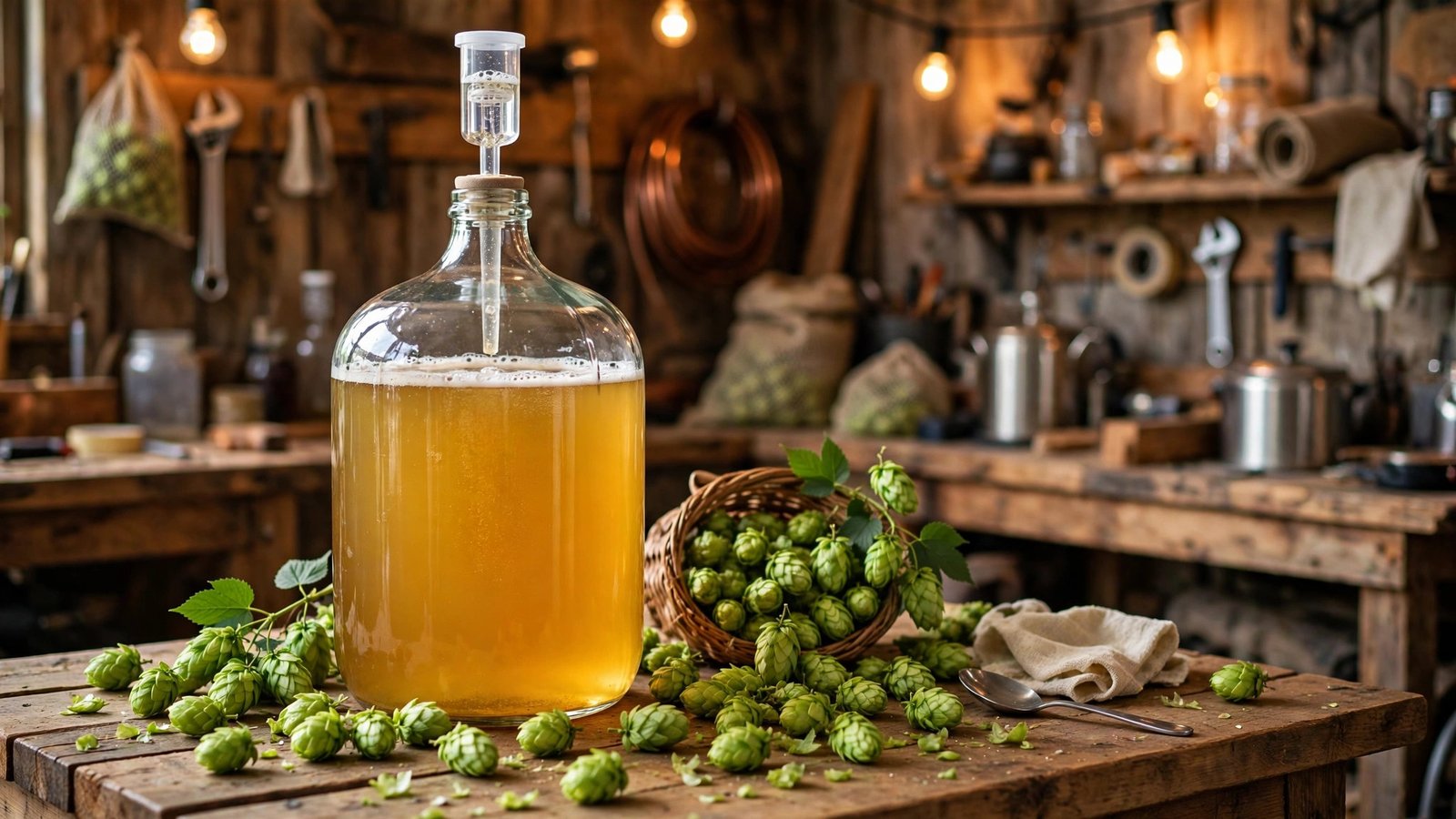
Dry hops perfume a beer without adding bite or bitterness.
That single sentence is the whole job in miniature, and it is also the standard against which every later choice should be judged. If the finished beer smells vivid and fresh, with the character of the hop variety clear in the glass, the dry hopping has worked. If it smells dull, grassy, or oddly harsh, something in the amount, the timing, the contact, or the handling has gone astray. Run through the checks in order before the hops go in, rather than trying to rescue a batch afterwards, because once hops are in the beer you can shorten their stay but you cannot undo what they have already given up.
Check Your Goal: Aroma, Not Bitterness
Start by naming what you want the hops to do. Dry hopping is about scent above all else: the fragrant oils that sit in the hop cone and that a rolling boil would drive away or change beyond recognition. Added cold, or at least unboiled, those oils pass into the beer largely intact, which is why a dry hopped pale can smell of citrus peel, pine, tropical fruit, or cut flowers depending on the variety chosen. Bitterness, by contrast, comes mainly from compounds that need heat and time in the boil to transform and dissolve, and a cold soak releases very little of them. A brewer who dry hops hoping to rescue a bland, under bittered beer will be disappointed, because the nose will lift while the palate stays much where it was.
Hold that distinction firmly when you taste. A strong aroma can make a beer feel more intense overall, and drinkers often describe a heavily dry hopped beer as hoppy in a broad sense, yet the firm bitterness that balances malt sweetness still has to be built earlier, in the kettle. Think of the boil hops as the structure and the dry hops as the perfume worn over it. If the structure is missing, perfume alone will not hold the beer together, however generous the dry addition might be. Serve it after plain food, and finish with the best dairy-free desserts that taste good if pudding is wanted at all.
Check the Amount Against the Batch Size
Amount is where beginners most often go wrong in both directions. A very light hand may add so little that the effect vanishes beneath the malt and the fermentation character, leaving the brewer wondering whether the hops went in at all. A very heavy hand can push past perfume into a raw, leafy, almost vegetal quality, and it also soaks up a surprising quantity of beer, so the fermenter yields less than expected and the losses sting. The right amount is therefore not a fixed weight to memorise but a proportion, judged against the size of the batch and the strength of effect you are after.
Scale honestly. A addition that feels modest in a large vessel becomes assertive when the same weight meets a much smaller volume of beer, because each mouthful then carries far more hop material in suspension and in solution. When you change batch size, change the dry hop with it, and when you repeat a recipe that worked, keep the proportion steady before you start adjusting anything else. Brewers learn fastest when only one variable moves at a time.
Also weigh the style in front of you. A pale, lightly malted beer shows dry hop aroma cleanly, so a moderate addition can seem generous, while a darker or richer beer absorbs and muffles the same addition behind roast and caramel notes. Neither is wrong, but expecting identical results from identical weights across different beers is a mistake. Judge the amount against the batch size first, then against the canvas the beer itself provides.
Check the Timing Against Fermentation
Timing shapes the aroma almost as much as the choice of hop. Add the hops while the ferment is still gently bubbling and some of the most delicate scent compounds will be carried out of the beer on the rising gas, scrubbed away before they can settle into the liquid. The beer may also change the hops in return, as yeast working on hop compounds can shift the aroma in directions brewers variously prize or regret. Add them after fermentation has fully finished and the picture calms down: the beer is quieter, the gas has largely stopped pushing aroma out, and what the hops give tends to stay where it is put.
Neither moment is automatically correct. An addition made towards the tail of active fermentation, when the yeast is still present but the fiercest activity has passed, suits brewers who want the yeast and hops to interact a little. A later addition, into finished beer, suits those chasing the cleanest, most direct expression of the raw hop. What matters is choosing deliberately rather than adding hops whenever the calendar happens to allow, and then repeating your chosen moment next time so the comparison means something.
Watch the beer, not just the clock. Fermentation does not run to a tidy timetable, and a warm room or a vigorous yeast can finish the heavy work sooner than a cool corner and a slow strain. Signs that activity is easing, a steadier gravity reading, and a calmer surface tell you more than a day counted off on a chart. Equally, do not leave finished beer sitting open and idle while you deliberate, because every unnecessary opening invites the oxygen that the later checks work so hard to exclude.
Check Contact Time Before Warmth Steals the Scent
Contact time is the quiet variable that ruins more dry hopped beers than any other. The fragrant oils move into the beer fairly promptly once the hops are wetted and submerged, and the character builds over the following days. Leave the hops in far beyond that useful window and the balance tips. Fresh scent fades, and in its place come grassy, tea like, and sometimes harsh notes drawn from the leafy material itself, as though the beer had started steeping the plant rather than borrowing its perfume. Warmth speeds the whole exchange, the good part and the spoiling part alike, so a warm room shortens the safe window whether you planned for it or not.
The practical habit is simple: taste as you go, once the beer has had a fair chance to pick up aroma. Draw a small sample, smell before you sip, and ask whether the hop character is bright and defined or beginning to blur. When it smells as you hoped, get the beer off the hops rather than granting them extra time out of habit or convenience. Dry hopping rewards decisiveness, and a day spent waiting for a free afternoon to rack the beer can be the day the aroma peaks and turns.
Check Oxygen at Every Transfer and Stir
Oxygen is the enemy of everything dry hopping tries to create. The aromatic compounds you have coaxed into the beer are fragile, and exposure to air dulls them with depressing speed, turning bright citrus and pine notes flat and stale and, given time, darkening the beer and coarsening its flavour. The cruel part is that the moments of greatest exposure are the very moments dry hopping demands: opening the fermenter, adding the hops, stirring or swirling, and transferring the finished beer for packaging. Every one of those steps needs to be done with air kept firmly in mind.
Work cleanly and briefly. Have the hops weighed, contained, and ready before the lid comes off, add them in one calm movement, and close the vessel again without fuss. If you stir to submerge floating hops, stir gently, below the surface, with a sanitised implement, rather than whisking air into the beer. When you transfer, let the beer flow quietly down the side of the receiving vessel or through a filled tube, never splashing from a height into an open bucket where it can pick up air with every ripple.
Sanitation and oxygen control are partners here, because a long, anxious transfer performed with doubtful equipment risks both infection and staleness at once. Prepare and sanitise everything in advance so the transfer itself is short. Fill bottles or a keg with as little empty headspace as the method safely allows, cap promptly, and store the packaged beer cool and dark. Readers wanting the wider background will find hops and what they bring to beer a useful account of why these plants repay such careful handling, from their preservative history to the oils that make modern aroma led styles possible.
Check the Variety Against the Beer You Brewed
The last check is about fit. Hop varieties carry distinct personalities, some leaning towards grapefruit and resin, others towards mango and soft fruit, others again towards spice, herbs, or blackcurrant leaf. Choosing a variety whose natural character fights the beer beneath it produces a glass that feels confused, however sound the technique. A crisp, dry pale suits bright citrus and pine notes. A softer, maltier beer may welcome rounder fruit or floral varieties. The long tradition surveyed in India pale ale and its styles shows how often the great examples are marriages of base beer and hop character rather than triumphs of sheer quantity.
Smell the hops before they go in. Rub a small quantity between clean palms and breathe in; the warmth of your hands releases a preview of the oils you are about to lend the beer. If that scent smells stale, cheesy, or simply tired, no technique in the earlier checks will restore it, and old hops are better kept out of a batch you have spent weeks brewing. Fresh hops should smell vivid and clean, and they should be stored cold, sealed, and away from air until the moment they are needed, for exactly the same oxygen reasons that govern the beer itself.
Blending varieties is tempting and can be lovely, but it muddies learning. A single variety in your early attempts tells you plainly what that hop does, so later blends are built from knowledge rather than hope. When you do blend, give each hop a reason to be there, one for brightness, perhaps, another for depth, and keep the total amount in line with the proportion your earlier batches taught you, rather than adding a full measure of each and wondering why the result tastes like a hedge.
End with the glass in front of you and the checklist honestly scored. Was the goal aroma, and did aroma arrive? Was the amount right for the batch, the timing right for the fermentation, the contact long enough but not too long, the oxygen kept out, and the variety a friend to the beer? Dry hopping is a small set of judgements repeated with attention, and a brewer who runs those checks each time will find the perfume in the glass stops being luck and becomes habit.