Bill Murray Net Worth, Biography, Age, Family and Career
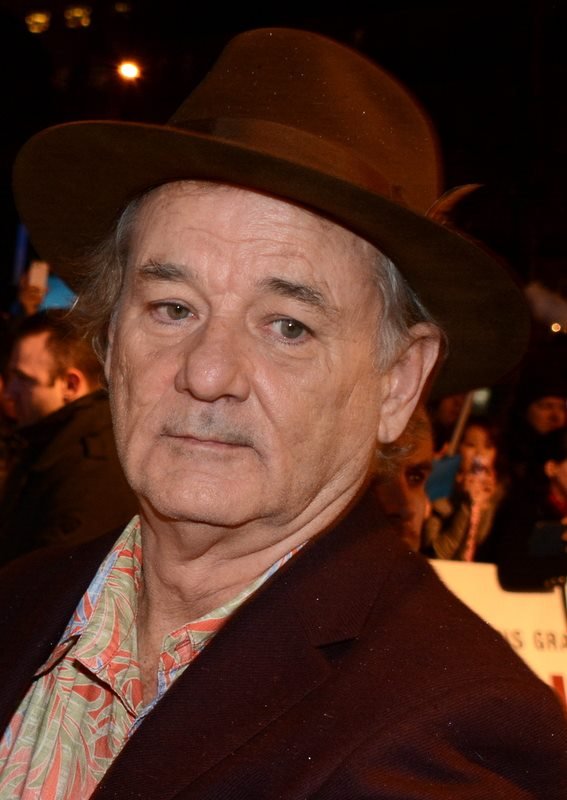
Bill Murray is an actor and comedian whose deadpan manner has carried him from the first great era of Saturday Night Live through a run of defining comedies to a second career as one of the most admired dramatic performers of his generation. Celebrity Net Worth puts his net worth at $180 million, the figure carried consistently for him across recent years. At 76 he remains a working performer, appearing in new productions and, in 2025, touring as the frontman of a blues-rock band, the Blood Brothers.
$180 Million, Stable Across Recent Updates
Celebrity Net Worth puts his net worth at $180 million, a figure that has been stable across the tracker’s recent updates and is matched by the other round-ups that cite it. Forbes publishes no net-worth total for him. The estimate rests on five decades of earnings at the top of his profession: leading-man fees from the 1980s onwards, a share in the extraordinary success of the Ghostbusters productions, whose principal performers held participation in their profits, and the steady later income of a performer in constant demand for leads, supporting roles and voice work. As with every figure of this kind it is an estimate built from public information, not an audited account, and no representative of Murray’s has published a figure of his own.
Beyond the headline figure, his documented interests are recreational as much as financial. He has been a co-owner of minor-league baseball teams, including the Charleston RiverDogs, holding the gloriously informal title of Director of Fun, and he has been involved with his brothers in a family golf-clothing and restaurant business built around the Caddyshack name. These ventures are reported here as interests he is known to hold, without invented valuations: no reliable published total exists for them, and they should not be added to the headline figure as though they were separate from it.
Property, by contrast, is a subject on which this profile offers no inventory. His residences have been reported at various times in New York, South Carolina, California and elsewhere, usually in connection with a sale or a neighbour’s anecdote rather than a verified record, and no reliable current list has been published. That restraint is deliberate: for a man whose public myth depends on turning up unannounced, an audited map of his domestic life is neither available nor necessary to an account of his standing.
Murray at 76 occupies a place that money only partly explains. The $180 million estimate measures a career; the reputation measures something else — a performer who made indifference look like mastery in his thirties and made disappointment look like wisdom in his fifties, and who still, in his eighth decade, is capable of walking on stage with a blues band or into a stranger’s party and becoming, for an evening, the centre of it. The work, unusually, has never stopped being interesting, and neither, on the evidence, has he.
A Father Lost in 1967, a Mother Who Raised Nine Alone
His parents are Edward Joseph Murray II and Lucille Murray (née Collins). His father’s death in 1967, from complications of diabetes, left his mother to raise nine children in Wilmette, and Murray has supported causes in his father’s memory. His siblings number eight. Three of his brothers — Brian Doyle-Murray, the eldest of the acting brothers and a veteran of the same Chicago comedy scene, Joel Murray and John Murray — became actors, and Brian in particular has appeared alongside him across his career, including in Caddyshack, Scrooged and Groundhog Day. His sister Nancy is an Adrian Dominican nun who has toured in one-woman religious productions; his brother Ed, who worked in golf and gave his name to a family golf business, died in 2020.
The bank label is wife, and it is superseded: he has no current wife, and no remarriage has been reported since 2008. He married Margaret Kelly in January 1981 in Las Vegas, with a second ceremony in Chicago for their families; the marriage ended in divorce in 1996. He married Jennifer Butler, a costume designer he had met at work, in July 1997; she filed for divorce in May 2008, the divorce was finalised on 13 June 2008, and she died in January 2021. A reported association with the singer Kelis in 2023 was never confirmed by either party and is not recorded here as a relationship. He is therefore described accurately as divorced and, so far as reliable reporting goes, single.
He has six sons. Homer, born in 1982, and Luke, born in 1985, are his sons with Margaret Kelly; Luke became a university basketball coach of national standing. Caleb, born in 1993, Jackson, born in 1995, Cooper, born in 1997, and Lincoln, born in 2001, are his sons with Jennifer Butler. The sons have largely been raised away from publicity, and Murray’s public remarks about them are affectionate and brief, in keeping with a privacy he guards more carefully for his family than for himself.
He has no official personal Instagram account. Fan accounts and tribute pages in his name are numerous and popular, none of them his, and he has explained in interviews that he does not maintain a personal presence on the platform. This article states that absence plainly rather than attributing a handle to him, and the table in this profile records the position in the same terms.
Saturday Night Live, Ghostbusters, Groundhog Day, and Wes Anderson
1977–1984: Saturday Night Live, Meatballs and Stripes
Murray joined Saturday Night Live in 1977, in its second season, replacing Chevy Chase in a cast that was already becoming legendary, and remained until 1980, winning an Emmy Award as part of its writing team. His characters — the unctuous lounge singer Nick, the excitable news commentator — established the persona: a man apparently indifferent to whether the audience kept up. Meatballs (1979), in which he played a summer-camp counsellor, was his first leading film role and a substantial success. Caddyshack (1980), in which he played the deranged groundskeeper Carl Spackler in scenes largely improvised, and Stripes (1981), a service comedy in which he played a cab driver who enlists on impulse, made him a leading man of a new kind: the comedy was in the refusal to try, and audiences recognised something true in it.
1984–1993: Ghostbusters, Scrooged and Groundhog Day
Ghostbusters (1984), in which he played Dr Peter Venkman, became one of the most successful comedies ever made and fixed his image internationally; he returned for Ghostbusters II (1989). Between the two he took the dramatic lead in The Razor’s Edge (1984), an adaptation of Somerset Maugham’s novel that he had championed and co-written; its commercial failure affected him deeply and he withdrew from acting for several years, living for a period in Paris and studying at the Sorbonne. He returned with Scrooged (1988), a modern retelling of Dickens in which his misanthropic television executive was close enough to his public image to feel personal, and with the heist comedy Quick Change (1990), which he co-directed. What About Bob? (1991) and Groundhog Day (1993), in which he played a weatherman condemned to repeat the same day until he becomes a better man, completed the period; the latter is now regularly placed among the finest comedies ever made, and its blend of farce and philosophy pointed directly at the work to come.
1998–2012: Rushmore, Lost in Translation and the Wes Anderson Years
The second career began with Rushmore (1998), Wes Anderson’s comedy in which Murray played Herman Blume, a wealthy industrialist competing with a schoolboy for a teacher’s affection. The performance — melancholy beneath the wit — won awards from critics’ organisations and announced a different actor. He became a fixture of Anderson’s company, appearing in The Royal Tenenbaums (2001), The Life Aquatic with Steve Zissou (2004), in the title role, The Darjeeling Limited (2007), Fantastic Mr. Fox (2009), as a voice, Moonrise Kingdom (2012) and The Grand Budapest Hotel (2014). In parallel, Sofia Coppola’s Lost in Translation (2003), in which he played a fading film star filming an advertisement in Tokyo, brought him the BAFTA Award for Best Actor and an Academy Award nomination, and remains the performance by which his dramatic reputation is measured. Jim Jarmusch’s Broken Flowers (2005) extended the register of quiet, disappointed men that directors now sought him for.
2013–2026: Later Work, Cameos and the Blood Brothers
Later work has mixed leads in smaller productions with the pleasures of the unbilled appearance. He played Franklin D. Roosevelt in Hyde Park on Hudson (2012), a music manager in St. Vincent (2014), opposite Melissa McCarthy, and returned to Coppola for On the Rocks (2020), opposite Rashida Jones. He appeared in Zombieland: Double Tap (2019), again playing a version of himself, in The French Dispatch (2021) for Anderson, in Ghostbusters: Afterlife (2021) and its sequel Ghostbusters: Frozen Empire (2024), and in The Friend (2024). His famous reluctance to maintain an agent or a publicist — business is conducted through a widely circulated freephone number on which messages are left and sometimes answered — has become part of the legend, as have his unannounced appearances at parties, games and ceremonies, where the ease with which he handles a room, down to small social rituals of the kind covered in guides to how to hold a wine glass, is part of the performance of being Bill Murray. In 2025 he toured with the blues-rock band the Blood Brothers as frontman, a late and characteristic departure.
Assessed whole, the career divides into two halves of roughly equal distinction. The first made him the defining comic presence of his decade, on the strength of an apparently effortless indifference that was in fact tightly controlled improvisation. The second, rarer achievement was to let that persona age in public: the same deadpan, slowed and saddened, became an instrument for playing disappointment, and directors from Anderson to Coppola to Jarmusch built films around it. Few performers of his generation have been essential to two such different bodies of work.
Evanston to Ghostbusters to Lost in Translation: the Short Record
| Evanston to Ghostbusters to Lost in Translation: the Short Record | Details |
|---|---|
| Born | 21 September 1950, Evanston, Illinois, United States |
| Age | 76 years old |
| Height | 6 ft 2 in (1.88 m) |
| Weight | No reliable published figure exists |
| Wife | No current wife; formerly married to Margaret Kelly (1981–1996) and Jennifer Butler (1997–2008) |
| Children | Six sons: Homer, Luke, Caleb, Jackson, Cooper and Lincoln |
| Siblings | Eight, including Brian Doyle-Murray, Joel Murray and John Murray |
| Net Worth | Estimated $180 million (Celebrity Net Worth) |
| No official personal account |
Evanston Birth, Fifth of Nine Children in Wilmette
William James Murray was born on 21 September 1950 in Evanston, Illinois, in the United States, and grew up in Wilmette, a suburb north of Chicago. He was the fifth of nine children. His father, Edward Joseph Murray II, sold lumber, and his mother, Lucille Murray (née Collins), worked as a mailroom clerk. The family was large, Catholic and short of money in the years after his father’s early death: Edward Murray died in 1967, when his son was seventeen, and the loss, in a household of nine children, is the event Murray’s biographers and Murray himself return to when explaining the self-reliance of his manner.
He attended Loyola Academy in Wilmette and worked as a teenager in the jobs available to a tall, funny boy in a Chicago suburb, including caddying at local golf courses — an apprenticeship in the observation of wealthy adults at leisure that he later mined for one of his most famous performances. After school he enrolled at Regis University in Denver to study pre-medical courses, left without completing them, and was arrested at Chicago’s airport in 1970, on his twenty-first birthday, in an incident involving marijuana that resulted in probation; he has treated the episode since as the end of one possible life and the beginning of another.
Back in Chicago, he followed his older brother Brian into improvisational comedy, joining the Second City troupe, where the company included John Belushi and where the discipline of building scenes from nothing became his training. He moved with that circle into radio comedy on the National Lampoon Radio Hour and then to New York, first to an off-Broadway Lampoon stage production and then, in 1977, to television. No drama school, no degree and no plan survived contact with the Second City; what survived was the training itself, which is visible in every performance since — an actor listening, waiting, and letting the pause do the work.