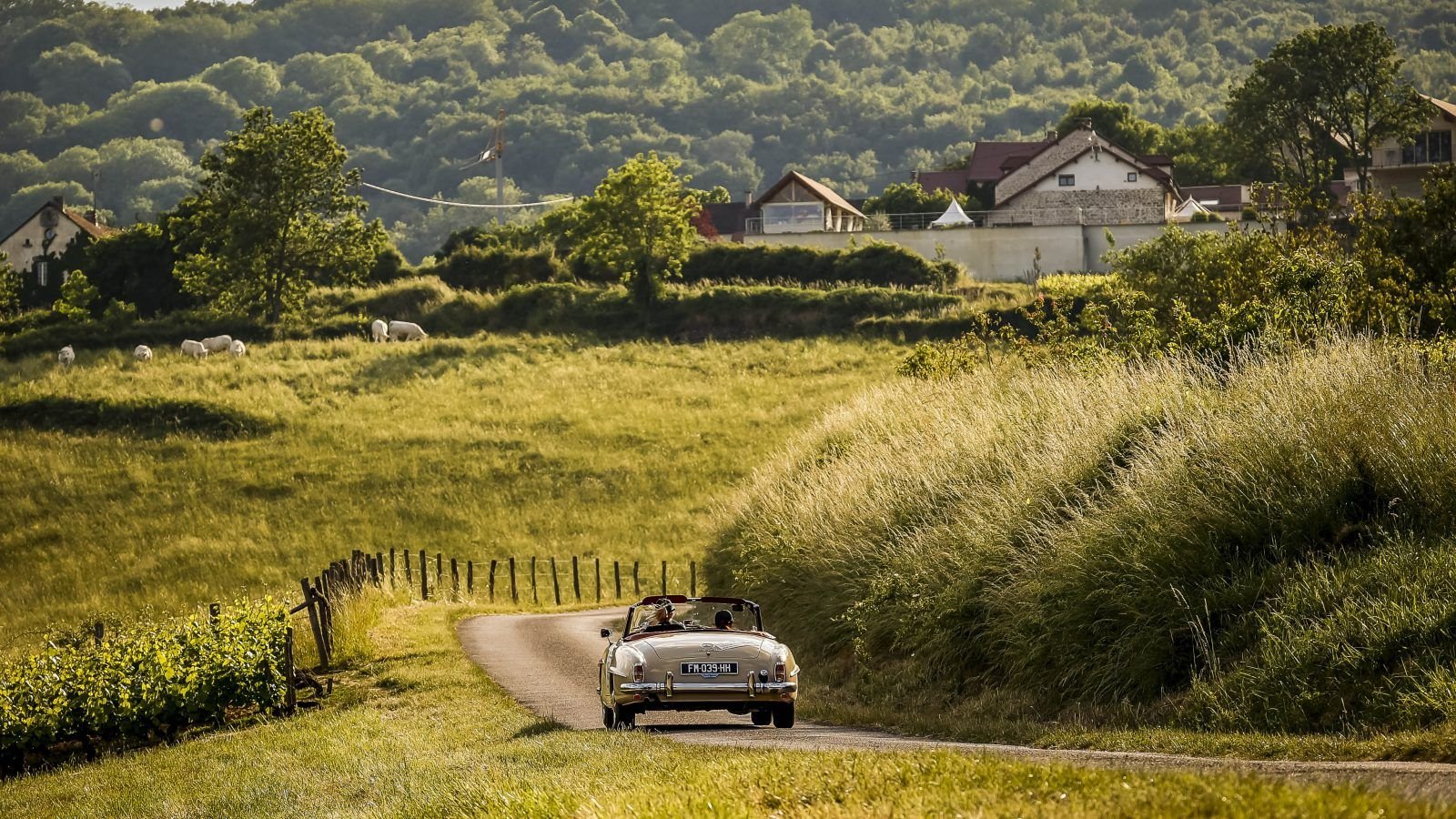
Driving on the right for the first time can make familiar skills feel strangely unfamiliar, from roundabouts to quiet rural junctions. With the legal kit sorted and the key rules clear in your mind, confidence usually arrives surprisingly quickly.
The short answer is this: yes, most British drivers can drive in France with their usual licence, provided they carry the right documents, equip the car properly, arrange any city sticker their route needs, and learn two habits — keeping right as the default, and giving way to traffic from the right where the old priority rule still applies. Nothing on that list is difficult. Almost all of it must be sorted before you leave home, which is where first trips are really won or lost. The same calm preparation covers emergencies too, right down to changing a flat tyre safely at the roadside if luck runs against you, because a driver who has rehearsed the basics rarely panics when something small goes wrong.
What Equipment Must Your Car Carry in France?
French rules expect certain kit to be in the car and within reach, and the safest approach is to treat the equipment list as a pre-departure job rather than a ferry-queue afterthought. Pack a warning triangle and a high-visibility jacket for the driver, and keep the jacket in the cabin rather than the boot, so you can put it on before stepping out. Many drivers carry a jacket for every passenger as well, which is plain common sense at a dark roadside.
Your headlights need attention because British cars are set up for driving on the left. Beam deflectors, or a built-in adjustment on newer cars, stop you dazzling oncoming traffic once you are driving on the right. A national identifier for the vehicle, a spare set of bulbs where your car makes them changeable, and a basic first aid kit all earn their space in the boot.
Do not rely on buying forgotten items at the port. Queues, closed shops and marked-up prices punish that plan, and some items are needed from the moment you roll off the ferry or train. Lay everything out at home, tick it off as it goes into the car, and check the current requirements through GOV.UK guidance on driving abroad shortly before you travel, because rules for equipment do change and the official word beats travel folklore every time.
Which Documents and Stickers Need Arranging Early?
GOV.UK states that people driving abroad should carry their driving licence and vehicle documents and check the rules of each country before travelling, as requirements differ across Europe. In practice that means your licence, the vehicle registration document, your insurance papers and, where the car is hired or borrowed, written proof that you may take it abroad. Keep paper copies separate from the originals, and photographs of each document on your phone, so a lost wallet does not become a lost holiday.
The sticker that catches people out is the Crit’Air vignette. French low-emission zone rules require vehicles entering restricted city areas to display a Crit’Air vignette showing their emissions category, and the sticker is ordered in advance and posted to you, which makes it useless to remember at the Channel. Work out whether your route enters a restricted city area — a ring road can take you into one even when the city is not your destination — and apply in good time if it does.
Order only through official channels and be wary of lookalike websites charging inflated fees for a simple application. While you wait for the sticker, plan the first fuel stop, the first toll and the first rest break, because paperwork and route planning are the same job: removing decisions from the hours when you will be tired and adjusting.
How Does Priority to the Right Catch Drivers Out?
It catches drivers out because it reverses a deep British assumption. The French Highway Code applies priority to the right at many unsigned junctions, meaning drivers must give way to vehicles approaching from their right. In a British town, a clear main road usually keeps its priority. In a French village, a modest side street on your right may hold the priority unless signs or markings say otherwise.
The danger spots are quiet ones: rural crossroads with no paint, small town junctions where buildings hide the side street, and roads where a yellow diamond sign — the marker that your road carries priority — has ended without you noticing. Approach unsigned junctions at a speed that lets you stop, look properly to the right and yield without drama. Treat a hesitant local driver ahead of you as information rather than an irritation; they may have seen the car you have not.
Roundabouts need a calmer head than most newcomers expect. Traffic already on most French roundabouts has priority, and you give way on entry, broadly as at home, but the lane discipline and exit signalling feel different when everything runs the other way round. Slow down, choose your lane early and do not be bullied by the car behind. A missed exit costs one extra circuit; a rushed one can cost far more. Reading up on the priority to the right rule before you go turns this from a nasty surprise into a rule you are simply watching for.
What Speed Limits Apply on Different French Roads?
Limits differ by type of road, and the pattern is easy to hold in mind: built-up areas carry the strictest limits, single-carriageway rural roads sit in the middle, and dual carriageways and motorways allow the fastest lawful speeds. Signs at the roadside always have the final say, and a village name sign marks the start of the built-up rules even where houses look sparse, so ease off as you approach any settlement rather than waiting for a cluster of buildings.
Wet weather lowers limits on many French roads, and newer drivers or those with a recent licence can be held to lower limits too, so the figure on the sign may not be the figure that applies to you. Your speedometer may read in miles per hour while French signs work in kilometres per hour, which makes a conversion habit essential. Learn the handful of equivalents you will use daily before you go, and let the passenger double-check you during the first day whenever a new limit appears.
Enforcement is a fact of French motoring. Fixed cameras, mobile checks and average-speed sections all operate, and fines can follow you home. The relaxed answer is to build slack into your timings so that keeping comfortably within the limit never makes you late. French rural roads invite a flowing pace, but the driver enjoying them most is rarely the fastest one.
How Should You Handle Tolls and Fuel Stops?
Many French motorways charge tolls, collected at barriers where you take a ticket on entry and pay on exit, or pass through sections with set charges. Keep a payment card handy in the cabin, choose a lane marked for card payment, and do not queue behind lorries out of habit. A passenger who handles tickets and cards makes the whole ritual smoother, so agree the jobs before the first barrier rather than fumbling at it.
Toll motorways are fast and well served, while the toll-free routes are slower and usually prettier. Neither is automatically right. A long haul south rewards the motorway; a gentle tour may suit the free roads, provided you accept lower speeds, more villages and more of those priority junctions. Mixing the two often works best — motorway for the miles you must cover, ordinary roads for the country you came to see.
Fuel stops reward a little forethought. Motorway services are convenient and dearer; supermarkets near motorway exits are where local drivers fill up, often with a small detour. Know which fuel your car takes, check the pump labelling carefully, and never let the tank run low in rural areas where stations keep shorter hours. Stretch, drink water and swap drivers at fuel stops, because fatigue, not distance, is the real enemy on long French days.
Why Does the First Hour on the Right Feel Hardest?
Because everything familiar sits in the wrong place. Your instinct at junctions is to look the British way first, the passenger sits where you expect the driver, and the gear hand or door hand feels oddly idle or busy depending on your car. Roundabouts demand a leftward sweep of the eyes that your habits resist. None of this means you are bad at it; it means driving is mostly habit, and you have temporarily borrowed someone else’s.
Make the first hour deliberately easy. Choose a quiet route away from the port rather than a city ring road, keep speeds modest and narrate your driving if it helps — say aloud which way you will look and who has priority. Passengers can help by reading signs and staying quiet at complicated junctions instead of offering three opinions at once.
Most drivers find the new pattern settles faster than they feared, often well within the first day. The riskier moment comes later, on a quiet road when confidence has risen and attention drifts, or back home after the holiday when the old habits need to return. Stay alert at those two edges and the middle looks after itself.
What Cover Protects You if the Car Breaks Down?
Arrange European breakdown cover before you travel, and check what it actually promises. Useful cover recovers the car, gets you and your passengers to safety, and either repairs the car locally or brings it home. Read the small print on vehicle age limits, onward travel and accommodation, because policies that sound alike can differ sharply at the roadside.
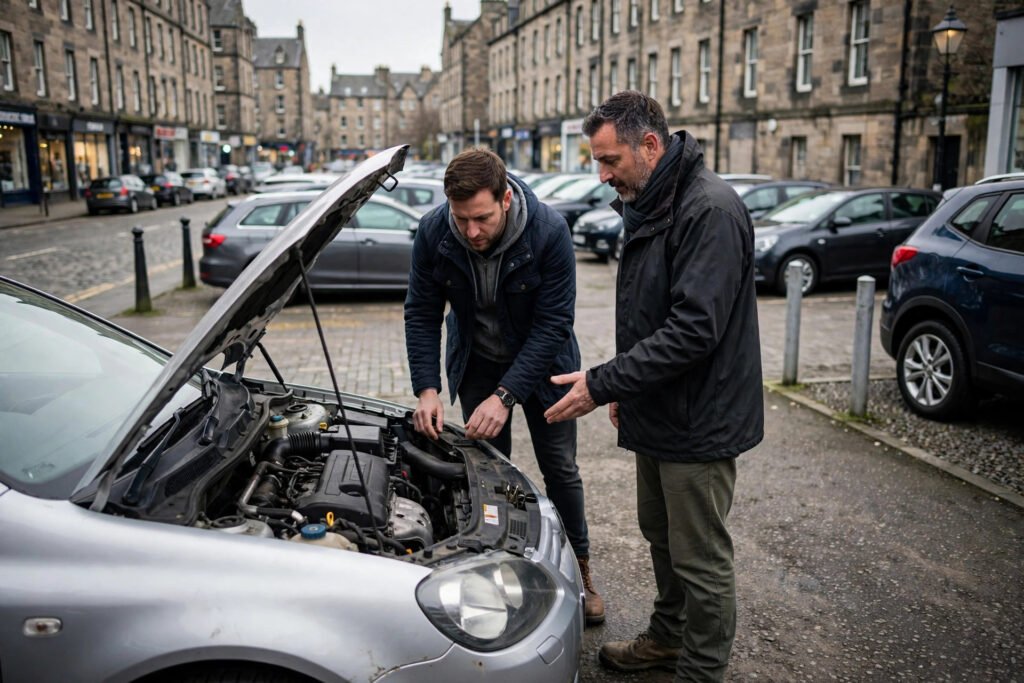
Keep your insurer and breakdown provider’s numbers saved in your phone and written on paper in the glovebox. If the car fails, get everyone out on the safe side, put the triangle out and move behind a barrier where one exists. On a motorway, use the emergency phones or the marked refuge areas if you can reach them safely, and never attempt repairs in a live lane.
Check your insurance itself, not just the breakdown add-on. Confirm the policy covers driving in France for your dates, carry the proof and understand any excess that would apply abroad. An hour with these documents at the kitchen table is unglamorous, and it is also the hour that protects the whole trip.