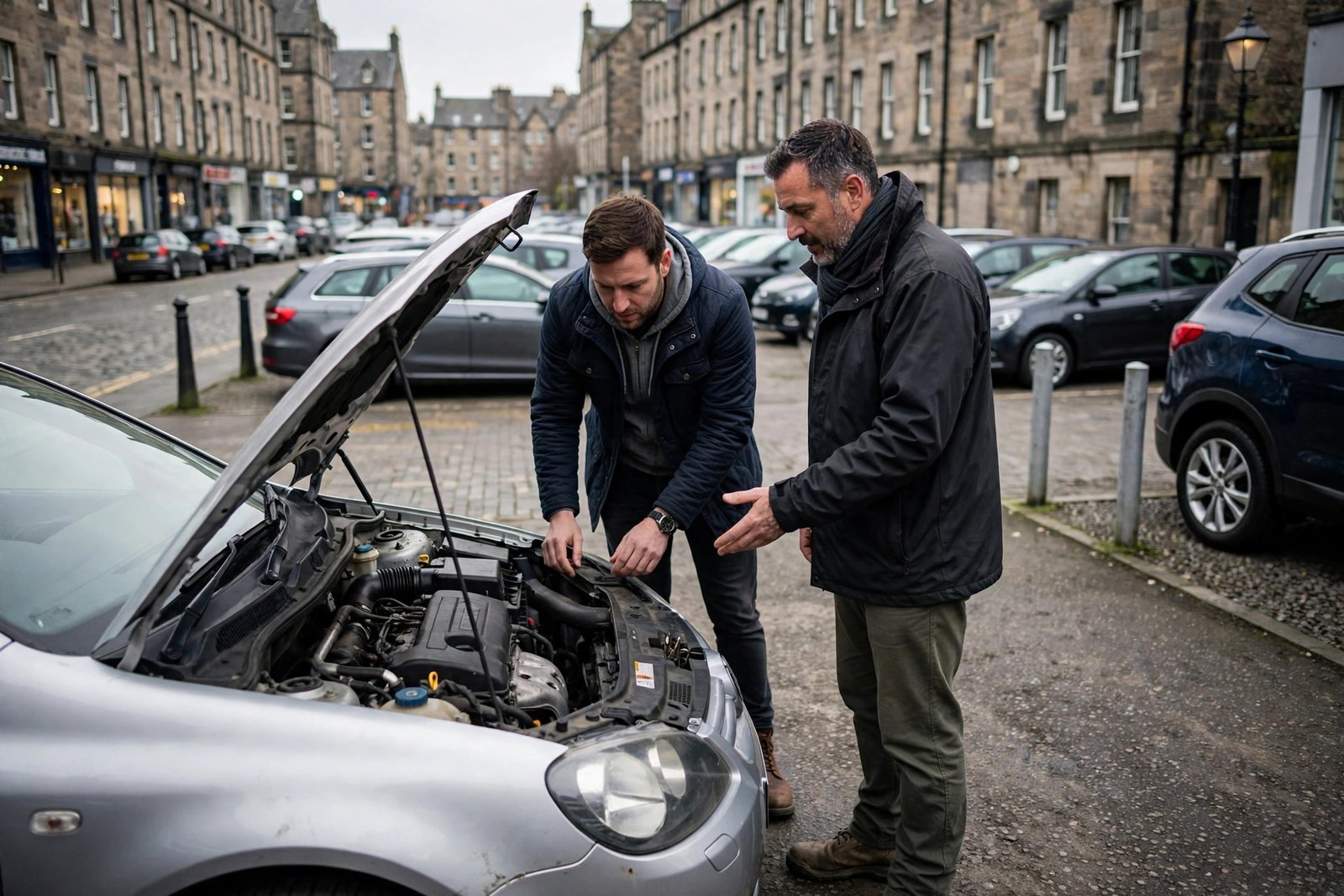
The smoothest used car sellers in Edinburgh rely on one thing: a buyer who skips the homework.
What Should You Check Before You Even View?
Homework starts long before you stand on a forecourt or a stranger’s driveway. Decide what the car is actually for, because a small hatchback for city parking, a family estate for school runs and a rugged estate for rural work are entirely different purchases wearing the same label. Write down the jobs the car must do, the passengers it must carry and the luggage it must swallow, then let that list, rather than a glossy advert, narrow the field.
With a shortlist forming, run a history check on any serious candidate before travelling to see it. That check looks for outstanding finance, a past write off, mileage discrepancies and changes of keeper that do not match the seller’s story. A car carrying someone else’s debt or a hidden damage record is a problem you want to discover from your own sofa, not after money has changed hands in a car park.
Paperwork thinking belongs at this stage too. Ask whether the service history exists, whether it looks continuous rather than freshly invented, and whether the registration document will be present at the viewing. Sellers who answer plainly and offer documents without fuss are giving you useful information about how the car has been kept. Vague answers, missing books and stories that shift between messages are early warnings worth heeding.
The same caution that helps with spotting scams before money disappears applies here in full. Pressure to decide quickly, reluctance to give an address, a price that feels oddly generous for the model and age, or a seller who discourages checks are all reasons to slow down rather than speed up. Edinburgh has plenty of honest cars for sale. Walking away from a doubtful one costs an afternoon; buying it can cost far more in worry.
How Do You Know the Price Is Honest?
An honest price is not a feeling. It is a comparison. Look at similar cars actually advertised for sale, matching age, mileage, fuel, trim and condition as closely as you can, and build a picture of what the market is asking right now. Adverts that sit unsold for weeks often signal optimistic pricing, while cars priced sensibly tend to move. Your evidence comes from the pattern across many listings, never from a single example.
Remember that the asking figure is only the opening position. Dealers expect discussion, and many private sellers build in room to move. What matters is knowing, before you begin, the figure beyond which you will not go, worked out calmly at home rather than invented under showroom lights. That private ceiling protects you from the slow drift where extras, warranties and finance add-ons quietly stretch a sensible purchase into a strained one.
Condition should move the price more than colour or fashion. A slightly older car with a full service record, fresh tyres and evidence of care is often the better buy against a newer example with gaps in its history and cheap rubber at each corner. Value lives in maintenance. When two cars look alike in photographs, the one with receipts, stamps and honest wear usually deserves the stronger bid.
Finally, judge the total commitment, not the windscreen figure alone. Insurance group, fuel appetite, tax, likely servicing and the cost of putting right anything you spotted all belong in the same calculation. A car that looks like a bargain can become the expensive option once those running realities are added, while a fairly priced car with modest needs can prove the cheapest motoring you ever buy.
What Does a Careful Inspection Actually Look For?
Inspect in daylight, on a dry day if you can manage it, and start the engine from cold. A warm engine on arrival can hide starting faults and early noises that a cold start reveals honestly. Walk around slowly looking for panels that sit unevenly, paint that changes tone between doors, and glass or lights that differ from their partners. Small mismatches often point to repairs the seller has not mentioned.
Tyres tell a story quickly. Uneven wear can suggest alignment trouble or neglected maintenance, while a mix of worn and new rubber hints at money spent only where failure forced it. Check the brakes through feel as much as sight once you drive: a pedal that pulses, pulls or feels spongy deserves questions. Under the bonnet, look for leaks, low fluids, cracked hoses and a general air of either care or abandonment.
Inside, test everything that moves or lights up. Windows, locks, heating, air conditioning, wipers, lights, the infotainment screen and every switch should work as expected, because electrical faults are tedious and can be costly to trace. Check the seats, belts and spare wheel area, lift mats where you can, and trust your nose: damp smells suggest water getting in somewhere it should not.
The test drive should cover mixed traffic, not a gentle loop around the block. Include stop and start streets, a faster stretch, some hills if Edinburgh conveniently provides them, and a full lock turn in a quiet car park to listen for knocks. Note steering feel, gear changes, clutch bite, braking stability and any warning light that appears or suspiciously never does. A seller who refuses a proper drive has answered an important question for you.
Dealer or Private Seller: Which Protects You More?
Seller type changes your legal footing, and understanding that difference is central to buying well. A dealer sells in the course of a business, so the law expects the car to be of satisfactory quality, fit for its purpose and as described. When something serious emerges soon after purchase, the dealer carries responsibilities that a private seller simply does not, and reputable dealers know it and behave accordingly.
A private sale rests on a narrower promise: the car must match what was said about it. If the seller described it honestly and you missed a worn clutch during inspection, the problem is largely yours. That is why the same car deserves a harder inspection, a colder eye and perhaps a lower offer when bought privately. The saving over dealer prices is real, but part of that saving is you taking on risk the dealer would otherwise carry.
Background reading on used cars and how the market works helps make sense of why the two routes feel so different, from pricing habits to the way faults are handled after sale. Neither route is automatically the wise one. A careful private seller with a cherished, well documented car can be a safer bet than a sloppy dealer, while a good dealer offers a safety net that suits buyers who value recourse over a bargain.
Whichever route you choose, keep the transaction clean. Pay in a traceable way rather than in untraceable notes handed over in a street, get a receipt that identifies the car, the seller, the date and the amount, and never let urgency talk you out of seeing the registration document. The seller’s name and address should match that document. If they do not, you need a convincing explanation before anything else proceeds.
How Do You Negotiate Without Burning the Deal?
Good negotiation is evidence presented politely. Instead of declaring a car overpriced, point to the comparable listings you found, the tyres nearing replacement, the service that is due or the fault you discovered on the drive. Each point has a cost attached in the real world, and asking the price to reflect those costs is reasonable rather than cheeky. Sellers respond far better to arithmetic than to theatre.
Tone matters as much as figures. Stay friendly, stay unhurried and make it clear you like the car while being honest about its needs. That combination tells the seller a deal is possible today if the numbers meet. Threats, invented rival buyers and theatrical walkouts usually harden positions, whereas calm silence after making an offer often does more work than another speech.
Know what else can be traded besides the headline figure. A dealer might include a fresh service, a longer warranty, new tyres or a full tank where the price itself will not move. A private seller might include accessories, a roof box or a set of winter wheels. Ask for the package that genuinely helps you, and weigh it honestly rather than collecting extras you will never use.
Your strongest tool remains the willingness to leave. If the gap will not close and the car is not right at the price, thank the seller and go, leaving the door open politely. Sometimes the phone rings later with a better offer. Sometimes it does not, and another car appears next week. Knowing your rights under the Consumer Rights Act explained keeps your confidence grounded in something firmer than bravado, particularly with dealers, and that quiet confidence shows in how you bargain.
What Do You Do in the First Days After Buying?
The work is not finished when the keys change hands. Sort insurance before driving away, arrange tax in your name, and make sure the registration document transfer is properly under way. Keep every receipt, advert copy and message from the sale together in a folder. If a dispute ever arises, that bundle is the difference between a clear account and a fading memory.
Use the early days to listen to the car. Drive it in the conditions you bought it for, check fluid levels again after some use, and note anything that feels different from the test drive: a new noise, a warning light, a leak on the driveway. Small concerns are cheapest when raised early, and with a dealer they should be raised promptly, politely and in writing so there is a record.
Book any due servicing rather than letting it drift, and deal with the minor items you negotiated around: the worn wiper, the tired battery, the tyre you promised yourself you would replace. A used car settles into your life best when those small jobs are cleared quickly, turning a purchase that still feels like a stranger’s machine into your own dependable transport.
Finally, reflect on the process while it is fresh. The checks that felt tedious, the history report, the cold start, the mixed traffic drive, are exactly what separated a considered purchase from a gamble. Edinburgh will sell you a car either way. The homework decides whether the car you bring home is a pleasure you planned or a problem you inherited, and that difference is entirely in the buyer’s hands.