
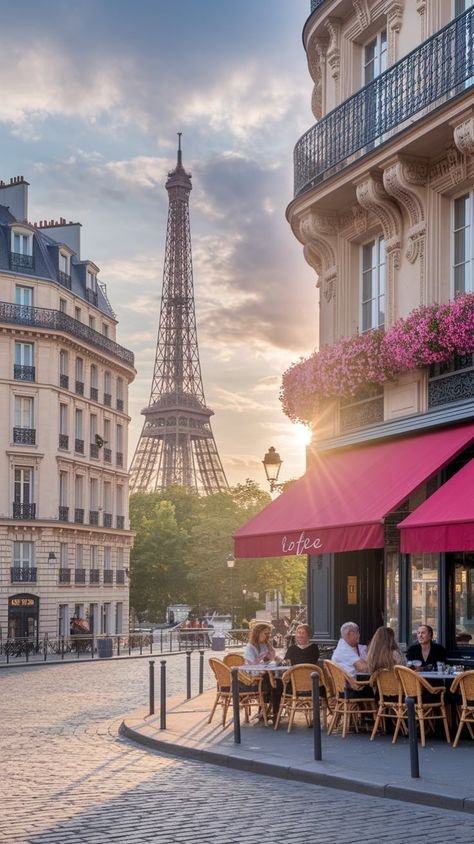
Paris is the most visited city on earth, and it has the tourist-trap industry to prove it. The €8 espressos, the “traditional” restaurants with laminated menus in six languages, the queues for attractions that aren’t worth the wait — they’re all designed for visitors who don’t know better. As a British traveller, you have one advantage: you’re close enough to visit often, which means you can skip the checklist tourism and do Paris properly. Here’s how to avoid tourist traps in Paris and experience the city the way Parisians actually enjoy it.
How to avoid tourist traps in Paris as a British traveller: the golden rules
- Never eat on a street with a view of a monument. Any restaurant overlooking the Eiffel Tower, Notre-Dame, or Sacré-Cœur is charging for the view, not the food. Walk two streets back — literally two — and prices halve while quality doubles.
- Stand at the bar. In Parisian cafés, coffee at the counter (au comptoir) is often half the price of table service — and it’s the authentic local way. A €1.50 espresso standing at the bar in the 11th arrondissement beats a €7 one sitting by the Champs-Élysées.
- Laminated multi-language menu = walk away. The good places have a handwritten ardoise (chalkboard), a short menu, and mostly French customers. If the menu has photos of the food, run.
- The “menu” (prix fixe) is your friend. The set lunch menu — often €15–€22 for three courses at lunch — is France’s greatest dining bargain. Same kitchen as the €40 dinner, half the price.
- Boulangeries over breakfast buffets. A croissant (€1.20), a pain au chocolat (€1.40), eaten on a bench — better than any €25 hotel breakfast. Find the boulangerie with a queue of locals.
The attractions: what to skip, what to book, what to do instead
- The Eiffel Tower summit: the queues are brutal (2–3 hours without a pre-booked ticket). Book the earliest slot online weeks ahead, or — local secret — admire it from the Champ de Mars, Trocadéro at sunset, or the rooftop of the Musée du Quai Branly. The best Eiffel Tower experience might not involve going up it.
- The Louvre: go on Wednesday or Friday evenings (open late, quieter), enter via the Porte des Lions (no queue), and don’t try to see everything — pick the Denon wing highlights and leave. Or skip it for the Musée d’Orsay (better building, better art, shorter queues) or the Musée de l’Orangerie (Monet’s Water Lilies in two oval rooms — transcendent, 30 minutes).
- Montmartre: the Sacré-Cœur steps are a pickpocket gauntlet and the Place du Tertre is a caricature factory. Instead: wander the real Montmartre — the vineyard, the quiet streets behind the basilica, the Musée de Montmartre.
- Champs-Élysées: a shopping street with traffic. Walk it once for the Arc de Triomphe view, then leave. The real Paris is elsewhere.
- Instead of the tourist circuit: the Canal Saint-Martin (picnic on the banks), the Coulée Verte (Paris’s original high-line park), the covered passages (Galerie Vivienne), Père Lachaise cemetery (surprisingly beautiful), and the view from Parc de Belleville (free, panoramic, no queues).
Check Paris Convention and Visitors Bureau for current exhibitions and (honest) crowd information.
Eating and drinking like a local
- Neighbourhoods that deliver: the 11th (Oberkampf), the 20th (Belleville/Ménilmontant), the 10th (Canal Saint-Martin), the 5th beyond the tourist streets. These are where young Parisians actually eat.
- The formule lunch: starter + main or main + dessert, €14–€20, everywhere at lunch. It’s the backbone of Parisian working life and the best value in the city.
- Wine by the pichet: a quarter-litre carafe of house wine (€4–€7) — perfectly good, no pretension. Ordering a bottle at lunch marks you as a tourist; the pichet marks you as someone who lives here.
- Picnic like a Parisian: baguette, cheese, charcuterie, fruit from a market, wine from a caviste — €15 feeds two royally. The Champ de Mars, the Luxembourg Gardens (outside the fenced lawns), the canal banks — Paris was designed for picnics.
- Dinner timing: Parisians eat at 8pm earliest. Restaurants that fill at 6:30pm are tourist restaurants. Book for 8:30 and you’ll eat among locals.
Scams and annoyances: the British traveller’s briefing
- The petition clipboard / gold ring / string bracelet: around major sights. Ignore completely — don’t engage, don’t sign, don’t stop. Engagement is the trap.
- Pickpockets: the Métro (especially Line 1), the Sacré-Cœur steps, and crowded museums. Front pockets, zipped bags, cross-body — the standard precautions, actually applied.
- Taxi scams: use Uber/Bolt or official taxi ranks with the meter on. Anyone offering a taxi inside the terminal is unlicensed.
- “Is this your first time in Paris?”: from strangers near attractions — it’s the opener for a scam or a timeshare pitch. Smile, keep walking.
The mindset shift
The deepest tourist trap isn’t a restaurant — it’s the checklist mentality: ten sights in two days, photos at each, memories of none. Paris rewards slowness: one neighbourhood explored properly beats five rushed. Sit in a café and watch the city. Walk without a destination. The Paris you’ll remember isn’t the one from the postcards — it’s the rainy afternoon in the Marais, the perfect croissant, the sunset from an unexpected bridge. Our Barcelona first-timer’s guide applies the same philosophy to Spain, and free walking tours in European capitals are the perfect Paris introduction — local guides, honest advice, tip what it’s worth.
Go well, eat well, and remember: the Paris of your second visit is always better than the first — because you’ll already know where not to go.
Bon voyage — and remember the two-street rule. It never fails.
The takeaway
To avoid tourist traps in Paris: eat two streets back from any monument, stand at the bar for coffee, follow the prix-fixe lunch, book attractions weeks ahead (or pick the quieter alternatives), ignore every clipboard and bracelet, and slow down. Paris isn’t a checklist — it’s a city that reveals itself to those who wander. The British advantage is proximity: skip the frantic first-timer itinerary and come back for the real thing.


