Barcelona is one of those cities where you can eat brilliantly by accident — and also get fleeced spectacularly if you don’t know the ropes. When friends ask what should I eat and where in barcelona as a first timer, I tell them the city’s food scene is really two cities: the Barcelona of the locals, all vermouth bars and weekday lunch menus, and the Barcelona of Las Ramblas, where a sad paella costs €24 and tastes of nothing.
I’ve been six times now, made every rookie mistake so you don’t have to, and eaten my body weight in jamón. Here’s the essential hit list: the dishes that define the city, the neighbourhoods where locals actually eat, and the traps to sidestep.
What should I eat and where in Barcelona as a first timer? The essentials
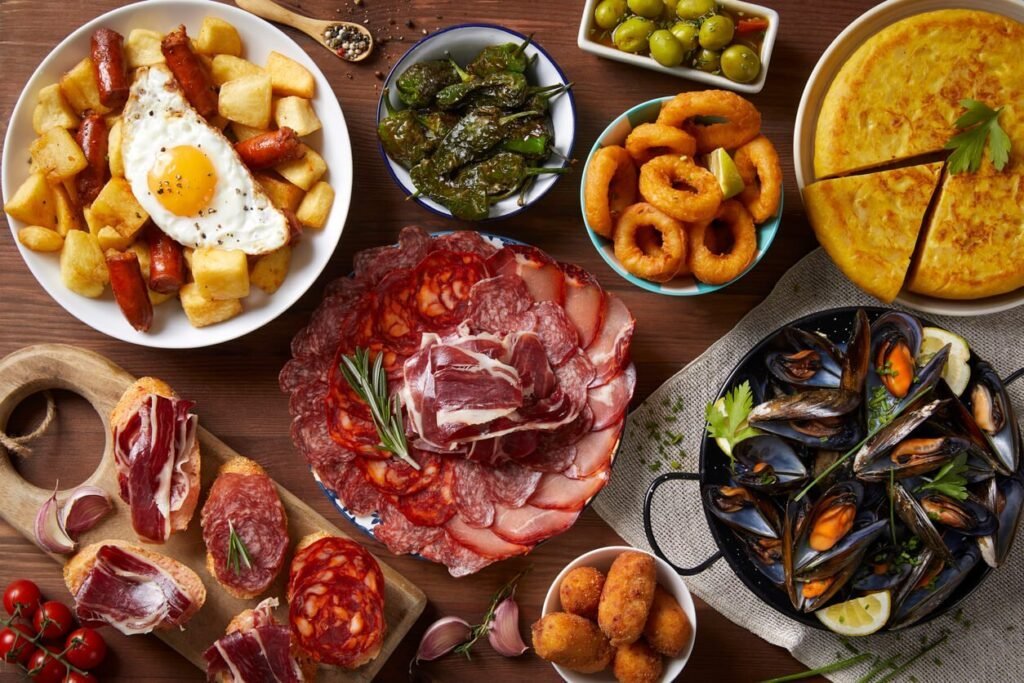
Start with the classics, but eat them in the right places. Pan con tomate — crusty bread rubbed with tomato, garlic and olive oil — appears everywhere and costs almost nothing; it’s the litmus test of a kitchen. Patatas bravas should be crispy with a proper spicy brava sauce, not drowned in mayo. Croquetas de jamón, pimientos de padrón (the little fried peppers where one in ten is fiery), and escalivada, the smoky roasted vegetable dish, round out the tapas canon. For something more substantial, try fideuà, paella’s noodle-based Catalan cousin, or a proper seafood paella eaten at lunch, never dinner.
Where you eat matters as much as what. The golden rule: walk three streets away from any major tourist sight before choosing a restaurant. The Gothic Quarter and El Born have wonderful places tucked on side streets — look for handwritten Catalan menus, a busy bar at lunchtime, and no one outside waving a laminated photo menu at you. Gràcia is my favourite neighbourhood for eating like a local: villagey squares, family-run vermouth bars, and prices that haven’t been inflated for visitors.
- Pan con tomate — the Catalan staple; if they charge more than €3, walk away
- Patatas bravas — crispy potatoes with spicy brava sauce
- Pimientos de padrón — blistered peppers, gloriously unpredictable heat
- Fideuà — paella made with short noodles instead of rice
- Crema catalana — the Catalan answer to crème brûlée, with citrus and cinnamon
- Vermut de grifo — house vermouth on tap with an olive and crisps, the classic aperitivo
- Calçots (in season, Nov–Apr) — chargrilled spring onions eaten with romesco sauce
- Xurros con xocolate — thick hot chocolate for dipping, best at breakfast
The lunchtime secret: menú del día
The single best value in Barcelona is the menú del día, the weekday set lunch that proper restaurants serve between about 1pm and 3:30pm. For €14–€20 you typically get three courses — a starter, a main, dessert — plus bread, wine or water. This is how office workers eat, and the quality is often outstanding because these kitchens survive on regulars, not tourists. Look for a chalkboard outside advertising ‘menú del día’ and a room full of people in work clothes.
Timing your meals like a local transforms the experience. Lunch is the main event, eaten late by British standards — restaurants fill from 1:30pm. Dinner starts at 9pm at the earliest; anywhere packed at 7pm is serving tourists. The vermouth hour, roughly 12 to 1:30pm on weekends, is a beloved Catalan ritual: a small glass of vermouth, some olives or berberechos (cockles), standing at the bar. Join in — it’s cheap, delicious, and about as local as it gets.
Tourist traps to avoid
Las Ramblas is the epicentre of bad eating in Barcelona. The restaurants with touts outside, photos of paella on boards, and ‘tourist menu’ signs are universally poor value — and La Boqueria market, while beautiful, has food stalls aimed squarely at visitors with inflated prices. If you want the market experience, walk twenty minutes to Mercat de Sant Antoni or Mercat de la Concepció instead, where locals actually shop and the bar counters serve superb, cheap food.
A few specific red flags: paella advertised with a photo and available instantly (real paella takes 20+ minutes and is made to order, usually for two), sangria in fishbowl glasses (locals drink tinto de verano or vermouth), and any restaurant where the menu is translated into six languages with pictures. Also, ‘Catalan cream’ desserts and ‘traditional’ tapas platters aimed at tour groups — the real versions are better and cheaper two streets over.
Markets, bakeries and sweet things
Beyond the markets, Barcelona’s bakeries deserve a dedicated morning. Ensaïmadas, coca de vidre (thin, crisp flatbread with sugar and pine nuts), and xuixos — sugar-dusted fried pastries filled with crema — are the local classics. For chocolate, the old granjas (traditional cafés) serve xurros con xocolate so thick your spoon stands up; go before 10am when it’s freshest. Coffee culture has caught up too, with excellent specialty spots in El Born and Poblenou if you need a proper flat white.
If you’re self-catering even slightly, shop where locals shop: Mercadona and Bonpreu supermarkets for basics, the municipal markets for fish, jamón and cheese. A baguette, some fuet sausage, manchego and a bottle of Priorat from a market stall makes a picnic that beats most restaurant meals — take it to Barceloneta beach at sunset or up to the bunkers del Carmel for the best free view in the city.
Eating well in Barcelona, summed up
Eat lunch late, dinner later, walk three streets from the sights, follow the menú del día chalkboards, and treat Las Ramblas as a street to walk down rather than eat on. Do that and Barcelona will feed you better than almost any city in Europe for less money than you’d spend at home.
For finding great local spots wherever you travel, find the best local restaurants when travelling has my full method, and avoid tourist traps in paris as a british traveller covers dodging tourist traps in Paris if that’s next on your list. Check official UK government foreign travel advice before you go for current entry requirements and local advice.