
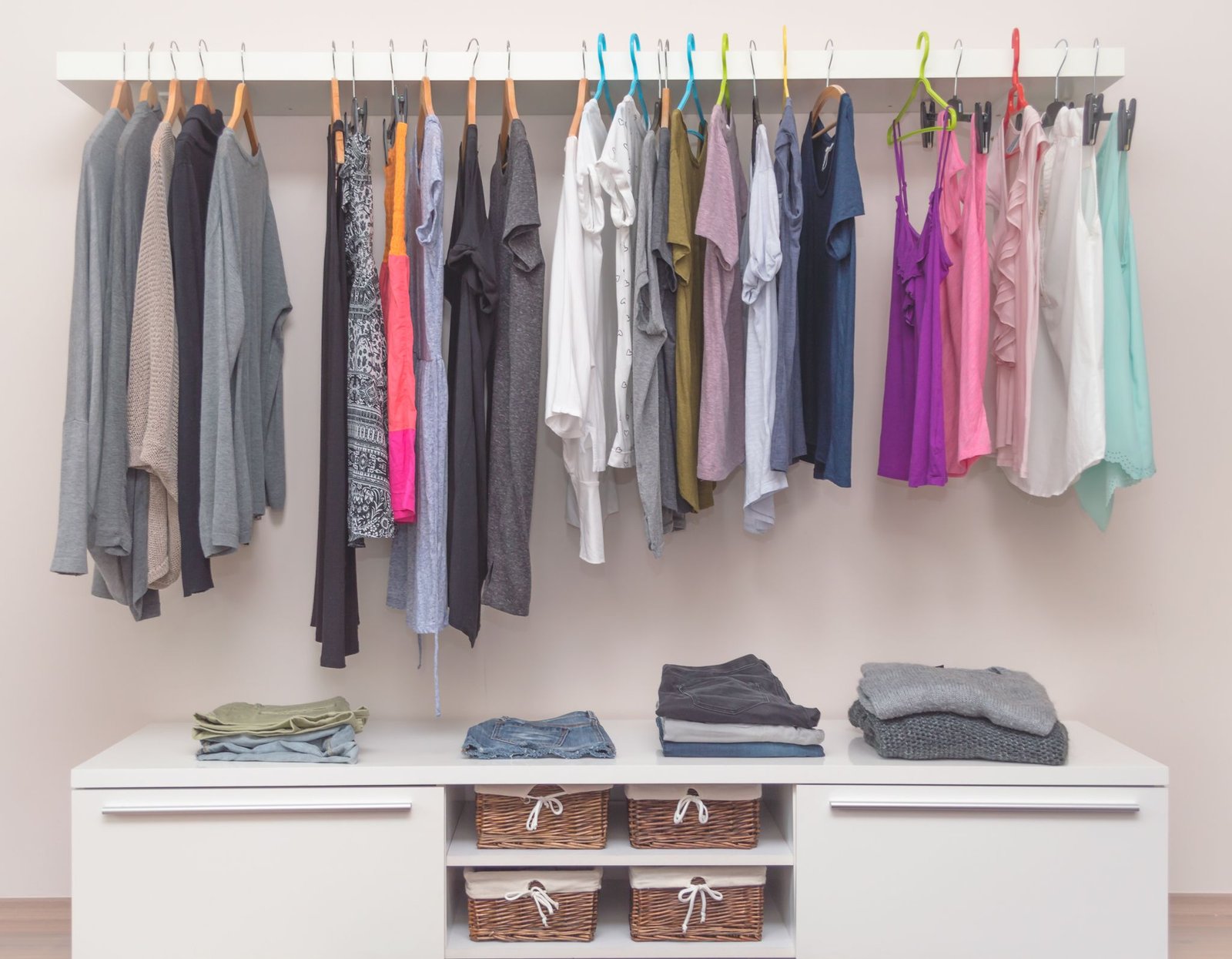
British homes aren’t known for generous wardrobes — Victorian terraces, new-build flats and box rooms all share the same tiny cupboard problem. Learning how to organise a small wardrobe to fit more clothes isn’t about buying clever gadgets (though a few help); it’s about editing ruthlessly, using every centimetre, and maintaining a system that survives real life. Here’s the method.
The maths first: most people wear 20% of their clothes 80% of the time. A small wardrobe forces the issue — there’s no room for the “maybe” pile. That’s actually a gift: constraints create the best wardrobes.
How to organise a small wardrobe: the 5-step method
1. Empty and edit (the hard part)
Take everything out. Everything. Then sort into: love and wear (keep), fix (alterations, repairs — bag it and book the tailor this week), donate/sell (good condition, not worn in a year), and bin/recycle (worn out — textile recycling, not landfill). Be honest about the “someday” items. If you haven’t worn it in 12 months, you won’t. This edit alone typically frees 30–40% of the space — and it’s the foundation of a capsule wardrobe, which is the ultimate small-wardrobe strategy.
2. Zone the space
Divide the wardrobe into zones: daily reach (eye to hip height — current favourites), upper (out-of-season, occasion wear in labelled boxes), lower (shoes, bags), and the door (hooks for tomorrow’s outfit, belts, scarves). Everything gets a home; homes never change. That’s the entire secret of staying organised.
3. Maximise every centimetre
- Slim velvet hangers (£10–£15 for 30). They grip clothes, take half the space of wooden hangers, and instantly double hanging capacity.
- Double the hanging rail. A tension rod or hanging rail extender (£8–£15) creates a second tier for shirts and folded trousers.
- Shelf dividers and boxes. Folded knitwear in labelled boxes or dividers stops the leaning-tower collapse.
- Over-door hooks and hanging organisers for shoes, bags and accessories — dead space becomes storage.
- Vacuum bags (£8–£12) for out-of-season bulky items (winter coats in summer, etc.) — they shrink to a third of the volume.
- Drawer dividers for underwear, t-shirts (file-folded, Marie Kondo style — you can see everything) and accessories.
4. Fold smarter
File-folding t-shirts, jumpers and jeans (folded into rectangles, stored upright like files) fits 50% more per drawer and lets you see everything at a glance. Hanging: shirts, blouses, dresses, blazers, trousers on clip hangers. Folding: knits (hanging stretches them), t-shirts, jeans, gym kit. WRAP’s clothing sustainability advice has good guides on storing clothes to keep them in shape.
5. Maintain with one-in-one-out
The system only survives with a rule: every new item means one leaves. Plus a 10-minute weekly reset (rehang, refold the chaos corner) and a seasonal review. Without maintenance, even the best system reverts to floordrobe within a month.
Small wardrobe, big style
A small wardrobe actually makes dressing easier — fewer choices, all of them good. This is why capsule thinking pairs so well with small spaces: 30 versatile pieces you love beat 100 you tolerate. Our guides to looking stylish on a budget and updating without fast fashion both assume exactly this kind of edited wardrobe.
The small-wardrobe audit: the 4-pile method
Organisation starts with owning the right things, not cleverer storage. Do this audit before buying any organisers.
Pile 1 — Keep and wear: worn in the last 3 months, fits now, in good condition. This is your actual wardrobe — probably 30–40% of what’s in there.
Pile 2 — Keep for reason: occasionwear, seasonal items (the winter coat in July), sentimental pieces. Box the seasonal ones — vacuum bags (£8–£12 for a set) compress bulky winter knits to flat packs that slide under the bed.
Pile 3 — Fix or alter: the “would wear if…” pile — needs a hem, a button, de-pilling. Bag it, date it, and set a deadline: if it’s not fixed in a month, it moves to pile 4. This pile is where wardrobes go to die slowly; the deadline is the point.
Pile 4 — Out: doesn’t fit, damaged beyond sensible repair, unworn for a year, or just not you anymore. Charity shop, Vinted, textile recycling (H&M and M&S take rags for recycling) — decide the destination per item immediately, or pile 4 migrates back into the wardrobe.
Storage that actually works in small spaces
- Vertical hanging, slim hangers. Velvet slim hangers (£10 for 30) instantly create 20–30% more rail space than chunky plastic ones. Hang everything that creases; fold knits (hanging stretches them).
- The KonMari fold for drawers. Filing clothes upright in drawers (rather than stacking) means you see everything — no more forgotten bottom layers. It takes an afternoon to convert and saves daily rummaging.
- Door and wall space. Over-door hooks (£8–£15) for tomorrow’s outfit, bags and robes; wall-mounted rails for accessories. Small wardrobes usually have unused vertical space — use it.
- Under-bed storage. The most underused space in British bedrooms. Shallow boxes or vacuum bags for seasonal, occasionwear and spare bedding.
- The one-in-one-out rule, enforced. A small wardrobe only stays organised if it stays the same size. New item in, old item out — no exceptions, no “I’ll sort it later”.
The truth about small wardrobes: they’re a feature, not a bug. Limited space forces the curation that large wardrobes avoid — and a curated wardrobe of things you wear beats a packed one you rummage through. Organise once, maintain with the one-in-one-out rule, and the small wardrobe becomes the easiest one to live with.
Small wardrobes: quick answers
What’s the ideal number of items for a small wardrobe? There’s no magic number — but most people wear 30–40 items regularly. If your wardrobe holds 40 well-chosen pieces, it’s not small, it’s curated. The problem is rarely space; it’s the 60 unworn items taking up the space.
How do I store out-of-season clothes? Vacuum bags under the bed for bulky knits and coats; labelled boxes on top of the wardrobe for the rest. The seasonal swap (30 minutes, twice a year) keeps the active wardrobe lean and relevant.
What about sentimental items I don’t wear? Keep a small memory box — not wardrobe space. Sentimental clothes earn a box in the loft, not a hanger. The wardrobe is for wearing; the box is for remembering.
How do I stop it filling up again? One-in-one-out, enforced ruthlessly. And the annual audit — every year, the 4-pile method again. Wardrobes drift; the audit corrects. Fifteen minutes of maintenance beats another full clear-out.
Your takeaway: edit, zone, maximise, maintain
To organise a small wardrobe to fit more clothes: empty and ruthlessly edit, zone the space by reach, maximise with slim hangers and double rails, file-fold drawers, and enforce one-in-one-out. The wardrobe isn’t too small — it just needs a system.


