Dolly Parton Net Worth, Biography, Age, Family and Career
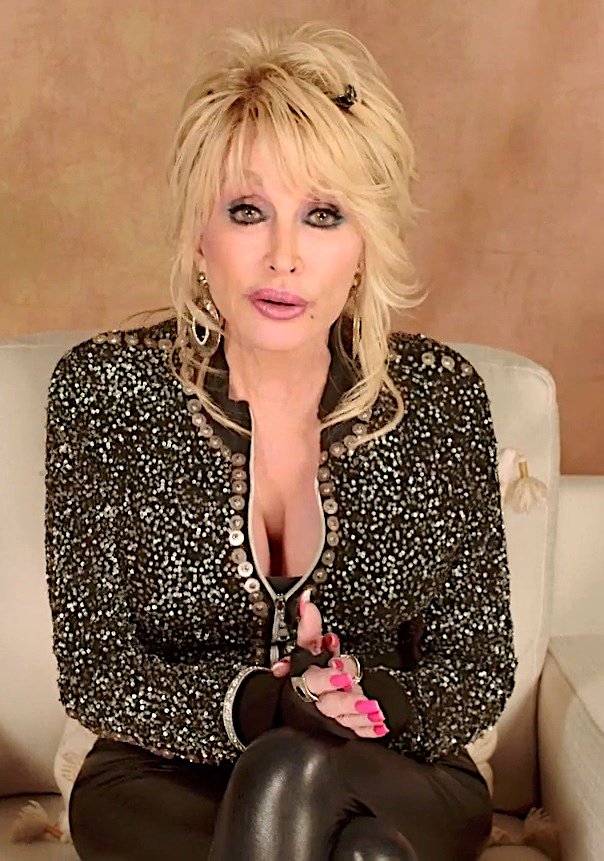
Dolly Parton, who died on 25 August 2026 at the age of 80, was a singer and songwriter whose work — “Jolene”, “I Will Always Love You”, “9 to 5” — made her one of the most widely loved performers of her era, and a businesswoman whose fortune was built on owning what she created. The allowed trackers disagree on that fortune, and the disagreement is printed in full later in this profile: Forbes estimated her net worth at $450 million, while Celebrity Net Worth put it at $650 million at the time of her death. She died in Nashville after what her representatives described as a brief battle with cancer.
A Pittman Center Family Life
Her parents remained in Tennessee. Her father, Robert Lee Parton Sr., died in 2000; her mother, Avie Lee, died in 2003. She spoke of both with a directness unusual in public life: her father, who never learned to read, was the spur for the Imagination Library, and her mother’s singing was the first music she knew. Of the large Locust Ridge family, several of her kin worked in music themselves, among them her sister Stella, a country singer in her own right, who accepted honours on her behalf after her death.
The bank label of husband is verified in full. She married Carl Thomas Dean on 30 May 1966 in Ringgold, Georgia, in a small ceremony attended by her mother, having met him outside a laundrette on her first day in Nashville. Dean ran an asphalt-paving business, avoided public life almost completely for nearly sixty years, and was photographed at her side only rarely — an arrangement both described as the foundation of the marriage’s longevity. Dean died on 3 March 2025 in Nashville, aged 82, and was predeceased by neither accident nor estrangement: the marriage ended only with his death, seventeen months before her own. She was buried beside him at Woodlawn Memorial Park and Mausoleum in Nashville, after a private family funeral on 28 August 2026.
Her home for the last decades of her life was Willow Lake Plantation in Brentwood, Tennessee, a property of some 63 acres which she bought in 1999 and where she lived quietly between working trips — a working estate with outbuildings and a small chapel, kept deliberately unshowy, and valued in recent property reporting at around $8.8 million. It is a single asset inside the much larger estate discussed later in this profile, and its scale is a fair guide to her habits: the fortune was held in businesses, rights and land, not in display. The practical questions that a property of that size raises are mostly unglamorous ones of upkeep and value for money — the same register, at a very different scale, as the choices covered in guidance on which budget air fryer is best for a small UK kitchen, where the honest answer is rarely the most expensive one.
Her official Instagram account, @dollyparton, was her main public channel in her final years, used for announcements, archive material and the family’s statements. It was through that account that her nephew Bryan Seaver announced her death on 25 August 2026, in a video delivered on behalf of the family, saying she had asked him years earlier to carry the news when it came.
A Childhood in Pittman Center
Dolly Rebecca Parton was born on 19 January 1946 in Pittman Center, Tennessee, in the foothills of the Great Smoky Mountains, and raised in nearby Locust Ridge. She was the fourth of the twelve born to Robert Lee Parton Sr., who farmed tobacco and worked construction jobs to supplement the farm’s income, and Avie Lee Parton, née Owens. The family lived in a one-room cabin on the banks of the Little Pigeon River. Money was scarce in a way she described plainly all her life, without self-pity: the Partons were, in her own repeated phrase, dirt poor, and the mountain community around them — church, kin and neighbours — was the structure that held.
Music was the family’s trade and its consolation. Her mother sang and played guitar; her grandfather was a fiddle-playing preacher; an uncle, Bill Owens, was a working songwriter who recognised her gift early and pressed it forward. She was performing on local radio and regional programmes in Knoxville while still at primary school, made her first recordings as a young teenager, and appeared at the Grand Ole Opry at thirteen, where she was introduced by Johnny Cash. She graduated from Sevier County High School in 1964 and took the bus to Nashville the following day, with her songs in a bag and, as she always told it, dirty laundry she meant to wash when she had made enough money to matter. The early Nashville years were spent writing for others before she was permitted to be heard properly herself.
Porter Wagoner Opens the Door
1967–1973: Porter Wagoner, “Jolene” and “I Will Always Love You”
Her break came in 1967, when the country star Porter Wagoner invited her to join his syndicated programme as his regular singing partner. The exposure made her a star within country music, and the duet albums that followed — beginning with Just Between You and Me (1968) — produced a run of hits. Her own solo records for RCA through this period include Coat of Many Colors (1971), whose title song, drawn directly from her mountain upbringing, became her signature piece of writing. In 1973 she recorded two songs on consecutive days that between them define her songwriting reputation: “Jolene”, a plea to a beautiful rival that has been covered hundreds of times, and “I Will Always Love You”, written as her farewell to Wagoner as she prepared to leave his organisation and strike out alone. Both were country number ones. The parting from Wagoner, in 1974, was professionally necessary and personally painful, and the farewell song outlasted the quarrel it caused.
1974–1985: The Crossover and “9 to 5”
The solo albums of the later 1970s — Jolene (1974), The Bargain Store (1975) and All I Can Do (1976) — consolidated her country position, and Here You Come Again (1977) carried her deliberately into the pop market, its title track becoming her first million-selling single and winning a Grammy Award. Heartbreaker (1978) and Great Balls of Fire (1979) completed the crossover. In 1980 she starred in the workplace comedy 9 to 5 and wrote and sang its title song, which reached number one on both the country and pop charts and became a working anthem far beyond its origins. When Whitney Houston recorded “I Will Always Love You” in 1992, it became one of the best-selling singles of all time — and because Parton had kept the publishing on her own songs, refusing an earlier request from Elvis Presley’s management that would have cost her half of it, the royalties flowed to the writer. That single decision, taken as a young woman against strong pressure, is the clearest example of the business judgement on which her fortune rests.
1986–2007: Dollywood and the Return to Roots
In 1986 she became a partner in a theme park in Pigeon Forge, in the mountains where she grew up, which reopened under the name Dollywood. The venture — examined as a business asset, distinct from her personal wealth, in the wealth part of this profile — grew over four decades into one of the most visited attractions of its kind in the United States, with a water park, resorts and a theatre district attached, and it anchored employment in her home county. Musically, the period brought a celebrated return to traditional forms: Trio (1987), recorded with Emmylou Harris and Linda Ronstadt, and its successor a decade later; then, at the turn of the century, a sequence of bluegrass albums — The Grass Is Blue (1999), Little Sparrow (2001) and Halos & Horns (2002) — that critics ranked among the finest records of her career and that won her further Grammy Awards in her fifties.
2008–2026: The Later Years, Glastonbury and the Final Recordings
The final phase of her career was conducted at a scale few performers of any age sustain. Backwoods Barbie (2008), Better Day (2011) and Blue Smoke (2014) were followed in June 2014 by her appearance in the Sunday legends slot at Glastonbury, before a crowd estimated at more than 100,000, which introduced her to a new audience in Britain wholesale. Pure & Simple (2016) topped the country charts on both sides of the Atlantic. She was inducted into the Rock and Roll Hall of Fame in 2022, having first tried to decline the honour on the ground that she had not earned it in that genre, and recorded the rock album Rockstar (2023) to answer it. Her philanthropy ran alongside the music throughout: the Imagination Library, founded in 1995 in her father’s honour, posts a free book each month to young readers under five in five countries and had passed 300 million books by the time of her death, and her donation of $1 million toward vaccine research in 2020 was credited by the researchers it funded. In May 2026 she postponed a Las Vegas residency to deal with health challenges. Her final recorded vocal, a duet with Bono on “Torn”, was recorded in June 2026 and released after her death. Posthumous Grammy nominations followed in November 2026, taking her career total to 58.
Dolly in Numbers and Dates
| Dolly in Numbers and Dates | Details |
|---|---|
| Born | 19 January 1946, Pittman Center, Tennessee |
| Age | 80 years old at her death on 25 August 2026 |
| Height | 5 ft 0 in (1.52 m) |
| Weight | No reliable published figure exists |
| Husband | Carl Dean (married 1966; he died on 3 March 2025) |
| Net Worth | Estimated $450 million (Forbes) to $650 million (Celebrity Net Worth) at her death — see below |
| @dollyparton |
How the $450 million Fortune Came About
The two allowed trackers disagree, and both figures are given here exactly as published. Forbes estimated Parton’s net worth at $450 million, most recently in its 2025 listing of America’s richest self-made women, and repeated the figure in its reporting after her death. Celebrity Net Worth put her net worth at $650 million at the time of her death. The gap is methodological, and it is not resolved here: her principal assets were privately held, no audited disclosure exists, and no public inventory of her estate had been published by November 2026. What the two trackers agree on is the composition. Forbes valued her song catalogue — she wrote, by the usual count, more than 3,000 songs, and owned the publishing — at roughly $120 million, and her stake in the Dollywood companies as the largest single component of the fortune. Celebrity Net Worth values the catalogue higher, at around $200 million, and allows more for growth in the tourism and licensing businesses.
Two distinctions matter, and this profile keeps them. First, the Dollywood theme park and its related resorts are companies, part-owned by Parton through her partnership in the Dollywood Company; a valuation of the whole enterprise is not her personal wealth, and only her stake in it counts toward either tracker’s figure. Second, her earnings history — the Houston recording’s royalties, decades of touring grosses, the $1 million vaccine donation and a lifetime of charitable giving that Forbes has estimated in the hundreds of millions — describes money that passed through her hands, not money she held at death. The estimates above are of what she held. A trust created in 1997, the D.P. Dean Trust, was identified in court filings reported in September 2026 as the vehicle for her property after death, and her business interests are overseen by She’s Alive LLC; who ultimately receives what had not been published at the time of writing, and no heir is guessed at here.
She was 80 when she died, and the shape of the estate is the shape of the career: a writer who kept her publishing when everyone advised otherwise, a performer who built her largest business in the poor county she came from, and a philanthropist whose book programme will outlast every figure in this section. The trackers will go on disagreeing about the total. The record underneath it is not in dispute.