Nine months of growing a human, minimal sleep, and a body that feels borrowed — and now everyone’s asking when you’ll “bounce back”. Let’s bin that phrase immediately. The safest way to lose weight after pregnancy has nothing to do with bouncing and everything to do with patience: nourishing yourself, moving gently, and giving your body the months it actually needs. Here’s the evidence-based approach that protects your health, your milk supply (if breastfeeding) and your sanity.
First, some perspective: it took nine months to gain the weight, and health professionals generally consider 6–12 months a realistic timeframe to lose it. Around half of new mums retain significant weight at six months — that’s normal, not failure. Crash dieting now risks nutrient deficiencies, lost milk supply, worse sleep and slower recovery. Slow and steady genuinely wins.
When can you start?
- First 6 weeks: focus on recovery, not weight loss. Gentle walking as you feel able, pelvic floor exercises from day one (your midwife or physio will emphasise these), rest, and eating enough. This is not the time for calorie restriction.
- After your 6–8 week GP check: if recovery is straightforward, you can begin gradual, moderate exercise and gentle healthy eating. After a C-section or complicated birth, wait for explicit medical clearance — usually 8–12 weeks for higher-intensity exercise.
- Breastfeeding: you need roughly 300–500 extra calories a day while nursing. Dieting aggressively can reduce milk supply — aim for gradual loss (around 0.5kg per week max) and never drop below about 1,800 calories daily without professional guidance.
The safest way to lose weight after pregnancy: the nutrition approach
Forget “diets”. The goal is nutrient-dense eating that fuels recovery and keeps energy stable through broken nights:
- Eat enough, especially protein and fibre. Undereating backfires — it tanks energy, mood and milk supply. Build meals around protein (eggs, beans, fish, yoghurt), whole grains and plenty of veg. Our budget healthy eating guide is ideal for the maternity-leave budget.
- Keep one-handed snacks ready. You’ll eat half your meals holding a baby. Stock nuts, fruit, oatcakes, cheese, boiled eggs — foods that don’t need two hands or a microwave.
- Continue your supplements. Vitamin D is recommended for breastfeeding mums (and babies), and iron matters if you lost blood during birth. Ask your GP or health visitor.
- Hydrate relentlessly. Breastfeeding is thirsty work, and dehydration masquerades as hunger and fatigue.
- Limit, don’t eliminate. The biscuits-at-3am phase is survival, not moral failure. Gradually steady the ship rather than banning foods.
Exercise: rebuild from the foundations
Postnatal exercise isn’t about burning calories — it’s about rebuilding a body that went through a marathon:
- Pelvic floor first. Daily Kegels from the early days. If you leak when you laugh, sneeze or run, that’s common but not “just part of motherhood” — a women’s health physio can fix most cases.
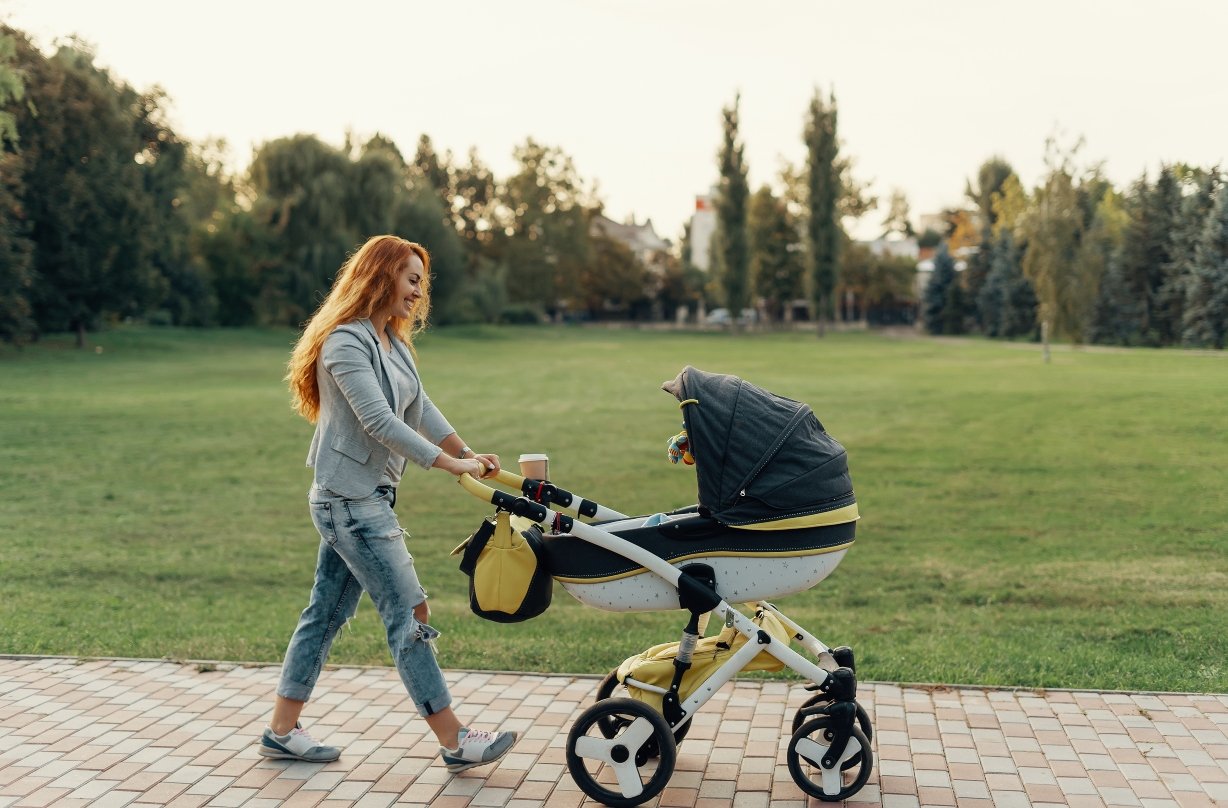
- Walking. The perfect postnatal exercise — free, pram-friendly, mood-lifting. Build from short strolls to brisk 30-minute walks. Fresh air with a newborn is also one of the best antidotes to the 3pm despair.
- Postnatal-specific strength. Around 6–8 weeks (with clearance), add gentle core rehab — not crunches (avoid until any diastasis recti is assessed), but dead bugs, glute bridges and modified planks. Our home workout guide adapts well, but consider one session with a postnatal-qualified trainer to check form.
- Buggy fitness classes. Available in most UK towns (£5–£10 a session) — exercise, fresh air and other sleep-deprived adults who get it.
If weight loss is the goal alongside fitness, timing your exercise well can help — though with a newborn, the best time is frankly whenever the baby sleeps.
Protect your mental health in the process
This matters as much as the physical side. Sleep deprivation, identity shifts and body changes make new mums vulnerable to low mood — and dieting stress on top is a recipe for misery. Be alert to postnatal depression (persistent low mood, detachment, hopelessness beyond the first two weeks) and talk to your GP or health visitor promptly; it’s common, treatable and nothing to be ashamed of. The charity Tommy’s has compassionate, evidence-based guidance for pregnancy and postnatal wellbeing.
Also: unfollow anyone whose “postpartum journey” makes you feel bad. Social media’s version of post-baby bodies is a highlight reel of genetics, help and filters.
The post-pregnancy exercise timeline: what’s safe when
“When can I exercise again?” is one of the most common postnatal questions, and the answer depends on the birth. Here’s the general framework — your midwife or GP confirms the specifics at the 6–8 week check.
Days 1–14: gentle recovery. Short walks, pelvic floor exercises (start as soon as comfortable — these matter more than anything else right now), and deep breathing. No lifting beyond the baby, no intense exercise. After a C-section, this phase is about wound healing — walking is encouraged, everything else waits.
Weeks 2–6: build the base. Longer walks, postnatal-specific core rehab (not crunches — deep core and pelvic floor reconnection), gentle stretching. Many areas have postnatal physiotherapy classes via the NHS if you had complications. The key rule: any increase in bleeding, pain or heaviness means you’ve done too much — scale back.
After the 6–8 week check: gradual return. With GP clearance, low-impact exercise resumes — swimming (once bleeding has stopped), cycling, postnatal fitness classes. Running is the one to delay: most physios recommend waiting 12+ weeks and passing some basic strength tests first, because the pelvic floor and joints (still affected by relaxin) need longer.
The nutrition side: if breastfeeding, you’re burning roughly 300–500 extra calories a day — aggressive dieting now is counterproductive and can affect milk supply and your own recovery. Eat to satisfy hunger with the balanced meals from the main guide; the gradual approach outlined there is specifically designed for this. Weight loss while breastfeeding should be slow — around 0.5kg a week max.
And the mental reframe that helps most: your body did something extraordinary. The goal isn’t “bouncing back” — it’s building forward, sustainably, on a body that deserves some respect.
Your takeaway: nourish, move gently, be patient
The safest way to lose weight after pregnancy is gradual: eat nutrient-dense food (enough of it), walk daily, rebuild your core and pelvic floor with professional guidance, and aim for 6–12 months, not 6–12 weeks. Protect your sleep, your mood and your milk supply first — the weight follows. You’re recovering from growing a person; give yourself the grace you’d give anyone else.