Swansea looks affordable next to London or Bristol — until you start adding up the real numbers. Rent is only the headline: deposits, bills, letting fees (now banned, but check), contents insurance, and the “student premium” landlords quietly bake into prices all move the total. Understanding what student housing in Swansea actually costs means looking past the advertised weekly rent to the full-year figure, and knowing which costs you can control. This guide breaks down the genuine costs, the traps, and the savings that matter.
You will learn typical rents by area and house type, the hidden costs beginners miss, how bills-included deals really work, and a budgeting framework that keeps housing affordable.
What students actually pay: rents by area
In 2026, a room in a shared student house in Swansea typically costs £95–£140 per week depending on area and quality — Brynmill and Uplands (the classic student quarters near Singleton campus) sit at the higher end for well-kept houses, while areas further out like Mount Pleasant or Townhill run cheaper. Purpose-built student accommodation (PBSA) near the Bay campus or city centre charges £150–£220+ per week, but usually includes bills, gym access, and ensuites — compare the all-in figure, not the headline.
The advertised weekly rent is rarely the full story. Most student lets run 44–52 weeks: a £120/week room on a 51-week contract costs £6,120 for the year, and you pay through summer even if you go home. Always multiply out the full contract before comparing. And watch the deposit: capped by law at five weeks’ rent, it must sit in a government-backed protection scheme — gov.uk’s renting guidance explains your rights plainly, and any landlord who cannot name the scheme is a red flag.
The hidden costs beginners never budget for
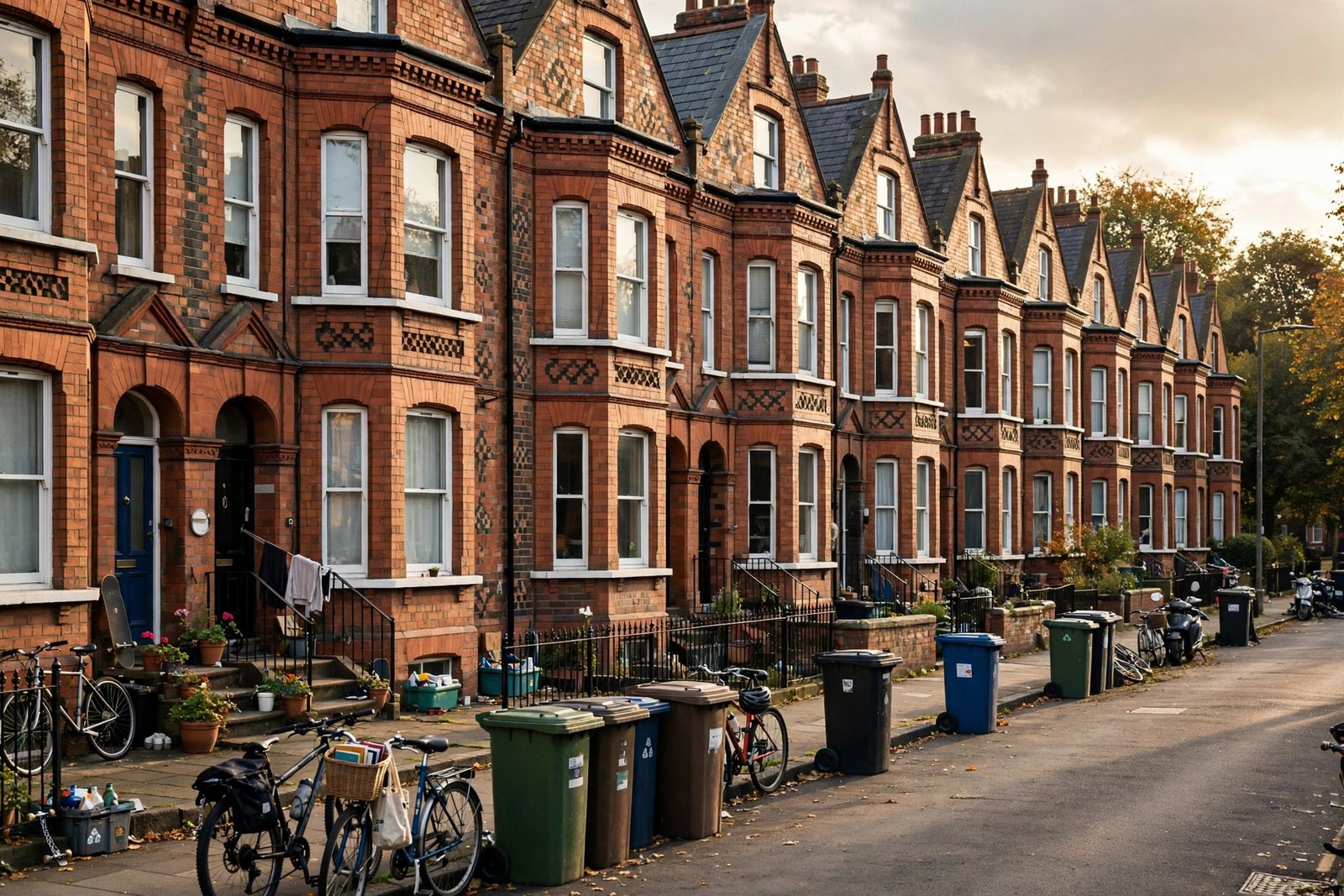
Beyond rent, budget for: bills (£40–£70/month per person for gas, electric, water, broadband in a shared house — more in draughty Victorian terraces, which describes much of Uplands); contents insurance (£5–£10/month, and worth it — student burglaries spike in October); council tax (full-time students are exempt, but get the exemption certificate from the university and give it to the council — the discount is not automatic); and TV licence (£169.50/year if you watch live TV, split between housemates).
Then the one-off costs: deposit (five weeks’ rent upfront), first month’s rent in advance, and a guarantor — most students’ parents act as guarantor, which is free but involves paperwork. International students without a UK guarantor are sometimes asked for six months’ rent upfront; negotiate this down or use a guarantor service rather than accepting it silently. Add it up and the “cheap” £95/week room can easily cost £7,000+ for the year all-in. MoneyHelper’s student budgeting tools help you model the full figure before you sign.
Bills-included vs bills-excluded: doing the maths
Bills-included packages look simple — one payment, no meter-reading arguments — but they carry a premium of roughly 10–20% over paying bills yourself, and they remove your incentive to economise. For a disciplined houseshare, bills-excluded is usually cheaper: set up a shared bills account or use a bill-splitting app, photograph meters on moving day, and agree house rules on heating early (the classic student row).
PBSA bills-included deals are a different calculation: at £170/week all-in for 44 weeks (£7,480), versus a £110/week shared house plus £60/month bills over 51 weeks (£6,930), the house wins on price but loses on convenience, location, and not living with strangers chosen by lottery. There is no universally right answer — price the two options honestly for your situation. Whatever you choose, Citizens Advice’s renting guides are the best free resource for understanding contracts, repairs, and deposit disputes.
Cutting the cost without cutting comfort
The biggest lever is housemate count and location: a five-bed house in a slightly less fashionable street routinely beats a three-bed in prime student territory by £20+/week each — that is £1,000 a year. Start looking in November–January for the following September; the best-value houses go early, and latecomers pay the scarcity premium. View in person, check phone signal, run the taps, ask current tenants about the landlord — and never pay anything before seeing a property and a contract.
Day-to-day, the savings compound: cook together rather than separately (one-pot student meals keep food costs near £25–35/week), split bulk buys, and agree a heating schedule instead of heating empty rooms. Eating healthily on a tight student budget and cutting the weekly grocery bill are the two habits that protect your rent money from lifestyle creep. Students who treat housing as a fixed cost to minimise — not a lifestyle to maximise — graduate with dramatically less financial stress.
Finally, negotiate from strength: landlords of large student houses would rather fill every room than hold out for top rent, so polite offers below asking — especially for slightly tired properties — succeed more often than beginners expect. Ask what is included before you haggle: a landlord who throws in broadband, a professional clean, or new mattresses may beat a cheaper headline rent. Everything about student housing is more negotiable than the letting agent implies.
Contracts, guarantors, and knowing your rights
Most Swansea student lets use assured shorthold tenancies with joint liability — meaning if a housemate stops paying, the landlord can pursue any of you for the shortfall. Read the contract before signing, not after: check the fixed term length, notice clauses, and who is responsible for what. Photograph every room and meter on moving day and email the photos to the agent the same day — this single habit wins most deposit disputes before they start.
Your deposit must be protected in a government-backed scheme within 30 days, and you must receive the prescribed information about which scheme. If the landlord fails to protect it, you can claim compensation of one to three times the deposit — the official deposit protection pages spell out the process. On repairs, landlords must fix structural issues, heating, hot water, and damp; report problems in writing and keep copies, escalating to the council’s environmental health team if ignored. Students often assume they have no power against landlords; in reality, UK renting law is firmly on the tenant’s side if you document everything.
Conclusion
Understanding student housing costs in Swansea means multiplying weekly rent across the full contract, adding £1,500–£2,500 in bills and one-off costs, and comparing bills-included deals on all-in figures. Start hunting early, choose housemates and location for value, know your deposit and repair rights, and keep daily spending disciplined. Do that, and Swansea remains one of the UK’s genuinely affordable university cities.
Frequently Asked Questions
How much does student housing in Swansea cost per year all-in?
A room in a shared house typically totals £5,500–£8,500 per year including bills and one-off costs; purpose-built accommodation runs £7,000–£11,000 all-in. Always calculate the full contract length, not just the weekly figure.
When should I start looking for student housing in Swansea?
November to January for the following September — the best-value houses in Uplands and Brynmill go early. Late hunters pay more for worse options.
Are letting fees still charged to tenants?
No — the Tenant Fees Act 2019 banned most letting fees in England, and Wales has equivalent protections. If an agent tries to charge admin or referencing fees, challenge it.
Do students pay council tax in Swansea?
Full-time students are exempt, but you must obtain an exemption certificate from your university and submit it to the council — the exemption is not applied automatically.