Cars rarely fail the MOT for the fault their owners feared.
Owners lie awake imagining an expensive engine problem or a mysterious fault deep in the electrics, then watch the car fail on a blown bulb, worn wipers or a tyre past its best. The test rewards attention to ordinary things far more than it punishes mechanical misfortune, which is good news for anyone willing to look properly before the day. Paperwork for other official hurdles, such as how to apply for a US ESTA from the UK, teaches the same lesson in a different setting, that most failures and refusals trace back to small, checkable details being left until far too late.
The Mistake of Trusting a Car That Feels Fine
The commonest mistake of all is assuming that a car which starts, steers and stops without drama must therefore be a car in testable condition. Daily driving is a poor judge of roadworthiness, because wear arrives gradually and drivers adapt to it without noticing. Brakes that fade a little more each month still stop the car at the school gate. Steering that has grown vague still follows the road. A suspension joint that has been knocking faintly since spring becomes part of the car’s normal soundtrack, and the owner stops hearing it altogether until a tester points it out.
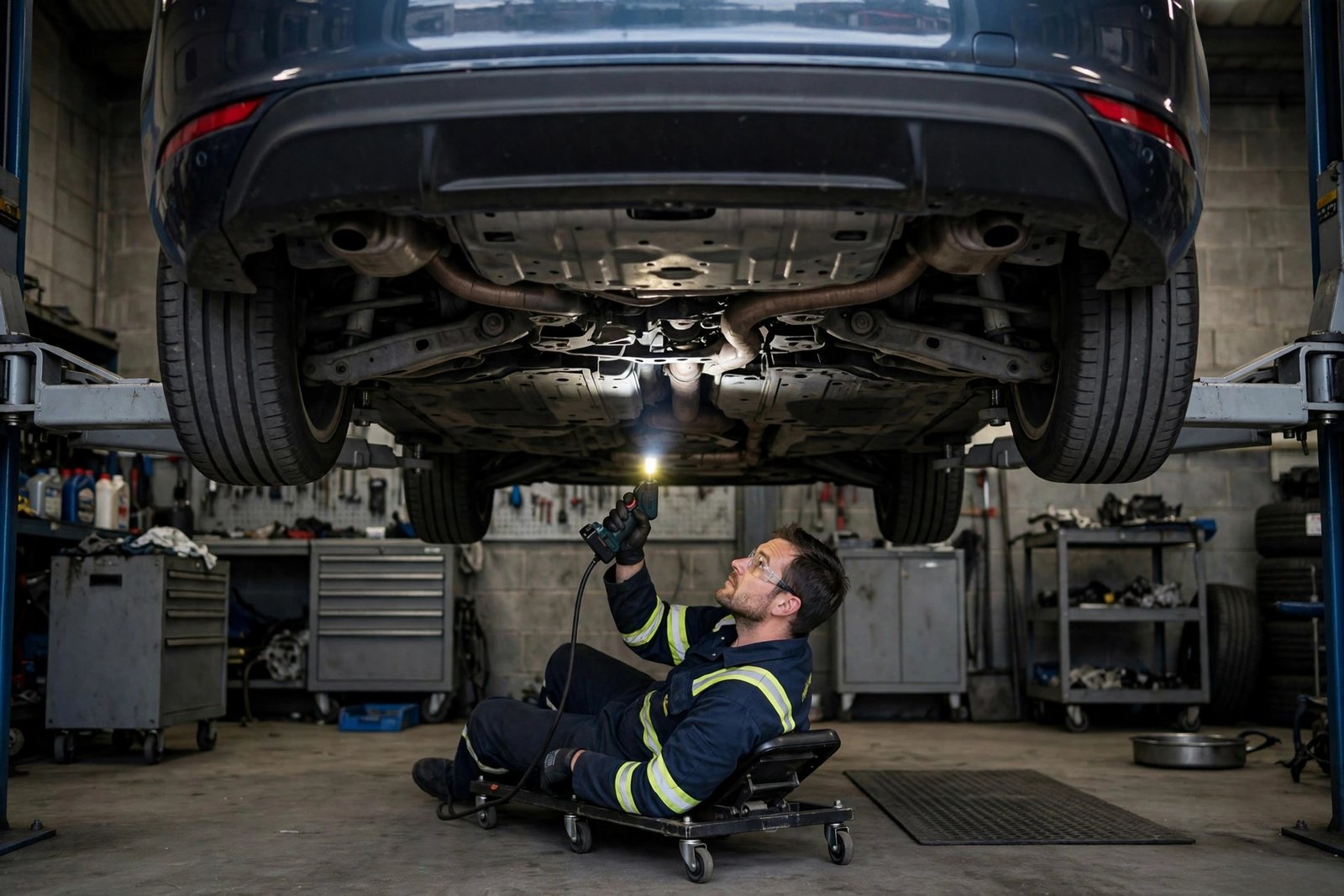
The MOT works to a different standard from the school run. It is the annual roadworthiness test for older cars in Great Britain, and its testers examine the car against set standards for safety and emissions equipment, not against how cheerful or tidy it feels. Cosmetic scuffs, tired paint and a worn driver’s seat count for nothing, while a small defect in a safety system counts for everything. That mismatch between what owners notice and what testers measure explains the particular sting of a failure on something the owner had walked past every day for months.
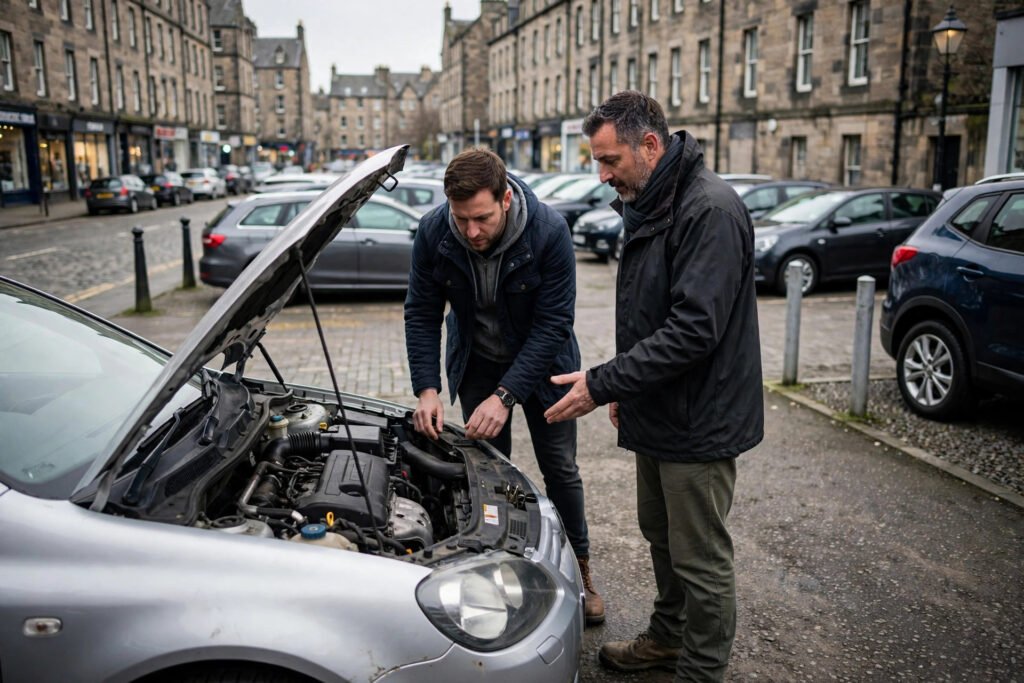
Treating the test as a free inspection is another half of the same mistake. Some owners book the car in, cross their fingers and treat the result as a to do list. That approach wastes the appointment and risks driving a car with defects that matter. The test is an examination, not a diagnosis service, and cars that pass first time are usually the ones whose owners did the examining themselves in the week before.
Lights and Lenses: the Silliest Way to Fail
No failure feels sillier than the one caused by lights, because no check is simpler to carry out at home. Walk around the car with every light switched on in turn, including headlights on both settings, indicators, brake lights, reversing lights, fog lights where fitted and the small lamps that illuminate the rear number plate. Brake lights need a helper, a wall to reflect their glow, or a window behind the car, since they only shine when the pedal is pressed. Replace any bulb that has failed, and treat a bulb that flickers or glows dimly as a warning worth investigating rather than a quirk to ignore.
Lenses and alignment matter alongside brightness. A cracked lens that lets in water, a headlamp clouded yellow with age, or a lamp aimed so poorly that it dazzles other drivers or lights the verge instead of the road can all draw the wrong verdict. Headlamp aim drifts as bulbs are changed and suspension settles, and adjusting it properly is a quick job for a garage with the right equipment. At home, at least confirm that both beams look even and point where they should when the car faces a wall or garage door after dark.
Reflectors and number plates belong to the same family of easy oversights. Plates must be readable and securely fixed, with no damage obscuring the characters, and reflectors must be present and undamaged. None of this requires skill or tools beyond the basics. It requires only the decision to look.
Tyres, Wipers and the View Through the Screen
Tyres carry the whole car, and the test treats them with suitable seriousness. Tread must cover the central portion of the tyre to a legal depth across its whole circumference, and the sidewalls must be free of cuts, bulges and exposed cord. A bulge is especially worth respecting, because it signals internal damage that can lead to sudden failure at speed. Check pressures as well, since a visibly soft tyre draws attention to itself and suggests the set has not been looked at for months. Remember the spare if the car carries one in a condition the tester will see, and make sure the tyres fitted match the sizes and types the car expects, with no mixing that the rules forbid across an axle.
The view through the windscreen is tested as carefully as the road beneath the tyres. Wipers must clear the screen effectively without leaving broad smeared bands, which means blades that have hardened, split or begun to chatter need replacing before the day rather than excuses after it. Washers must actually deliver fluid, so fill the bottle, check that the jets reach the screen and clear any blocked nozzle with care. Owners are often surprised how cheaply a set of blades transforms a rainy drive, quite apart from its effect on the test result.
The screen itself must be free of damage in the driver’s line of sight, and anything attached to it deserves a second look. Chips and cracks in the swept area can fail the car depending on their size and position, while dangling ornaments, sat nav mounts and stickers that intrude into the view can all be judged an obstruction. Clear the dash of clutter, keep the screen clean inside and out, and treat a growing chip as a repair to arrange promptly, since small chips are often fixable before they spread into cracks that demand a whole new screen.
Brakes and Steering Give Warnings Worth Hearing
Brakes rarely fail without first whispering about it. A pedal that feels spongy, sinks slowly or needs pumping suggests air or trouble in the hydraulic system. Grinding sounds point to friction material worn away entirely, while a squeal under light braking often means pads are nearing their end. A car that pulls to one side under braking, or a handbrake that climbs too high and still holds weakly on a slope, is telling its owner something a tester will certainly confirm. Brake discs scored, pitted or thinned with age belong to the same story, and none of these warnings improves for being ignored.
Steering speaks in a similar language. Play in the wheel, heaviness that comes and goes, knocking over rough ground and a tendency to wander all suggest wear somewhere in the steering or suspension. Joints and bushes wear in ordinary service, and their decline is exactly the gradual kind that daily driving teaches owners to tolerate. A tester, feeling the car fresh with the wheels raised, has no such tolerance built in.
The practical response is to listen deliberately before the test rather than hopefully during it. On a quiet, safe stretch of road, brake firmly and notice whether the car stays straight and the pedal stays firm. At parking speeds, turn the wheel from lock to lock and listen for knocks or groans. Any warning found this way belongs in a garage diary before the test date, because brake and steering work is safety work first and test preparation second, and a few days in hand allows parts to be ordered without panic.
Small Items That Catch Careful Owners Out
Beyond the headline systems sits a crowd of small items that catch out even careful owners. The horn must work and sound clearly, which many drivers discover theirs does not only when a tester presses it. Seat belts must extend, fasten, retract and show no fraying or damage, including the belts in the rear that nobody uses from one year to the next. Seats themselves must be secure, doors must open and close properly from inside and out where the test requires it, and the fuel cap must seal, since a missing or perished seal is both a defect and an annoyance at every filling station.
Fluid levels and warning lights form another quiet trap. A dashboard carrying a lit warning symbol on the day invites failure or at least unwelcome questions, and some warnings relate directly to systems the test examines. Topping up screenwash is trivial, but oil, coolant and brake fluid levels also tell a story about whether the car is maintained or merely used. The exhaust system must be secure and complete, without the blowing note that betrays a hole, and emissions equipment fitted to the car must be present and working, because the test checks what leaves the tailpipe against the standards for the car’s age and fuel.
Mirrors and the speedometer fall into this overlooked territory too. Mirrors must be present, secure and adjustable, and the speedometer must work. Even a boot or bonnet that will not stay shut can end a test early. Reading through the MOT test and what it checks before your own walk round the car turns this scattered list into a single sensible order.
The Correct Way: a Short Check Before the Day
The correct way needs no special talent, only a short check carried out in good time. Set aside part of an hour on a dry day in the week before the test, not the night before, so that anything found can still be fixed calmly. Work around the car in a fixed order. Lights and lenses first, then tyres and pressures, then wipers, washers, screen and mirrors, then belts, horn, doors and dashboard warnings, finishing with a short drive devoted to brakes, steering and listening for knocks. A notebook or phone note of anything doubtful turns the walk into a proper job list rather than a vague worry.
Fix the simple things yourself and book the rest without delay. Bulbs, blades, fluids and tyre pressures sit within most owners’ abilities, while brakes, steering and suspension belong to professionals with lifts and tools. If the car is due a service around the same season, aligning the two can work well, provided the service happens before the test and not as a hopeful substitute for it. Keep previous advisories from earlier tests and attend to them during the year, because an advisory is a free early warning of exactly the item most likely to become a failure next time round.
On the day itself, arrive with the car warm and carrying enough fuel for the emissions check. Knowing how British practice compares with vehicle inspection regimes compared briefly puts the whole ritual in perspective, since every country that runs such schemes finds the same pattern of avoidable failures. The car that passes first time is rarely the newest on the ramp. It is the one whose owner spent a short hour looking at it through a tester’s eyes.