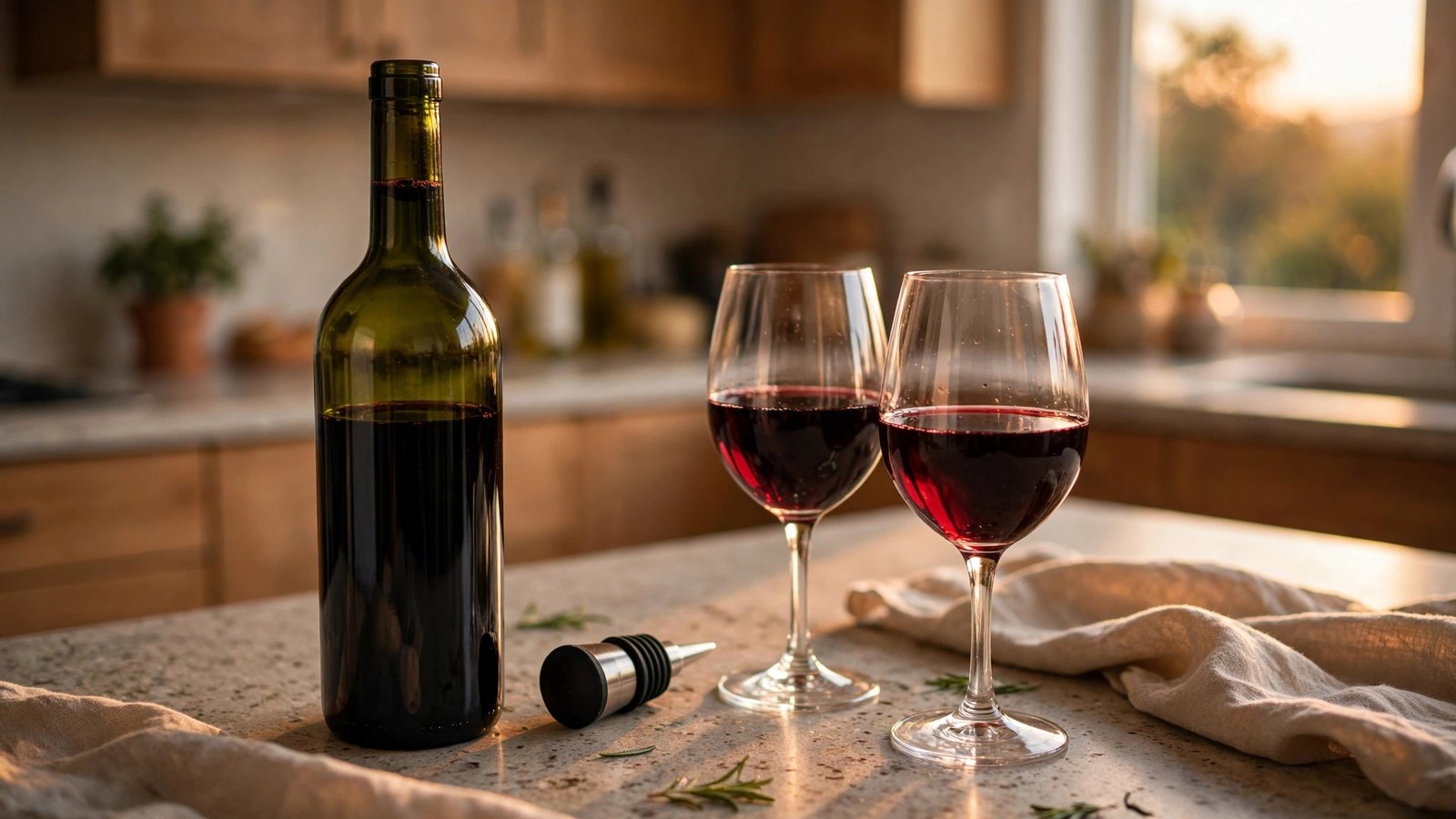
An opened bottle starts changing the moment the cork comes out.
From that instant, air begins its quiet work inside the bottle. Oxygen that refreshes a freshly poured glass turns against the wine left behind, flattening its fruit, dulling its aroma and pushing it towards a tired, sour edge. Warmth hurries the decline along, and bright light adds its own damage, so an opened bottle left on a sunny worktop ages far faster than the same bottle kept cool and dark. Nothing stops the process altogether. Good storage simply slows it enough for the wine to stay enjoyable at the next pouring. The habits that matter are few: seal promptly, keep cold, stand the bottle upright, and judge honestly when what remains belongs in a pan rather than a glass. Sparkling wine needs the swiftest care of all, because once its pressure escapes, the sparkle that defines it fades ahead of everything else.
Start With a Clean Cork, a Fridge and a Cool Shelf
Before technique comes equipment, and the useful kit is refreshingly modest. Keep the original cork if it came out cleanly and intact, because a sound cork that still fits snugly remains a perfectly good seal for a short stay in storage. Check it for splits and crumbling, and wipe the neck so no drips dry into a sticky ring. Alongside the cork, a clean stopper made for wine bottles earns its place in the drawer, since not every closure survives opening. The second essential is fridge space cleared in advance, because a bottle with a home waiting is far more likely to be stored properly than one left out while room is negotiated. The third is a cool, dark shelf for the brief moments a bottle waits outside the fridge, away from the oven and any window that catches afternoon sun. There is a pleasing kinship here with other slow pleasures kept well at home, where patience matters more than fuss, much as with smoking a cigar properly as a beginner, where rushing spoils what resting protects.
A vacuum pump suits households that regularly leave bottles unfinished, since drawing air out of the neck reduces what is left to react with the wine. A gas blanket, which lays a heavier inert layer over the surface, serves the same purpose differently. Neither performs miracles, and neither excuses warmth or delay; think of them as reinforcements for the basic trio of cork, cold and darkness. Keep the pump where you will reach for it on a tired evening, because a tool buried in a cupboard protects nothing.
Seal the Bottle Before the Air Gets Busy
The first step, taken promptly, is to close the bottle as soon as pouring finishes for the evening, rather than leaving it open on the table while conversation drifts on. Every extra hour uncorked lets oxygen work undisturbed across the surface of the wine. The second step is to seat the seal firmly. A cork pushed back in should feel snug, ideally with its cleaner end, the end that faced the wine, going back towards the wine, since the outer end has handled dust and worktops. If the cork has expanded and refuses to return, force nothing; reach for the spare stopper, because a cracked cork can crumble into the bottle. The third step is to reduce the air space where you sensibly can. A smaller clean bottle, filled higher and sealed tightly, leaves less air above the wine, and that simple geometry slows the decline reliably. Pour gently down its side to avoid stirring in yet more air. The fourth step is speed into the cold: a sealed bottle still standing warm is only half protected, so sealing and chilling should feel like one continuous movement.
Watch for the small failures that undo a good seal. A stopper sitting crooked lets air creep past its edge all night, and a cork that rocks when touched was never seated at all. Give the closure a gentle fingertip test before the bottle goes away. If wine has been decanted, return what remains to a bottle rather than leaving it in the decanter, whose wide mouth offers the largest possible surface to the air.
Chill Every Opened Bottle, Reds Included
Cold is the opened bottle’s best friend, whatever its colour. Refrigeration slows the changes that oxygen sets in motion, so whites, rosés and reds alike belong in the fridge once opened, alongside sparkling wine, which needs the cold to hold what pressure remains. Many drinkers hesitate over reds, but storage temperature and serving temperature are different decisions. A red kept cold, then allowed to lose its chill gradually before pouring, tastes far fresher than a red kept warm and served at the temperature tradition prefers, because warmth during storage does damage no serving ritual can reverse. Anyone wanting the wider picture will find the storage of wine and cellaring a useful backdrop, since the same enemies threaten an unopened collection across a far longer span.
Inside the fridge, position matters. The door swings through warm kitchen air at every opening, so a shelf deeper inside gives the bottle a steadier cold. Keep opened wine away from strongly scented foods where you can, because a loose seal and a ripe cheese rarely improve one another. If fridge space is genuinely short, a cool dark cupboard is the lesser evil for a red that will be finished soon, but treat that as a compromise for hours, never a storage plan, and never leave the bottle beside the cooker, where every meal warms it afresh.
Stand It Upright and Away From Light
An opened bottle should stand upright, not lie on its side. Lying down suits sealed bottles in a cellar, where the cork needs moisture to stay swollen, but an opened bottle has a different problem: the wine’s surface. Upright, the wine meets the air through the narrow circle of the neck. On its side, it spreads along the bottle and presents a far broader surface to the oxygen trapped inside, speeding the flattening and souring you are trying to delay. Upright storage also reduces the chance of seepage onto a fridge shelf. Add darkness. Light, and sunlight above all, works on wine through glass, warming it and spoiling its freshness, which is one reason bottles are so often made from tinted glass. A fridge interior is dark whenever its door is shut, quietly solving the light problem, and a closed cupboard does the same job for short spells outside it.
One more detail deserves attention while the bottle waits: keep it away from the fridge motor’s warm side if your model runs hot at the back, and never stand it on top of a warm appliance to save space. Heat creeps in quietly through glass, and a bottle that feels cool to the hand at pouring time may have spent its waiting hours warmer than you assumed, quietly undoing the good your sealing did. Steadiness completes the picture. A bottle knocked, carried about and repeatedly warmed in the hand ages faster than one left in peace, so once an opened bottle goes away, resist fetching it out for a splash here and there across several evenings. Decide what the remainder is for, a glass with supper or a sauce on the stove, and handle it accordingly.
Judge Each Style by Its Own Fading Speed
Not every wine fades at the same pace, and honest judging starts with the style in the bottle. Sparkling wine fades fastest: its sparkle is dissolved gas held under pressure, and once opened, that gas escapes steadily, leaving the wine flat even while its flavour still seems sound. A proper sparkling stopper, the kind that grips the neck and holds pressure in, matters more for these bottles than for any other, and even then the wine asks to be finished promptly. Whites and rosés generally hold their freshness gracefully for a while, though delicate aromatic styles lose their perfume sooner than sturdier ones. Reds vary with their structure: a robust red often shrugs off a stay in the fridge and can taste more settled at the second pouring, while a lighter, older red may fade quickly once air has had its way. Fortified wines are the marathon runners of the opened shelf and keep their character longest, though they still deserve a seal and a cool home.
Trust your senses over the calendar. Pour a small amount, look at its colour, smell it before tasting, and be honest about what you find. Fresh wine smells of fruit, flowers or spice; fading wine smells flat, dull or sharply vinegary, and the taste follows the nose. Learning to recognise wine faults and spoiled bottles sharpens that judgement, because a bottle that smells of vinegar or wet cardboard is telling you plainly that storage has lost the argument. When in doubt, taste a sip rather than pouring a full glass for a guest, and never serve a bottle you would not happily drink yourself.
Know When to Cook With It Instead
Every opened bottle reaches a point where drinking pleasure has gone but usefulness remains, and recognising that point is a skill rather than a failure. Wine that tastes tired or slightly sharp, yet smells clean rather than spoiled, can still earn its place in the kitchen. A splash deglazes a pan after onions have browned, the base of a sauce welcomes it, and a slow braise forgives a wine that a glass would judge harshly. The boundary is smell: wine that has turned genuinely vinegary or carries a musty taint belongs in the sink, not the stew, because cooking concentrates flavour and a spoiled note will survive the pot. When the bottle smells clean but dull, cook with it confidently and soon, rather than returning it to the fridge in the hope it recovers. It will not recover; opened wine only travels one way.
A final habit ties the routine together: open with the finish in mind. If only a glass or two will be drunk, pour modestly, and seal and chill the remainder before the meal rather than after it, while the wine is still at its best. Keep the order of operations steady: enjoy, seal, chill, stand upright, judge by style, and cook with what fades. Followed without drama, those steps keep most opened bottles pleasurable for their next pouring and turn leftovers into an ingredient instead of a regret.